Get Full Government Meeting Transcripts, Videos, & Alerts Forever!
Get email alerts on the Education Development topic
No spam. Unsubscribe anytime.
Forsyth County approves rezoning for Legacy Traditional Schools campus amid traffic and stormwater concerns
Summary
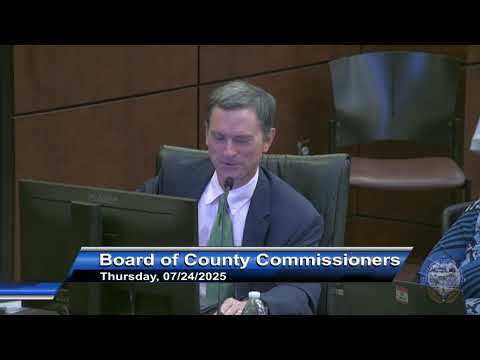
The Forsyth County Board of Commissioners approved zoning map amendment F-1661 to allow a mixed-use development anchored by a Legacy Traditional Schools campus, 6-1, after testimony from the developer and multiple neighbors about traffic, stormwater and buffering.
Forsyth County commissioners on July 24 approved zoning map amendment F-1661, allowing a two‑phase mixed‑use development that includes a campus for Legacy Traditional Schools and two commercial lots on Lewisville‑Clemens Road.
The approval was granted after a public hearing and debate; the motion passed 6‑1. The petition rezoned about 19.37 acres from RS‑30 (large lot single family) to IPS (institutional and public special use) for the school and HBS (highway business special use) for the frontage commercial lots.
The petition and site plan presented by staff and the developer call for a campus of six buildings, on‑site stacking to avoid queuing onto Lewisville‑Clemens Road, and two commercial lots fronting the road. Kirk Erickson, deputy director of planning and zoning, told commissioners the school portion includes about 5,000 feet of vehicle queuing and separate drop‑off/pickup circulation so “they should not be having their vehicles stacking up and causing problems with traffic on Lewisville‑Clemens.” Jason Opp, vice president of real estate development speaking for Legacy Traditional Schools, said the operator staggers dismissal times and “we have about a mile of stacking for automobiles on the campus,” and pledged to coordinate bell times with Winston‑Salem Forsyth County Schools.
Neighbors and public commenters raised concerns about stormwater, erosion, pedestrian safety and future commercial uses on the frontage. John Carter, a lifelong resident, said the site sits on a valley slope and warned against “clearing top to bottom” that could increase runoff into Blanket Bottom Creek and the Yadkin River. Savannah Sperlaza, who said she lives directly beside the property and works as a special‑education teacher and principal, asked what buffers or fencing would be used to separate her property from commercial development.
Planning staff described several required protections that would apply if the zoning is implemented: a 100‑foot undisturbed stream buffer along Blanket Bottom Creek, an approximate 30‑foot greenway easement adjacent to that buffer, and type‑2 buffer yards (double rows of evergreens, supplemental deciduous trees and shrubs) between commercial and RS‑30 residential areas. Erickson said the overall impervious surface for the site as proposed would be approximately 39 percent, leaving more than 60 percent of the parcel in a natural state, and that erosion‑control and stormwater permits would be required before building permits are issued.
Staff said the commercial portion of the site is expected to add about $4.5 million in taxable value to the county and create roughly 35 jobs; the school campus was estimated to create about 110 jobs, for a total projected 145 jobs at full build‑out. The Planning Board voted unanimously to recommend approval after a June hearing that included one speaker opposed.
Commissioner Bessie, during discussion, focused on whether the site plan includes required sidewalks and the road‑frontage street yard; Erickson confirmed sidewalks and the 10‑foot street yard will be required when the commercial lots develop. Commissioners also debated broader questions about charter schools’ demographics and county policy; Commissioner Bessie said she had concerns about charter‑school demographics but acknowledged the rezoning decision must be made under land‑use criteria.
The board’s motion approving the rezoning incorporated findings of consistency with the Legacy comprehensive plan, the Unified Development Ordinance and the county’s CETA (special intense development allocation) process and passed 6‑1.