Get Full Government Meeting Transcripts, Videos, & Alerts Forever!
Forsyth County approves transfers and payment changes to help Winston-Salem/Forsyth County Schools cover debt
Summary
Forsyth County commissioners voted to transfer funds and change how the county pays for school services to help the Winston‑Salem/Forsyth County Schools reduce last year’s debt and simplify payments for school resource officers and nurses.
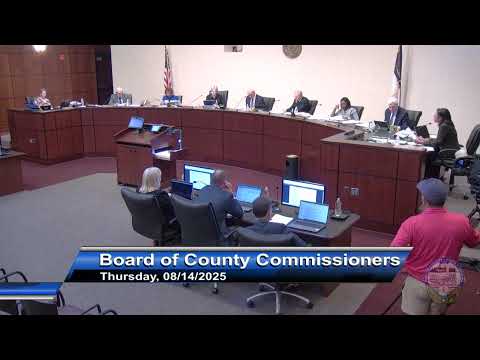
Forsyth County commissioners voted this week to authorize transfers and accounting changes aimed at helping the Winston-Salem/Forsyth County Schools (WSFCS) repay outstanding debt and simplify payments for county-provided services.
The board approved three related actions: a $3.8 million reallocation from the county’s education capital projects ordinance, a $4.7 million transfer of interest earnings tied to the county’s 2023 general obligation bonds (with conditions attached), and an amendment that stops routing the county’s payments for school resource officers and public health nursing through the school system—reducing the schools’ appropriation by about $4.6 million while leaving the services funded and provided by the county.
The measures together were offered by county staff as ways to create general-fund balance and free up dollars the school system can use for current expenses, while the county retains controls intended to limit misuse.
Deputy Chief Financial Officer Lee Plunkett told commissioners the first funding plan would move unspent general‑fund transfers from the education capital projects ordinance back to the general fund and then re‑appropriate those dollars to the schools as current expense. Plunkett said roughly $5 million remained in that capital account and WSFCS requested $3,870,000; the motion before the board authorized $3,800,000. Plunkett said the second plan would use $4.7 million of investment earnings from 2023 general obligation bond proceeds to pay debt‑service interest and thereby free up property tax revenue for school current expense, and he summarized both…
Already have an account? Log in
Subscribe to keep reading
Unlock the rest of this article — and every article on Citizen Portal.
- Unlimited articles
- AI-powered breakdowns of topics, speakers, decisions, and budgets
- Instant alerts when your location has a new meeting
- Follow topics and more locations
- 1,000 AI Insights / month, plus AI Chat