Get Full Government Meeting Transcripts, Videos, & Alerts Forever!
Get email alerts on the School Funding Wsfcs topic
No spam. Unsubscribe anytime.
Forsyth County approves transfers and payment changes to help Winston-Salem/Forsyth County Schools cover debt
Summary
Forsyth County commissioners voted to transfer funds and change how the county pays for school services to help the Winston‑Salem/Forsyth County Schools reduce last year’s debt and simplify payments for school resource officers and nurses.
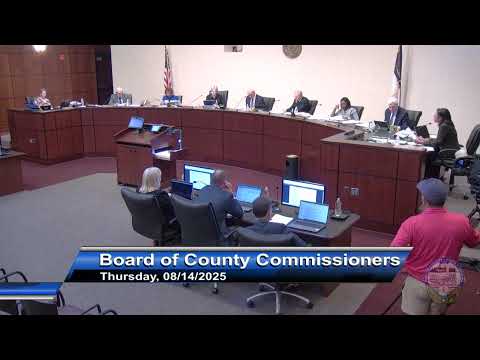
Forsyth County commissioners voted this week to authorize transfers and accounting changes aimed at helping the Winston-Salem/Forsyth County Schools (WSFCS) repay outstanding debt and simplify payments for county-provided services.
The board approved three related actions: a $3.8 million reallocation from the county’s education capital projects ordinance, a $4.7 million transfer of interest earnings tied to the county’s 2023 general obligation bonds (with conditions attached), and an amendment that stops routing the county’s payments for school resource officers and public health nursing through the school system—reducing the schools’ appropriation by about $4.6 million while leaving the services funded and provided by the county.
The measures together were offered by county staff as ways to create general-fund balance and free up dollars the school system can use for current expenses, while the county retains controls intended to limit misuse.
Deputy Chief Financial Officer Lee Plunkett told commissioners the first funding plan would move unspent general‑fund transfers from the education capital projects ordinance back to the general fund and then re‑appropriate those dollars to the schools as current expense. Plunkett said roughly $5 million remained in that capital account and WSFCS requested $3,870,000; the motion before the board authorized $3,800,000. Plunkett said the second plan would use $4.7 million of investment earnings from 2023 general obligation bond proceeds to pay debt‑service interest and thereby free up property tax revenue for school current expense, and he summarized both actions as creating $8,568,000 in available resources if both were adopted.
Interim Superintendent Kathy Moore said the debt reduction request is urgent. "There are multiple fires burning. This is the one that's closest to our feet right now and highest," Moore told the board, arguing that reducing last year’s debt would ease pressure on the district as it implements further budget reductions.
Members of the public urged the county to act. An early‑childhood special‑education teacher who identified herself as an EC teacher urged the board to approve the funds to avoid further staff cuts, saying the reductions would "threaten one of the most vulnerable group of people in our community, our EC students." Tamara McLaughlin, a licensed mental health clinician, called the schools’ situation "a disaster of epic proportions," and Michelle Jordan, who said she is retired, emphasized that the contested spending was put toward student needs.
At the same time, some commissioners stressed accountability and limits. Resident Alan Daniel supported county assistance but said the school board must face consequences for fiscal failures, and several commissioners pressed for explicit conditions and documentation showing the county appropriation was sent to the North Carolina Department of Public Instruction (NCDPI) to retire debt.
The board adopted a written condition in the agenda materials requiring WSFCS to use the funding to repay part of its debt to NCDPI, with payment to occur within one week of receipt and evidence of payment provided to the county manager within 24 hours. The materials also note that if legal requirements mandate some portion of any county appropriation be shared with charter schools, that sharing would be permitted and accounted for. The agenda language gives the county the right to offset future payments to WSFCS if the funds are used other than as authorized.
Votes and key outcomes: the $3.8 million reallocation (agenda item 4) passed 5–2 after a motion by Commissioner Bessie and a second by Commissioner McDaniel. The $4.7 million transfer of bond interest earnings (agenda item 5) passed 4–3 after the board amended the action so the county would not release funds until the school board provided a written letter committing that Ashley Elementary School would be the district’s next capital project; the county attorney confirmed the standard clawback language would remain in place. The budget amendment to stop routing payments for school resource officers and school nurses through WSFCS (agenda item 6) passed unanimously; the county will directly pay those services in FY26, and the change has a net $0 effect on county dollars in the current year.
Commissioners who opposed or hesitated said they worried the county was stepping into what they described as state or school board responsibilities and that county funds could set a precedent. Supporters said partial payment and visible commitment would demonstrate good faith to the state board of education and the North Carolina Department of Public Instruction and could reduce interest penalties tied to outstanding obligations.
The board also discussed the school system’s internal controls. Moore said the district has moved to a new enterprise resource planning (ERP) system that requires line‑item budgeting and prevents expenditures beyond available budgeted amounts without formal transfers; she and staff said only the superintendent or the CFO can approve expenditures outside the approved budget and that the district had removed the ability to spend beyond budget without approval.
The board’s actions do not reverse the personnel reductions announced by the school system earlier in the week; commissioners and the interim superintendent noted the transfers and accounting changes address last fiscal year’s indebtedness and do not directly restore positions cut as part of the district’s FY26 balancing plan.
The county’s agenda materials and motions name the North Carolina Department of Public Instruction and the state board of education in the conditions and explain that IRS rules govern whether investment earnings on bond proceeds can be used to pay debt service interest. The county attorney advised that the county would not release the $4.7 million until the board received the school board’s written assurance and that standard recoupment language could be included in the ordinance amendment.
Looking ahead, commissioners asked for prompt documentation from the school board and the interim superintendent on appeals to the state board of education (the district is pursuing relief from a 1% interest penalty) and for any written commitments about Ashley Elementary. The board also signaled that future discussions would be needed about nearly $5 million that WSFCS owes the county from the prior year, a matter the county said remains unresolved.