Get Full Government Meeting Transcripts, Videos, & Alerts Forever!
Carmel council continues appeal of Esperanza/JB Pasteur project after disputes over parking, open space and historic review
Summary
The Carmel-by-the-Sea City Council on Aug. 4 paused a decision on an appeal of a Planning Commission approval for the Esperanza (JB Pasteur) mixed-use project, agreeing to remand the matter for further work after months of public comment and conflicting readings of local zoning, historic-preservation and parking rules.
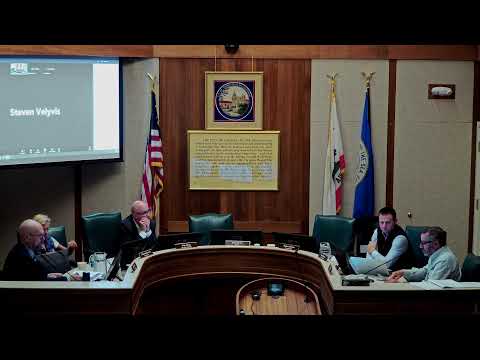
The Carmel-by-the-Sea City Council on Monday continued an appeal of the Esperanza (JB Pasteur) mixed‑use project and directed staff to return with draft findings and motions after extensive public comment and debate over whether the project complies with city zoning, parking requirements and historic‑resource rules.
The project — a proposal to build two new buildings plus retain a small existing community room on a roughly 12,000‑square‑foot site on Dolores Street near Seventh Avenue — was approved by the Planning Commission on April 9. Eleven residents filed a timely appeal, arguing the design improperly combines structures and therefore exceeds a 10,000‑square‑foot-per‑structure limit, improperly counts roof and balcony areas as required open space, relies on a deficient historic‑resource review and inappropriately uses the city’s in‑lieu parking program instead of providing adequate on‑site spaces.
Why it matters: The dispute pits competing civic priorities — preservation of a complex the record calls the Northern California Savings & Loan complex and nearby Stone House Terrace against a developer’s plan for new mixed‑use housing and retail. Council members and the public focused on three technical questions that determine whether the council can rely on categorical CEQA exemptions and whether the Planning Commission’s approval must be revisited: (1) whether the proposed connected massing should be treated as a single “structure” under CMC 17.14.140(c); (2) whether the project has adequately demonstrated on‑site parking is impractical under CMC 17.38.030 and therefore qualifies for in‑lieu parking; and (3) whether the local historic‑resource consistency work meets the Secretary of the Interior’s standards for rehabilitation (the bases for a Class 31 CEQA exemption).
Staff presentation and legal framing
Evan (planning staff) summarized the April 9 Planning Commission approval and staff’s recommendation that the council deny the appeal, find the project categorically exempt under CEQA (Class 32 infill and Class 31 historic rehabilitation exemptions), and approve associated permits including design review, a lot merger and use permits. Evan…
Already have an account? Log in
Subscribe to keep reading
Unlock the rest of this article — and every article on Citizen Portal.
- Unlimited articles
- AI-powered breakdowns of topics, speakers, decisions, and budgets
- Instant alerts when your location has a new meeting
- Follow topics and more locations
- 1,000 AI Insights / month, plus AI Chat