Get Full Government Meeting Transcripts, Videos, & Alerts Forever!
Get email alerts on the Election Consolidation topic
No spam. Unsubscribe anytime.
Virginia registrars, local officials say consolidating elections would cut election-specific costs but raise implementation risks for small localities
Summary
Presenters and registrars told a legislative subcommittee that moving state and local elections to even-numbered years would reduce variable, election-specific spending statewide but would leave many fixed, ongoing costs intact—and could strain small localities unless the state provides transition funding or minimum staffing safeguards.
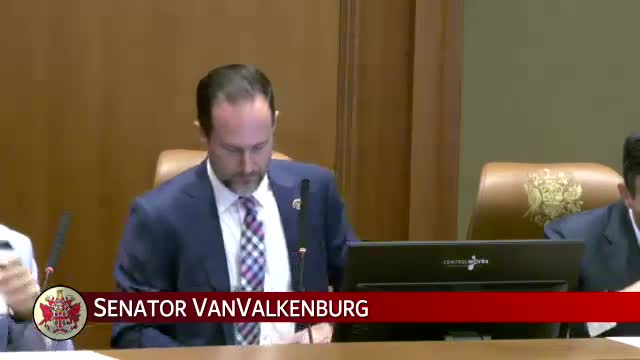
Chairman Senator Van Valkenburg convened the Joint Subcommittee to Study the Consolidation and Scheduling of General Elections on March 12 to examine how shifting Virginia’s state and local election calendar to even‑numbered years would affect budgets and administration. Presenters from county and municipal associations, legislative budget staff, the Virginia Department of Elections and registrars told members consolidation would reduce some election‑specific costs but leave most recurring administrative spending unchanged.
The panel heard that consolidation would likely reduce variable costs such as polling‑place rentals, per‑election ballot printing and postage, and stipends for officers of election, while many fixed costs—registrar salaries, IT and facilities—would continue. “If elections were consolidated into even years, savings could be realized on election specific costs such as polling places, ballot printing, postage, and stipends for officers of election,” said Dean Lynch, executive director of the Virginia Association of Counties, who presented a county perspective on finances.
Why this matters: state officials and registrars said the largest fiscal effects would fall on local governments because Virginia law assigns primary responsibility for funding elections to counties and cities. The Department of Elections and registrars argued the General Assembly could preserve local election capacity during a transition by (a) providing one‑time or ongoing funding to cover compliance and staffing needs, and (b) considering statutory changes such as minimum local staffing or flexibility in early‑voting site rules.
Most important facts and estimates
- State and local spending reported in testimony: fiscal 2023 local election spending was cited at about $55.6 million with roughly $7.9 million reimbursed by the state; fiscal 2024 spending rose to about $67.6 million with approximately $12.5 million provided by the state (figures provided by the Virginia Association of Counties).
- The Virginia Department of Elections told the panel it has 67 staff, serves about 6.2 million registered voters and operates on roughly a $22 million budget; about $11 million in personnel support is passed through annually from the state to local registrars and electoral boards, and presidential primary reimbursement was about $7 million in 2024 (Commissioner Susan Beals).
- Registrars’ association data: localities together spend roughly $100 million annually on elections (registrars’ estimate), with approximately $81 million from local funds and about $18 million from state support; registrars estimated a plausible statewide reduction in election‑specific spending on the order of $11–25 million and offered $15 million as a midrange, dependent on local size and year (Eric Olson, Prince William County, speaking for the Voter Registrars Association of Virginia).
What presenters told the subcommittee
- Local funding responsibility and variability: Lynch and municipal representative Kelly Burke (mayor of Leesburg, vice president of the Virginia Municipal League) emphasized that the state’s long tradition of off‑year elections is intended to keep local issues separate from federal contests, and that localities bear most election costs—staff, polling locations, ballots, postage and equipment. Lynch said counties must retain flexibility to place bond referenda or other local questions before voters in non‑even years because of constitutional and statutory requirements.
- State budget and balance of power: Senate and House budget staff (Mike Tweedam and Kim McKay) explained that changing the election cycle would also affect the rhythm of the gubernatorial and budget process codified in Title 2.2 of the Code of Virginia; they warned that moving elections to even years without other changes would shift some timing and influence between governors and the General Assembly.
- Department of Elections operational view: Commissioner Susan Beals described ongoing, year‑round functions—voter registration maintenance, voting system certification, training, campaign finance processing and FOIA responses—and noted most of those functions would continue regardless of calendar changes. She identified modest near‑term savings for the state (call‑center costs and printing/mailing forms) but said she did not expect large state budget reductions because much of the department’s work and staffing is continuous.
- Local registrars’ technical and budget details: Eric Olson gave line‑item examples from local budgets showing that some counties spend a large share on fixed, year‑round costs (salaries, IT, facilities) and a smaller share on election‑specific costs; smaller localities have less ability to absorb changes because fixed costs make up a larger percentage of their budgets. Olson said many registrars welcome consolidation if accompanied by “careful planning, modification of ancillary laws and proper fiscal support.”
Concerns raised by legislators and officials
- Voter turnout and ballot length: Witnesses said consolidation could increase turnout for local contests that now occur in low‑turnout odd years, but they also flagged potential voter fatigue and “roll‑off” on long, multi‑page ballots. Commissioner Beals warned longer ballots can increase the time voters spend at voting machines and complicate audits.
- Staffing and institutional knowledge: Multiple registrars and electoral‑board representatives warned that moving to a biennial cycle could push jurisdictions to replace full‑time staff with seasonal workers, risking loss of institutional knowledge and reducing capacity to meet security, ADA and other annual compliance requirements.
- Small locality budget risk: Several speakers from small counties cautioned that if supervisors reduce registrar budgets in off years, offices could be permanently understaffed; registrars asked the General Assembly to consider protections such as minimum staffing standards or targeted state funding to prevent that outcome.
What the subcommittee directed or scheduled
- Commissioner Beals agreed to return in September with a fuller briefing on election administration topics and additional data the subcommittee requested.
- Staff and presenters agreed to provide more granular breakdowns distinguishing fixed (ongoing) costs from election‑specific costs, and to share registrar‑level examples of how budgets split between those categories.
Quotes
- “If elections were consolidated into even years, savings could be realized on election specific costs such as polling places, ballot printing, postage, and stipends for officers of election,” Dean Lynch, Virginia Association of Counties.
- “For over 170 years, Virginia has maintained a distinctive electoral calendar purposely setting apart from federal elections,” Kelly Burke, mayor of Leesburg.
- “We have 67 staff members and 6,200,000 registered voters. We have a $22,000,000 operating budget and…about $11,000,000 passes through us for general registrar and electoral board salaries,” Commissioner Susan Beals, Virginia Department of Elections.
Ending
No legislative decision was made at the March 12 informational meeting. Committee members instructed staff and presenters to produce more detailed, locality‑level cost breakdowns and scheduled a final informational session for September to examine administration and implementation issues before any drafting of statutory or constitutional language.
Votes at a glance: none—no formal motions or votes were recorded during this meeting.