Get Full Government Meeting Transcripts, Videos, & Alerts Forever!
Get email alerts on the Executive Session topic
No spam. Unsubscribe anytime.
Norwich City Council holds closed session to discuss pending claims under Conn. Gen. Stat. §1-200
Summary
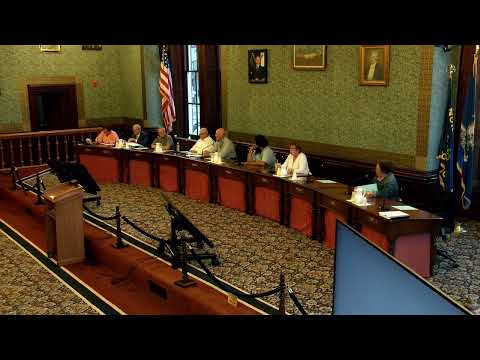
At a special meeting, the Norwich City Council voted unanimously to enter an executive session to discuss pending claims under Connecticut General Statutes §1-200(6), (8) and (9). The council invited the city manager, fire chief and corporate counsel to participate; no votes were taken during the closed session.
The Norwich City Council voted 5-0 at a special meeting to enter an executive session to discuss pending claims pursuant to Connecticut General Statutes 1-200(6), (8) and (9).
The motion to go into executive session was made on the record and then amended on council recommendation to add subsection (9) to the statutory citation. After the amendment was adopted, the council recessed to the City Manager's Conference Room with City manager John Salamone, fire chief Samuel Wilson and incorporation counsel Michael Driscoll identified to participate "during all or a portion of this executive session at the request of the city council." Alderman Betancourt and Alderman Nash were noted as joining by phone rather than in person.
Council members recorded votes by roll call. Alderman Hayes, Alderman Gould, Alderman Singh, President Pro Tem DeLucia and Mayor Nystrom all voted yes on the amendment and on the motion as amended. The minutes note the vote counts as 5 to 0. The council returned to open session later with the clerk stating that no votes were taken while the body was in executive session.
After returning from the closed session, the council moved to reconvene the special meeting and then to adjourn; both motions passed 5 to 0 by roll call.
The record shows the council used the executive session authority listed in Conn. Gen. Stat. §1-200 to discuss "pending claims." The meeting minutes do not disclose the substance of those claims; the council recorded only that the closed session occurred and that no formal votes were taken during it.
Details recorded on the public record include the statutory citation referenced, the invited participants, and the names of council members who voted to enter and to leave the executive session. No additional actions, votes or staff assignments related to the pending claims were placed on the public record in the transcript provided.