Get Full Government Meeting Transcripts, Videos, & Alerts Forever!
Get email alerts on the Outdoor Lighting Ordinance topic
No spam. Unsubscribe anytime.
Buncombe Planning Board reviews proposed outdoor‑lighting text amendments; no votes taken due to lack of quorum
Summary
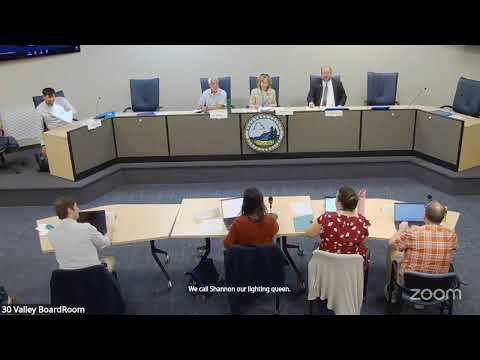
The Buncombe County Planning Board received an introductory presentation on proposed amendments to the county’s outdoor‑lighting ordinance at its Sept. 15 meeting, but did not take any formal votes because a quorum was not present.
The Buncombe County Planning Board received an introductory presentation on proposed amendments to the county’s outdoor‑lighting ordinance at its Sept. 15 meeting, but did not take any formal votes because a quorum was not present.
Planning staff presented a summary of the package — billed in the meeting as text amendments to the county zoning ordinance (referred to in the meeting as “ZPH 20 20 five‑twenty 4”) — describing changes to definitions, foot‑candle/Kelvin/height tables, exemptions, and compliance procedures. The board heard questions from members and one public commenter, and staff said it will schedule a work session in October and a public hearing in November to continue the process.
Staff framed the proposed changes as targeted updates to reduce light trespass and glare, improve energy efficiency, and clarify inconsistent or vague sections of the current ordinance, which staff said dates from a prior update in 2012. Shannon, the county planner who led the presentation, said the proposal focuses on exterior lighting for commercial and multifamily development and does not regulate single‑family residential interior lighting. "So, yes, today, we are going to talk about the proposed, lighting text amendments," Shannon said.
The staff overview identified a set of specific proposed changes that will be discussed in detail at the work session. Those highlights included: new definitions for accent lighting, facade lighting and electronic message displays; reorganizing foot‑candle, Kelvin and pole‑height standards into tables; adding graphics to illustrate technical concepts; standards requiring fixtures to be aimed and shielded with limited exceptions; updated guidance for motion‑activated lighting, street lights, sports fields and backlit signs; options to allow smaller projects to bypass full photometric plans; exemptions for gas‑flame lamps and low‑voltage landscape lighting; and removal of an as‑built drawing requirement and an outdated "10 business day" review reference.
Board members and the public focused on several recurring concerns. Bernard (Bernie) Arguier, a long‑time area resident who identified himself as having helped draft Buncombe’s original 2012 lighting ordinance, urged stricter limits on color temperature (Kelvin rating) and greater attention to dimming and lumen limits. Arguier said many cities are moving to lower Kelvin standards and recommended a county standard of about 3,000 Kelvin for most uses. "To me, there's no reason to have anyone use above 3,000," Arguier said, adding that lower Kelvin lights are widely available and reduce glare and health impacts.
Arising repeatedly in board discussion were three implementation and legal issues staff flagged for further analysis: how to treat nonconforming fixtures and sites under the state zoning code (N.C. Gen. Stat. ch. 160D, discussed in the meeting as "160D"); whether prohibitions or classifications in the draft amendments could create new nonconformities in nonresidential zoning districts; and potential statutory constraints from pending state legislation (referred to in the meeting as House Bill 171) that, if enacted, could affect how the county frames equity analyses. A board member asked staff to check whether the proposed changes could unintentionally create prohibited nonconforming situations under the definitions in 160D; staff acknowledged they had not completed that review and said they would do so before moving forward.
Staff also said Duke Energy reviewed the draft language and identified pole‑height issues; county staff reported adjusting maximum pole heights in response and said Duke indicated it can comply with the new requirements if adopted. Shannon said the county's current cutoff requirements already apply to most uses and the amendments mostly adjust and clarify those standards rather than create a wholesale dark‑sky ordinance.
Technical and policy tradeoffs were discussed. Staff described the primary measurement tools used in the ordinance: photometric plans and foot‑candle maps that show light levels across a site, and Kelvin ratings that describe color temperature. Staff noted that photometric plans are currently required for many commercial projects but can be costly; the proposal would create smaller‑project options to reduce that burden. Arguier and some board members suggested additional conservation measures such as dimming parking‑lot lights after late evening hours and using lumen caps for dusk‑to‑dawn fixtures so applicants are not forced to interpret foot‑candle calculations.
Board members also asked about observatory protection. Shannon said the proposals are not a dark‑sky ordinance but would offer higher protections in rural areas; staff said they considered local observatories, including UNC Asheville’s observatory, and that more stringent measures would be feasible in rural zones while allowing more flexibility in commercial cores. Arguier, who said he helped design UNC Asheville’s observatory, recommended coordination with the city of Asheville and with observatory stakeholders to further limit higher‑Kelvin lighting near viewing sites.
Next steps: staff will prepare a memoran-dum with source references for the equity analysis and follow up on the legal review under 160D and the status of House Bill 171. The planning staff confirmed they will schedule a focused work session in October to dig into the draft text and a public hearing in November where the public can testify and the board may take action if a quorum is present. The board did not approve the agenda or minutes and did not take any formal action on the amendments at the Sept. 15 meeting.
The discussion left several policy choices to be resolved in upcoming meetings: where to set Kelvin limits for different zoning contexts (residential, commercial, sports fields), whether to require dimming or lumen caps for late‑night hours, and how to treat existing nonconforming fixtures under state law. Staff and at least one public commenter signaled support for lower Kelvin ratings and for creating less burdensome options for small projects; board members asked staff to return with legal analysis and comparative examples at the next work session.
For now, the county’s lighting ordinance remains unchanged; the planning staff will return to the board with a more detailed draft, legal analysis and options for standards and exemptions at the scheduled follow‑up meetings.