Get Full Government Meeting Transcripts, Videos, & Alerts Forever!
Get email alerts on the Battery Energy Storage topic
No spam. Unsubscribe anytime.
Residents urge caution on proposed battery storage project, citing fire safety and planning gaps
Summary
Public commenters and some board members told the Goshen Town Board they are concerned about the safety and planning status of a proposed New Leaf Energy battery energy storage project; speakers said industry fire-suppression claims are inadequate and planning review is incomplete.
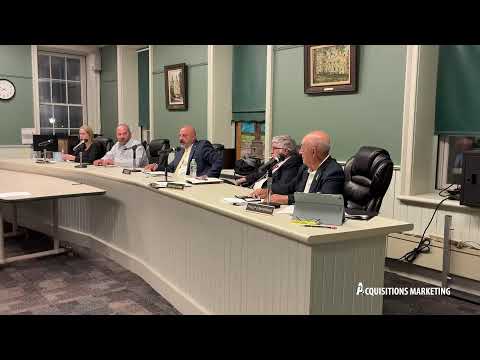
Several residents told the Goshen Town Board on Sept. 11 they are concerned about safety, evacuation risk and the planning status of a proposed battery energy storage system (BESS) application from New Leaf Energy.
"A battery fire is not like burning paper or wood. A battery fire is an exothermic chemical reaction that makes its own oxygen. Foam doesn't work. Water doesn't work," resident Chris Haley said during public comment, citing guidance from the National Fire Protection Association and firefighter experience.
Haley said the board and fire officials should recognize that current suppression methods may not contain lithium-ion battery fires and that, in some incidents, respondents have advised letting the battery burn while evacuations proceed. He said that "best available" technology is not synonymous with "safe" and urged the board and planning authorities to proceed cautiously.
Board members and commentators described the project's planning timeline as in flux. Speakers said New Leaf Energy has presented to the planning board and requested four variances, including setbacks and a 100% variance from a road-frontage requirement; the zoning board of appeals (ZBA) recently held a meeting but did not have a quorum to take final action. A board member said the project has not returned to the planning board for final review.
Speakers noted that if the planning board approves the application, the town board will later see related requests (such as a special-use permit) and should be prepared to ask detailed safety and emergency-response questions. One board member said a master-plan review team recommended removing an overlay district used to allow battery storage in order to limit locations where such projects could be sited.
No formal board decision was made on the project during the meeting. Speakers asked the planning board and ZBA to complete their reviews and for staff to bring any items requiring town-board action back for more detailed examination of suppression, evacuation plans and environmental impacts.
Ending: The town board heard public safety concerns and status updates; planning and zoning review were reported as ongoing and residents asked the board to withhold approvals until safety and siting questions are addressed.