Get Full Government Meeting Transcripts, Videos, & Alerts Forever!
Get email alerts on the Housing topic
No spam. Unsubscribe anytime.
Bangor presentation details housing shortfalls, public‑health concerns and workforce trends
Summary
City staff presented a five‑year consolidated plan needs assessment on Aug. 18, identifying high housing cost burden, elevated overdose and HIV case rates, and workforce and demographic trends that will inform federal funding allocations and a strategic plan due this fall.
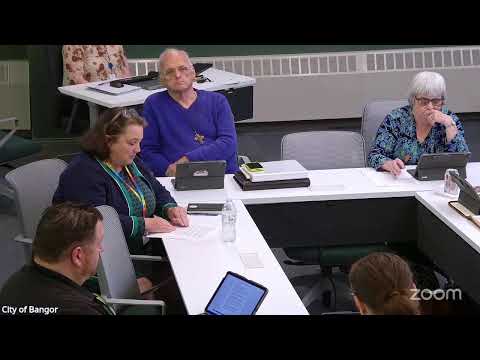
City staff presented a five‑year consolidated plan needs assessment to the Bangor City Economic Development Committee on Aug. 18, outlining housing, public‑health and workforce trends that the city plans to use when applying federal funds such as Community Development Block Grant dollars.
Robin Sedick, who led the presentation, described the work as “a culmination of about a year of research” and said the consolidated plan is used by the city and other entities to align with federal funding requirements. Sedick told the committee the plan uses local data where available and otherwise extrapolates from Penobscot County and national sources such as the American Community Survey.
Key housing findings include that 32 percent of Bangor households experienced at least one severe housing problem (substandard facilities, overcrowding or cost burden). Sedick said 16 percent of households spend more than half their income on housing. She reported that an estimated 292 people experienced homelessness on any given day in 2024; of those, 210 (72 percent) were sheltered and 82 were unsheltered.
The presentation highlighted disproportionate need among nonwhite households and extremely low‑income renters. Sedick said renters are roughly twice as likely as owners to experience housing problems and that 24 percent of renter households are severely cost‑burdened. The Bangor Housing Authority reported about 700 public housing units and a wait list of more than 1,000 families, Sedick said, noting roughly 700 of those on the wait list are seniors.
On public health, Sedick reported elevated rates of drug overdose deaths and emergency responses: she said there were 490 fatal drug overdoses in 2024 (Penobscot County accounted for 18 percent of that total) and that about 1,200 EMS incidents annually required naloxone for suspected overdose. She also presented Maine CDC figures on a recent HIV outbreak, saying there were 36 new HIV cases in 2023 and 26 new cases in the first nine months of the current year; she said 88 percent of recent cases involved persons who were unhoused within one year.
Sedick described demographic and workforce trends: Bangor’s population was estimated at about 31,000 in 2024, the city has a median age around 40.7, and household composition shows a large share of single‑person households and households with older adults. Major industry drivers include health care and education; Sedick reported the region employs substantial numbers in health services and education and that many jobs require at least an associate degree.
Committee members raised policy and strategic questions. Councilor Fish said the presentation was “a little bit depressing,” and Councilor Bender urged more aggressive action on affordable housing, citing state targets for new housing production. Committee members discussed the possibility of a city affordable‑housing bond to attract private developers and increase the supply of subsidized units.
Sedick said next steps include drafting a strategic plan that will combine the needs assessment with infrastructure, public‑facility and broadband analyses; she told the committee staff expect to produce a draft around November and share it with the committee.