Get Full Government Meeting Transcripts, Videos, & Alerts Forever!
Get email alerts on the Immigration Enforcement topic
No spam. Unsubscribe anytime.
Community members demand Houston end HPD collaboration with ICE, cite safety and trust concerns
Summary
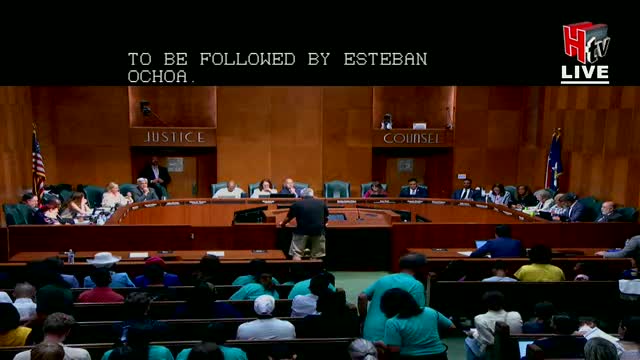
At the July 29 Houston City Council meeting, dozens of residents, advocates and service providers urged the council to end Houston Police Department cooperation with U.S. Immigration and Customs Enforcement, citing increased fear among immigrants, reported ICE detentions tied to traffic stops, and declines in 911 calls from immigrant communities.
A sustained wave of public comment at the July 29 Houston City Council meeting called for the city to end cooperation between the Houston Police Department (HPD) and U.S. Immigration and Customs Enforcement (ICE), with speakers urging policy changes, transparency and reallocation of resources to legal and social services.
Why it matters: community members and nonprofit leaders said HPD's cooperation with ICE erodes trust, discourages reporting of crimes and emergencies, and causes trauma and family separation in immigrant communities.
Speakers recounted local incidents and cited reporting on HPD's contacts with ICE. Christopher Rivera of the Textile Rights Project said, "From 02/2002, there have been over 2,600 immigrant drivers who have been deported due to non safety traffic stops," and that HPD called ICE 19 times from February 2022 to February 2024 and "this year, that number tripled to over 58 calls." Multiple speakers said ICE is using civil warrants that are not reviewed by judges and that HPD's practice of contacting ICE on NCIC database "hits" is creating an atmosphere of fear.
Advocates pressed for concrete policy steps: ending proactive HPD contact with ICE for civil NCIC matches, canceling city contracts or data-sharing with ICE, accepting the Harris County enhanced library card as municipal photo ID, investing city dollars in legal representation and "know your rights" education for immigrants, and making non-safety traffic violations secondary to reduce deportations stemming from routine stops.
Healthcare and education workers described the human consequences. A psychiatric resident said that patients fear seeking care if interactions with law enforcement can lead to immigration enforcement; educators and parents described students afraid their parents will be taken. "When local police act as an immigration agent, trust in law enforcement plummets," said Stephanie Padilla, co-founder of Immigrant Youth Texas.
Opponents of city cooperation with ICE included a broad coalition: grassroots organizers, legal aid clinics, faith leaders and public-health professionals. Speakers referenced reporting from the Houston Chronicle and cited specific cases they said showed alarming conditions in detention and the use of non-safety stops to initiate immigration enforcement.
Council members did not announce a policy change during the July 29 meeting. Several council members were noted as having briefed with advocates in advance; advocates asked the council to adopt ordinance-level protections or departmental directives that would bar HPD from proactive collaboration with ICE and to increase transparency around any existing contacts.
Ending: Speakers closed by asking the council to take immediate, written steps to end or legally restrict HPD cooperation with ICE, allocate funds for immigrant legal services, and accept alternate municipal IDs to reduce the risk that routine encounters lead to detention and deportation.