Get Full Government Meeting Transcripts, Videos, & Alerts Forever!
Get email alerts on the Automated License Plate Readers topic
No spam. Unsubscribe anytime.
Hays County tables proposed expansion of Flock Safety license-plate readers after public opposition
Summary
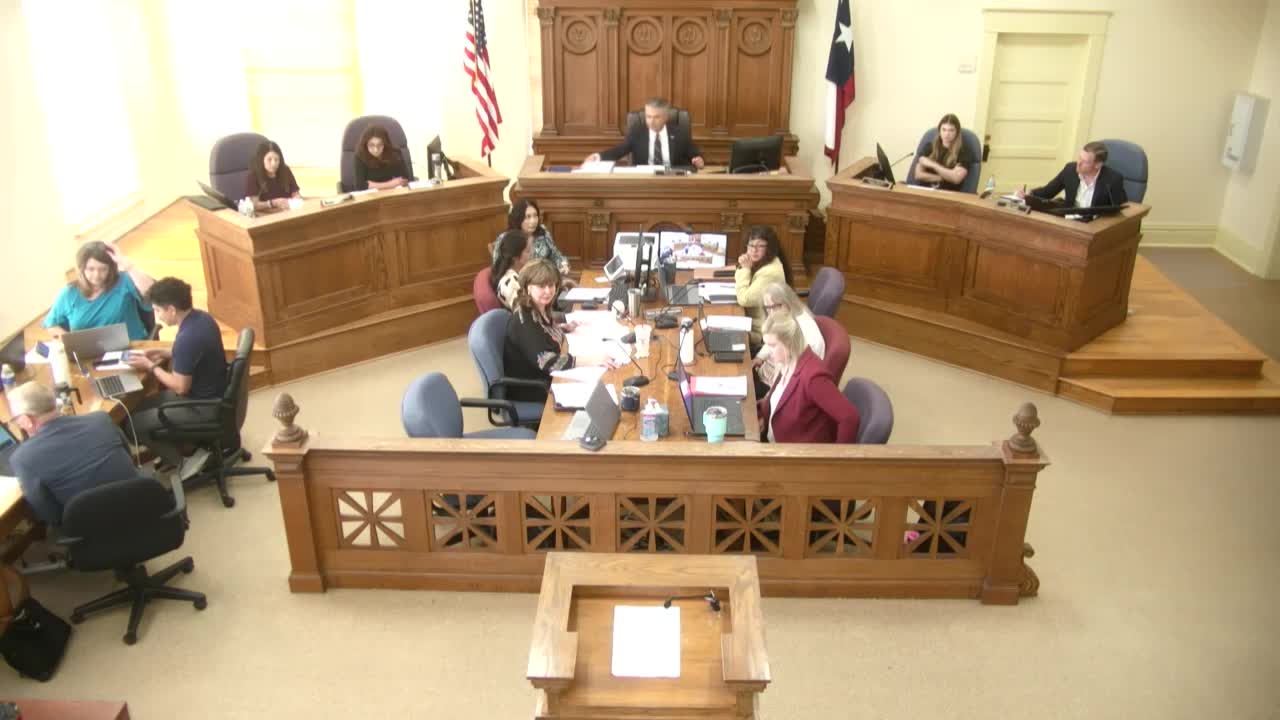
Hays County Commissioners Court on July 29 tabled consideration of an amendment to expand its agreement with Flock Group Inc., the maker of Flock Safety automated license-plate readers, following extended public comment and debate over surveillance, immigration enforcement and public safety.
Hays County Commissioners Court on July 29 tabled consideration of an amendment to expand its agreement with Flock Group Inc., the maker of Flock Safety automated license-plate readers, following extended public comment and debate over surveillance, immigration enforcement and public safety.
The item (G42) would have authorized “amendment number 2 order form between Hays County and Flock Group Inc., related to Flock Safety equipment approved by the commissioner’s court on 02/11/2025.” The sheriff told the court the county planned to pay for the additional equipment with FY25 rural law-enforcement grant funds. After public commenters, council members and county officials spoke, the court decided to table the item for further community discussion for about two weeks.
Why it matters: automated license-plate readers (ALPRs) photograph license plates and make them searchable; privacy advocates say that builds databases that can be queried later by many agencies, while law enforcement calls them an important investigative tool. The debate brought competing evidence and local examples: opponents cited national reporting and local city council actions; the sheriff and other supporters described cases they say the technology helped solve.
What commenters said - Sam Benavides, a public commenter, urged the court to “reject all expansions of automated license plate readers which photograph thousands of license plates per minute and make the data available to over 600 law enforcement agencies across the country for 30 days,” and warned the system “boasts 10,000,000,000 plate reads per month,” a figure he read from the contract backup. - Miles Martin of Mano Amiga told the court: “I’m asking you to vote no on the expansion of the flock safety cameras through the sheriff’s office.” - Eric Martinez, executive director of a Hays County nonprofit, told commissioners: “We’re talking about a system that quietly tracks where we drive, when, and how often, automatically every day,” and he said the county should consider budget tradeoffs and the technology’s documented use in immigration enforcement in other jurisdictions.
What law enforcement and city officials said - Hays County Sheriff Anthony Hippolito defended the devices as public-safety tools: “I don’t look at flock cameras as mass surveillance. This is 100% about public safety,” he told the court, and said the county has solved violent crimes with camera evidence. - Amanda Rodriguez, a San Marcos city council member, described her council’s recent review and said the city found “15,000,000 searches of our cameras” in a recent period and that some outside agencies were querying that data; she said that experience led San Marcos to reject expansion locally. - Commissioner Inglesby, who sponsored bringing the item forward, said the technology has helped solve local cases and that his precinct has seen measurable public-safety benefit.
Court action and next steps Judge and commissioners agreed to pause action and return the item for further discussion. The court’s stated next step was to table the amendment for about two weeks so staff, commissioners, the sheriff’s office and community stakeholders can meet, review policies and provide additional information before any vote. The judge said the pause was intended to give commissioners time to meet privately with the sheriff and to arrange broader community engagement.
Context and points of contention Supporters argued ALPRs help investigators identify vehicles in violent and property crimes, pointing to cases where camera hits led to arrests. Opponents pressed two recurring concerns: (1) that widespread plate-read databases can be queried by outside agencies (including immigration enforcement) and (2) that county funds used for surveillance devices could instead be directed to social services, housing, or public-health programs that they say address drivers of crime.
The court did not approve the contract amendment; it remains pending. Commissioners asked the sheriff to provide more detail on current camera locations, data-sharing agreements and the department’s audit and access policies before the item returns.
A timeline for follow-up: the court indicated it would revisit the item in roughly two weeks and asked staff to coordinate additional meetings that include community representatives, law enforcement and city officials. The county did not adopt the amendment at Thursday’s meeting.