Lifetime Citizen Portal Access — AI Briefings, Alerts & Unlimited Follows
UN humanitarian office warns of acute needs after violence, drought and wildfires in Syria’s As‑Suwayda
Loading...
Summary
The UN Office for the Coordination of Humanitarian Affairs told the Security Council that recent violence in As‑Suwayda has displaced roughly 175,000 people and compounded needs already driven by drought and wildfires. OCHA sought $3.2 billion for the response through year-end and warned of severe funding shortfalls.
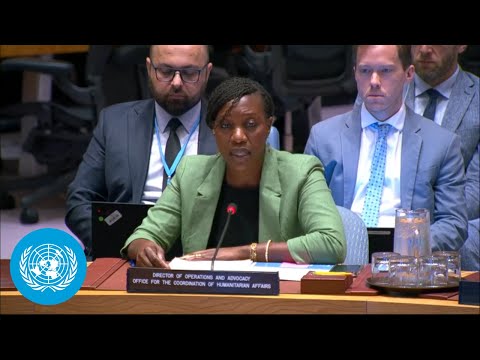
Edem Basudno, speaking for the UN Office for the Coordination of Humanitarian Affairs (OCHA), told the Security Council that recent violence and climatic shocks in Syria have sharply increased humanitarian needs, particularly in the southern governorate of As‑Suwayda.
"Recent weeks have indeed provided a stark reminder that Syria is not just one of the world's largest humanitarian crises, but also subject to violence and climatic shocks that compound the country's needs," Basudno said in her briefing.
Basudno said the fighting in As‑Suwayda has displaced an estimated 175,000 people, "both within the area and to surrounding governorates," and described the figure as representing "a third of the population in a governorate, where two thirds of people are already in need of humanitarian assistance." She reported that women, children and medical personnel are among hundreds of people killed, and that the World Health Organization had confirmed the deaths of two doctors and documented obstruction and attacks on ambulances and hospitals.
Water infrastructure in parts of As‑Suwayda has been critically damaged, Basudno said, and major cuts to electricity and disruptions to food, fuel and market supplies have been reported. The main hospital in the affected area is described as overwhelmed, with severe shortages of medicines, medical personnel and electricity.
OCHA has engaged with parties on the ground to try to secure access for relief deliveries, Basudno said. She said a 32‑truck convoy from the Syrian Arab Red Crescent (SARC), carrying aid from the World Food Programme, UNICEF and other partners, reached As‑Suwayda on July 20. A second SARC convoy with food, wheat flour, fuel, medicines and health supplies also reached the area later in July, and a third convoy with fuel for hospitals and bakeries, food, surgical kits and shelter supplies arrived on the day of the briefing.
"Those caught up in the fighting must be protected and be allowed to move freely in search of safety and medical treatment," Basudno said, urging parties to facilitate expanded and sustained humanitarian access and to protect aid workers and essential services.
Alongside the violence, Basudno said Syria has faced destructive wildfires in the coastal governorate of Latakia that displaced more than 1,100 people and destroyed large areas of agricultural land. She said the fires were worsened by the worst drought‑like conditions Syria has seen in 36 years, with key reservoirs at historically low levels.
OCHA and partners are providing food, clean water, critical household items and mobile health and nutrition teams in affected areas, Basudno said. She noted a $625,000 allocation from the Syria Humanitarian Fund is supporting SARC emergency response in the Latakia fires.
Basudno also described longer‑term pressures as return movements continue: as of mid‑July she said more than 1,500,000 internally displaced persons had returned to their home areas and roughly 700,000 refugees had returned from abroad, placing additional strain on health, water and education services.
On funding, Basudno said the UN had issued an extension of its humanitarian response plan and was seeking $3.2 billion through the end of the year, a reduction of nearly $1 billion from its 2024 ask. "We have received only 12% of the ask," she said, and warned that without further funding the gap between needs and assistance would widen.
Basudno closed by asking the council to prioritize three steps: protection of civilians and humanitarian workers and unfettered access to medical care and relief; continued investment in the large‑scale humanitarian operation; and mobilization of resources for reconstruction and recovery to help communities return to sustainable living conditions.
The remarks combined operational updates, reported casualty and displacement figures, and appeals for funding and access; no formal decisions or votes were recorded during the briefing.