Get Full Government Meeting Transcripts, Videos, & Alerts Forever!
Get email alerts on the Micromobility Scooters topic
No spam. Unsubscribe anytime.
Houston officials propose scooter-free zone downtown amid public safety concerns
Summary
City staff on Thursday recommended creating a scooter-free zone in Houston’s Central Business District, East Downtown and parts of Midtown, saying accidents and enforcement challenges have increased since 2021 and that a local regulatory framework does not yet exist.
City staff on Thursday recommended creating a scooter-free zone in Houston’s Central Business District, East Downtown and parts of Midtown, saying accidents and enforcement challenges have increased since 2021 and that a local regulatory framework does not yet exist.
Maria Irshad, deputy director of the Administration and Regulatory Affairs Department, told the Quality of Life Committee the administration will recommend ordinances amending chapter 45 of the city code to ban motorized scooters from the public right of way in the designated area. “Our recommendation to city council will be… amendments to chapter 45 that would create a scooter free zone,” Irshad said.
The proposal drew lengthy public testimony at City Hall. Hotel managers, Discovery Green representatives and convention center officials described recurring late‑night “takeovers,” property damage and safety incidents that they say have deterred visitors and increased security costs. Todd Holloman, vice president for venues and events at Houston First, said scooters have been “reckless recreation” in the convention campus and that staff and guests face regular hazards. “Scooters are not used as transportation. Scooter use is actively dangerous to pedestrians and not complimentary,” Holloman said.
Why it matters: staff and police described a pattern of growth and concentrated harm downtown. City presenters and HPD officers said most reported accidents and enforcement activity are centered in and near downtown and that unregulated, storefront and pop‑up vendors complicate enforcement. Maria Irshad and Captain Melissa Countryman of the Houston Police Department urged the committee to consider either a ban in the densest areas or a tightly permitted program, noting the administration views the status quo as unsustainable.
What staff presented: Irshad summarized prior 2021 ordinance changes that prohibited sidewalk rentals and authorized the city to remove devices left in the public right of way. Captain Countryman described enforcement work and a targeted task force earlier this year, reporting more than 330 rider warnings, 13 vendor citations, the seizure of about 129 scooters and multiple arrests and vehicle tows during January–March operations. The presenters cited Texas Department of Transportation (TxDOT) crash data showing more recorded scooter accidents since 2021, including multiple fatalities they said occurred in recent years; they also said 53 percent of recorded accidents were concentrated in downtown and adjacent areas.
Options discussed: staff outlined three approaches — maintain the status quo, establish a permitted regulatory program (as in Austin, Dallas and San Antonio) or create a scooter‑free zone for the most affected neighborhoods. Irshad said some peer cities use permits, geofencing, speed governors and rider verification to limit harms, while others internationally have rolled back or limited scooter programs. She told the committee the Texas Transportation Code authorizes municipalities to ban scooters from the public right of way when public safety requires it.
Public comment and competing views: more than three dozen speakers filled the public comment list; the committee limited remarks to 90 seconds to accommodate the crowd. Testimony split between calls for an immediate ban to restore safety and calls for a regulated permit program that would allow compliant operators and commuters to continue using scooters.
- Pro‑ban testimony: Hotel and convention stakeholders, Discovery Green leaders and many residents described nightly disorder, lawn damage, thefts and occasional gun violence in areas where scooters and three‑wheel recreational vehicles congregate. Catherine Lott, president and executive director of Discovery Green, said the park has spent donor funds and increased security to respond to repeated damage and violent incidents: “We do not have a scooter issue. We have a violence issue. And that scooter culture has realized that there is lawlessness allowed,” she said.
- Pro‑regulation testimony: Brick‑and‑mortar scooter operators and representatives of national shared micromobility companies urged permitting and enforcement tools rather than a ban. Speakers representing local rental shops described ID checks, age restrictions, training, and platform features such as geofencing and speed caps; operators and vendors said a permitted program would allow the city to ban or suspend individual riders and remove illicit vendors. A Bird representative requested time to work with staff on ordinance language that would leave a path to a city‑permitted program.
Council member questions and staff responses: council members pressed on enforcement capacity, whether the ban would be time‑limited, the effect on people who use personal scooters to commute, and the risk that pop‑up vendors would relocate to other neighborhoods. Captain Countryman said HPD can enforce a clear ban more easily than the current patchwork approach but acknowledged enforcement requires resources and that vendors sometimes move to private lots where city authority is limited. Irshad said ordinances are amendable and the city could later pursue a regulated program if officials decide to do so.
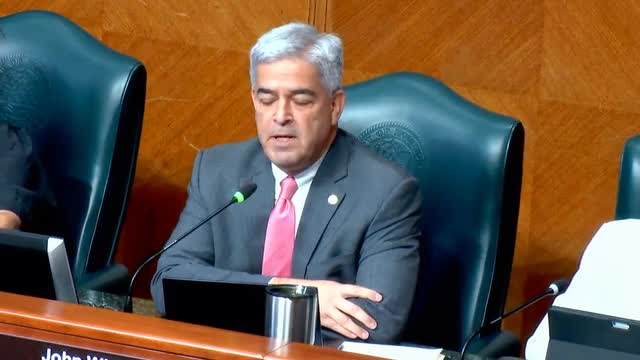
Next steps: No ordinance vote occurred at the meeting. Staff said the presentation was intended to solicit feedback and that language will be drafted and returned to council. Chair Julian Ramirez described the session as an informational and public‑feedback step; he closed the meeting after hearing public comment and noted further discussions and potential ordinance language would follow.
Context and limits: presenters relied on TxDOT crash reports and local enforcement tallies; TxDOT data capture only collisions involving a vehicle or property damage, and presenters said trip‑level exposure data for Houston (number of devices or rides) are not available because vendors are not currently permitted to share that information. Several speakers urged the city to target illegal, unpermitted operators specifically, saying a ban would punish lawful small businesses and commuters.
Where the debate stands: the administration recommended drafting amendments to create a downtown scooter‑free zone. Council members and community stakeholders expressed sharply divided views: some urged immediate action to protect residents and visitors and stop repeated nighttime lawlessness; others recommended building a permitted, enforceable micromobility program that can require geofencing, ID verification, speed controls and fines for noncompliant operators. No formal action or vote was taken at the July 24 committee meeting.