Center Grove presents 2025 student performance data: gains in early reading, uneven growth across grades
Loading...
Summary
District officials reported higher third-grade iRead pass rates and growth among some special-education cohorts, while overall iLearn proficiency remains inconsistent. Administrators outlined curriculum alignment, MTSS, co-teaching and UFLI phonics training as next steps.
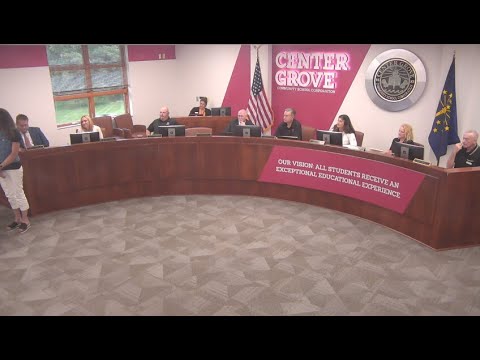
Dr. Simmers provided the board with an overview of Center Grove's 2025 student performance data on Aug. 21, highlighting improvements in early reading while noting inconsistent performance across grade levels and subject areas.
Dr. Simmers told trustees the district saw an increase in third-grade iRead passing rates from 92.5% in 2024 to 95% in 2025. Three elementary schools'Center Grove, North Grove and Sugar Grove'reached the district's 95% goal; Walnut Grove and Maple Grove were at about 94%. Officials also reported growth in identified special-education students at Maple Grove (52.6% to 75%), Walnut Grove (43.5% to 63.2%) and Sugar Grove (70% to 82.4%). Second-grade passing for iRead rose from 58% to 74.6%.
Simmers attributed gains in early reading to targeted efforts including use of the University of Florida Literacy Initiative (UFLI) phonics program in grades K'2, professional development and a district reading specialist, as well as a consistent intervention curriculum and summer programming deployed for students who did not initially pass iRead. The district emphasized it will continue to use reading plans and state-allowed exemptions for eligible students.
The presentation also covered changes in state testing and accountability: revisions to the Indiana Academic Standards in 2020 and a legislative reduction in 2023; expanded ILEARN checkpoints; and statewide administration of iRead for second graders in 2025. Simmers said the district will implement the ILEARN checkpoints (three checkpoints plus a summative) for grades 3'8 in the coming year.
Beyond early reading, Simmers noted inconsistent cohort growth across grades and subjects and identified gaps for English-language learners and special-education students. To address those issues, the district plans to: implement a guaranteed and viable curriculum aligned to assessment blueprints; expand MTSS and RTI interventions; strengthen co-teaching in elementary schools; use student-centered coaching and PLCs to build teacher efficacy; and hold leaders accountable through measurement and monitoring structures.
On the SAT, the district remains above state averages but has seen declines in math performance; administrators said high-school staff are reviewing curriculum alignment using SAT blueprints. Simmers also said biology ILEARN and AP participation improved and that the district's unofficial 2025 graduation rate is about 99% (data not yet certified), up from a certified 95% in 2024.
Simmers framed the data as part of an ongoing improvement story: "This data is real, but so is our effort, our heart, and our determination," she told the board, adding that leadership will use the results to target resources and strengthen instruction. Trustees asked for continued disaggregation of results by content area and subgroup and for measured goals; Simmers said school improvement plans already set content-specific targets and that district goals include modest year-over-year proficiency gains.