Lifetime Citizen Portal Access — AI Briefings, Alerts & Unlimited Follows
Senate committee clears SB 830 to fast-track Sutter Health hospital in Emeryville
Loading...
Summary
The Senate Environmental Quality Committee voted 5-0 to concur in Assembly amendments to SB 830, a bill to provide CEQA judicial streamlining and designate Emeryville as lead agency for Sutter Health's proposed hospital campus; sponsors say it preserves environmental safeguards and requires a community benefits agreement.
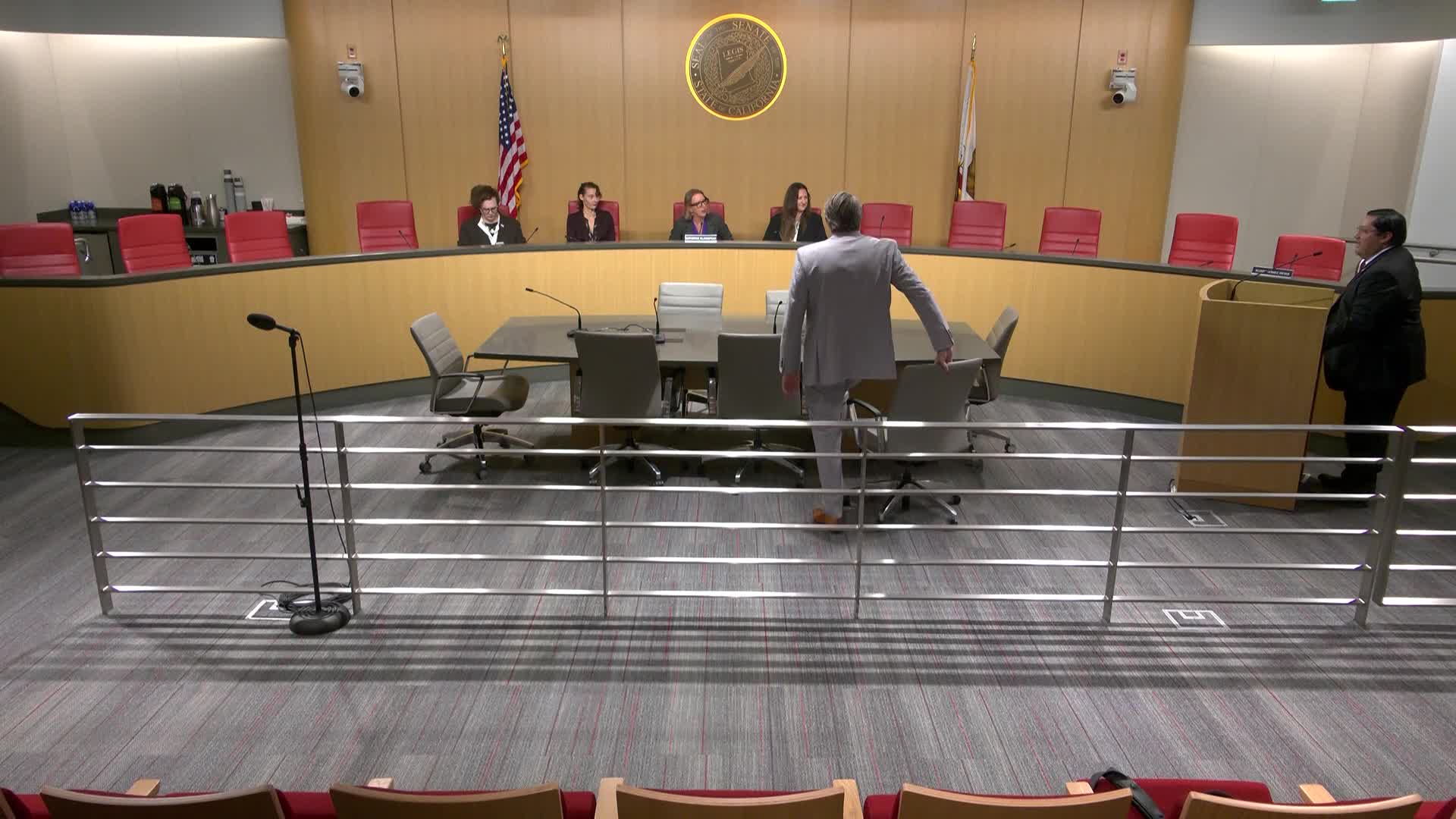
The California State Senate Environmental Quality Committee voted 5-0 on SB 830 to concur in Assembly amendments, moving the bill forward after testimony that it would accelerate construction of a new Sutter Health hospital campus in Emeryville.
Senator Ereguene, who presented the measure as a district bill, told the committee, "This bill will establish a CEQA streamlining process for Sutter Health's new hospital campus in Emeryville and would designate the city of Emeryville as a lead agency for CEQA review." She said the bill responds to local capacity risks after prior hospital closures and state seismic mandates that will close Alta Bates in 2030.
The bill's sponsors and supporters said the expedited review is intended to avoid a gap in acute-care access. "We cannot afford to lose healthcare access in the Northern East Bay Area," Ereguene said, and she added the Emeryville campus would provide services within a "15 minute drive from home or work." She said Sutter Health must meet conditions to qualify for judicial streamlining, including a community benefits agreement with the city of Emeryville, a net-zero standard, LEED certification or similar sustainability measures, and creation of "500 new construction jobs." Ereguene noted the bill passed the Assembly 79-0.
Joe Greggert, vice president of state government affairs for Sutter Health and a sponsor witness, said the organization "is very committed to our project in Emeryville" and urged committee members to vote aye. Chris McCailey, representing the Civil Justice Association of California, also voiced support.
Committee members and the chair discussed the broader context of CEQA reforms and stressed maintaining environmental protections and community input while permitting projects that meet rigorous environmental standards to move more quickly through the courts if sued under CEQA. The chair framed the measure as modeled on prior legislative streamlining tools used for major economic development projects in California.
When quorum was achieved after a recess, Senator Mangivar moved to concur in the Assembly amendments. The roll call recorded five ayes: Senator Blake Spear (aye), Senator Gonzales (aye), Senator Minjivar (aye), Senator Perez (aye) and Senator Reyes (aye). The motion passed 5-0.
Committee testimony noted the project is a major investment; Ereguene said the hospital "is going to cost over $1,000,000,000." Supporters and the senator emphasized the project's job creation and sustainability commitments as conditions of the streamlined review. No primary opposition witnesses appeared in the room during the hearing.
Votes at a glance: SB 830 (Sen. Ereguene) '025 (concur in Assembly amendments): motion that the Assembly amendments be concurred in; mover: Senator Mangivar; second: not specified; outcome: passed (5-0). Recorded ayes: Blake Spear, Gonzales, Minjivar, Perez, Reyes.
What the committee did not decide: The committee did not reject or alter the bill's substantive conditions in the hearing record; the committee concurred in Assembly amendments and advanced the bill. The transcript does not specify final funding sources or the precise timeline beyond the 2030 seismic-driven closure referenced for Alta Bates.
The Environmental Quality Committee adjourned after the vote; the bill will proceed through the Senate process as the Legislature's schedule allows.