Get Full Government Meeting Transcripts, Videos, & Alerts Forever!
Get email alerts on the Urban Agriculture topic
No spam. Unsubscribe anytime.
TIDA launches 10‑to‑12 month planning effort for Urban Agricultural Park; site size reduced to about 13 acres
Summary
TIDA staff described a plan to produce a program, concept design and implementation strategy for an urban agricultural park that was originally envisioned at ~23 acres; earlier changes to accommodate a sports park and potential Job Corps integration reduce available area to about 13 acres.
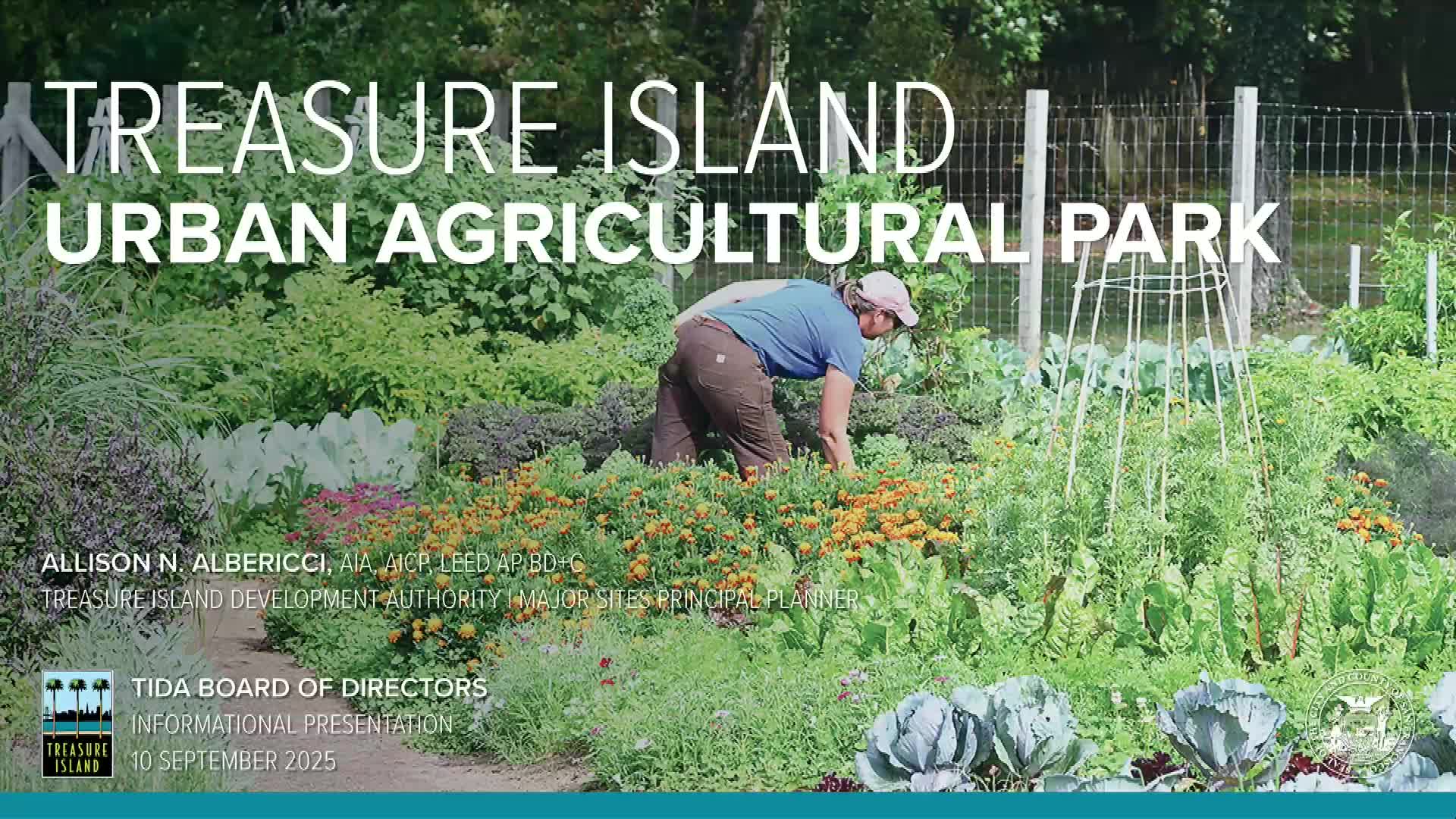
Treasure Island Development Authority staff presented an informational overview on Sept. 10 of a newly initiated implementation planning effort for the island’s Urban Agricultural Park. The project will produce a vision, conceptual design and a phased implementation and funding plan over roughly 10–12 months for board consideration.
The agricultural park is described in the adopted development plan as a 20–25 acre facility but recent project changes reduced the developable area. Staff said a 2024 expansion of the sports park to host Bay FC’s training facility and consideration of integrating a Department of Labor Job Corps campus reduce the commonly available agricultural parcel to approximately 13 acres. The planning team will study whether that area can meet the program goals and whether phased or smaller‑scale pilot projects are appropriate.
“Allison Alberici, major sites principal planner with TIDA, said the project will create a program, conceptual design and implementation plan for consideration and endorsement by the Board and subsequent integration into the development project,” staff said in the presentation. The planning scope includes evaluating a mix of uses — community gardens, production farming, native plant nursery, horticultural therapy, apiculture, agritourism and direct sales — and developing governance, operations and funding strategies. The team also plans to explore shared infrastructure for production and plant propagation to support island maintenance needs.
Staff identified several precedents for study and outreach partners to inform planning, including Rec and Park, the Planning Department, the Alameda County Resource Conservation District and operators of successful urban farms and native plant nurseries. Examples cited for study included Alemany Farm, Presidio native plant nursery and Urban Adamah in Berkeley; staff said those cases illustrate models for food security, native plant propagation and community programming.
TIDA staff said the work will include stakeholder outreach to on‑island groups (for example, Indigenous permaculture practitioners and the Treasure Island Job Corps), technical advisors, and community workshops. A collaborative concept design workshop with partners and stakeholders is planned before the end of the year, with a draft vision and program targeted for the island meeting in November and a preferred alternative and detailed implementation work in 2026.
No board decision was required; staff sought guidance on outreach targets, precedents and program priorities and will return with a draft concept and implementation recommendations for board review.