Gold Beach library seeks state development funds for solar canopies, batteries to reach net‑zero and emergency readiness
Loading...
Summary
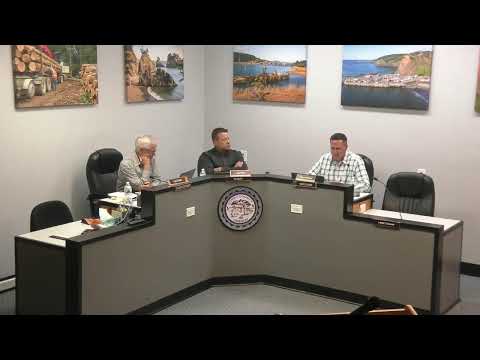
Gold Beach — Curry Public Library District officials on Aug. 6 outlined a solar canopy and battery project intended to make the Gold Beach library net‑zero over a year, add on‑site battery backup for outages, and provide shaded gathering and covered‑parking canopies that could also collect rainwater and provide device‑charging during emergencies.
The project team told the Curry County Board of Commissioners the development phase will be competitive and requested letters of support from county officials and community members as part of the application materials. Project managers said an initial intake deadline had been August 15 but was later extended to Sept. 15.
The presentation and why it matters
Jeremy Skinner, director of the Curry Public Library District, said the library already has rooftop panels and batteries that supply roughly 7–8 percent of its current electricity use and that the proposed buildout would produce as much electricity as the library uses in a year, with a modest cushion for additional public charging. Shannon Souza of Soul Coast Consulting, the project manager, said the development design divides the system into three canopies (covered walkway, gathering area, and covered parking) so the project can be constructed in phases if full funding is not awarded.
Souza said the system is roughly a 100‑kilowatt install and would include a stack of batteries sized to support prioritized loads during outages. Project staff described operational priorities for the batteries that include lighting, communications/device charging for the public, limited interior support if the library functions as a local command or gathering center, and restricted EV charging for public vehicles that support emergency services.
Community resilience, utility policy and stormwater
Souza and Skinner placed the library work in a broader regional resilience context, noting the South Coast receives electricity from the Bonneville Power Administration through the local cooperative and that state energy planning is emphasizing distributed resilience. The presenters said the project was an awardee of state planning funds and now seeks development funds administered by the Oregon Department of Energy. They described working with Coos‑Curry Electric Cooperative (CCEC) to ensure the cooperative’s net‑metering and operations and maintenance (O&M) needs are addressed so other ratepayers are not adversely affected.
The canopy design includes gutters and optional bioswales/rain gardens to capture runoff from the sloped site. Presenters said stormwater integration is in the concept budget and can be done concurrently with canopy foundations.
Funding, timeline and how the public can help
Presenters told commissioners the original planning program pool started at about $50 million in 2021 and, at the time of the presentation, roughly $12 million remained available for development awards; they warned the development competition is “highly, highly competitive.” Souza said applications were being accepted through Sept. 15 and the project team was asking the county and residents to submit letters of support; sample letters were available from the project team and Skinner said the library would post materials to its Facebook page and email templates on request.
What presenters did not say
Presenters described technical sizing, community engagement and priorities, but did not commit the county to any funding obligation. They also said final award decisions would depend on the technical competitiveness of applications and on demonstrated community support.
Sources and next steps
Skinner said he would circulate sample support letters via email; Souza left contact information and encouraged community members and the board to submit letters ahead of the Sept. 15 intake deadline. Commissioners did not vote on the presentation but thanked the presenters and asked staff to post outreach materials, and Skinner said he would email the materials to commissioners and to the library’s social channels.
Ending
Project managers described the plan as a replicable “proof of concept” for coastal energy resilience. They asked residents and the commissioners to submit letters of support to strengthen the development grant application.