Get Full Government Meeting Transcripts, Videos, & Alerts Forever!
Get email alerts on the Library Funding topic
No spam. Unsubscribe anytime.
Highland officials weigh tax increase, service cuts as library funding falls behind inflation
Summary
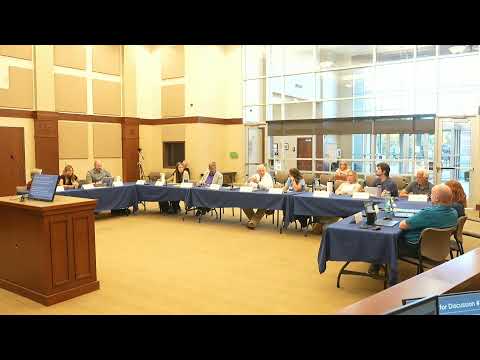
Highland City Council and the library board discussed a multi-year funding shortfall for the Highlands View Library on July 29, weighing a property-tax increase, service reductions, and other options while directing staff to draft a better survey question and participate in director hiring.
Assistant City Administrator and Community Development Director Jay Bachman told the Highland City Council and library board on July 29 that the city’s dedicated library tax, established in February 2007, has not kept pace with inflation and that the library now faces a funding shortfall that could require either a revenue increase or cuts to services.
“We are collecting $65.77 per household, instead of the inflation adjusted $90.53,” Bachman said, summarizing the fund’s finances and the effect of 17 years of inflation on the dedicated tax rate. He and library director Donna Carden laid out usage and budget data showing large increases in demand while revenues remained largely tied to the fixed tax rate.
The discussion matters because the Highlands View Library is operating at current service levels only by using one-time reserves and a recent general-fund supplement. Bachman and Carden said the library’s operations depend on the dedicated tax for roughly 98% of its revenue, and that without a change the fund balance will drop over the next five to six years. Options on the table include increasing the dedicated property-tax rate, supplementing the library from the city general fund, reducing hours or programming, pursuing donations or room-rental revenue, or some combination.
Bachman and Carden presented comparative and historical figures to illustrate the gap. When the dedicated tax began in 2007 it produced roughly $200,366 for about 3,442 households; in 2024 the library collected $314,801 from roughly 4,786 households as the city grew from about 14,000 to 20,000 people. The library’s collection has grown to roughly 44,262 items and last year hosted 233 programs with about 9,022 attendees. At the same time, federal and state grants have declined: Carden said the library expects to spend over $9,000 this year on materials to maintain service levels and that an annual Libby (ebooks) subscription will cost “almost $11,000” next year.
Staffing and deferred maintenance were central concerns in the discussion. Carden said she is the library’s only full-time employee and that other positions are part time; she described program and circulation workloads that, if sustained, would require more competitive pay and additional full-time staffing. Council members and board members described starting wages for library assistants and pages (the transcript records a corrected starting wage of $15.50 per hour for a library assistant and about $10.50 for pages), large summer spikes in story-time attendance (typical summer story times of 70–80 people, with occasional events reaching roughly 100 children), and replacement costs (recent carpet and furniture replacements cost roughly $25,000 and $20,000 respectively).
Council members and board members debated whether to seek a property-tax increase and, if so, how to present it to residents. Some members urged that the public be educated about the choice between maintaining service levels (which would require new revenue) and cutting programs or hours. Bachman suggested the city could present options rather than a simple yes/no tax question. Several participants cautioned that an immediate survey would likely reproduce prior results unless the library mounted a targeted information campaign first; Carden and staff were authorized to contribute to crafting survey language.
The council directed several immediate steps. Staff will draft a revised resident-survey question with more context about options (status quo requiring revenue increases, reductions in hours/programming, or other funding approaches) and present that draft at the council meeting on the following Tuesday. The council also agreed that the library board may begin limited public communications about the library’s funding concerns but asked to review city-facing messages before major mailings or city-branded outreach. Council members further agreed to involve selected council and board members in final-stage interviews for the new library director; administration reported seven applicants and planned to invite a shortlist for in-person interviews in mid-August.
Library-board vice chair Kevin Tams and other council members emphasized messaging: “We have to educate them on the fact that we’re not talking about a property tax increase, we’re talking about keeping up with inflation,” Tams said, framing a possible campaign as restoring purchasing power rather than an open-ended tax hike. Council members also discussed nonresident-card arrangements with neighboring municipalities (Cedar Hills and Alpine were specifically mentioned) and cautioned that changes to nonresident reimbursements or interlocal agreements would affect revenue assumptions.
Participants also examined alternatives to a dedicated tax increase: collapsing the dedicated library tax into the general fund (some cities fund libraries from general revenues), pursuing private donors or a capital wing that could produce rental revenue, expanding room rental to support building maintenance (other Utah libraries were cited as examples), and modest “pay-to-play” fees for specific services — though several speakers, including library board members, said they strongly opposed charging residents a fee to access basic library services. Board and staff raised concerns that charging residents a fee could jeopardize compliance with state and national public-library requirements and limit eligibility for grants and state resources; the American Library Association’s policy on free public access was cited by name during the meeting.
Council members noted timing constraints: a tax increase could not be implemented until the following year’s budget and “truth in taxation” process; some council members suggested waiting until the new council is seated to decide whether to place a measure on a future ballot or pursue other options. In the near term, the council’s July 29 consensus was to allow more focused outreach and to have staff prepare a clearer survey question for the September circulation or the council’s upcoming meeting schedule. The city will present the draft survey question to the council on Tuesday, August 5 (as recorded at the meeting), and library director interviews were scheduled for mid-August.
For residents, the most immediate change is likely increased public information: the library and city staff will prepare messaging for review by council members before broader distribution. Longer-term outcomes — whether a tax increase, general-fund transfers, reduced services, or a blended approach — will depend on council decisions next budget cycle and on public response to outreach and any referendum process.