Get Full Government Meeting Transcripts, Videos, & Alerts Forever!
Get email alerts on the Osac Workplan topic
No spam. Unsubscribe anytime.
OSAC reviews council staffing, charter review, project alignment and communications on work plan
Summary
The commission reviewed a multi‑item work plan including council staffing questions, prioritization of charter review items, council project alignment, legislation sponsorship process, internal communications improvements, and retreat planning; staff will follow up on timelines and model options.
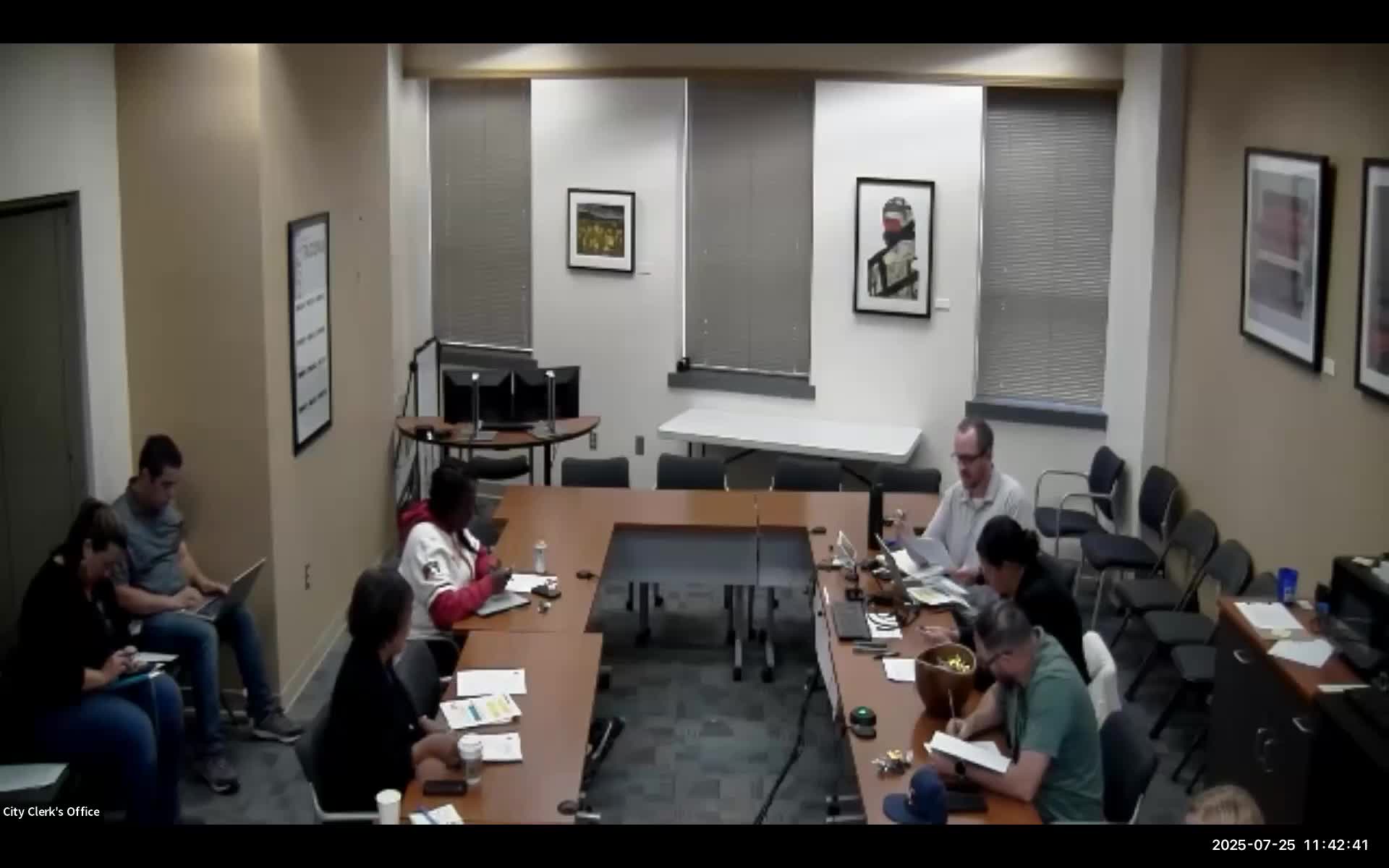
Operation Operational Strategy and Administrative Commission members used the July 25 meeting to review and prioritize a work plan of governance items including council staffing, charter review timing, council project alignment, the legislative sponsorship process, internal communications, and retreat planning.
Committee staff presented a roadmap of administration planning and work items for 2025–26 and outlined definitions, concerns, and goals for each item. The council‑staffing item centers on whether to change staffing support and resource allocation for council members following recent changes to the council rules; committee members asked staff to explore hiring timelines and whether mid‑biennium budget adjustments ("mid‑mod") are a viable funding source for any changes.
On the charter review process, the committee said it wants to prioritize completing assigned items during the current council term when possible, and requested staff detail whether the charter requires a charter review committee or whether the city can use other review structures. Committee members discussed how recommendations from the 2024 charter review had been delegated to committees and expressed a desire to close out those items or make clear recommendations to a future council.
The committee raised recurring operational problems about coordination: overlapping council member projects can create duplicate requests to staff and inconsistent direction to departments. Members discussed creating a shared, visible tool (for example, a shared board or tracker) where council members can list projects and allow colleagues to join or avoid duplicate work. Committee members emphasized that populating and maintaining such a tool would be the council's responsibility.
On internal communications, members identified inconsistent department‑level presentation styles and a lack of organization‑wide branding as obstacles to clear public messaging. Several members suggested more polished visuals and infographics, frequent workforce‑analytics dashboards, and a more coordinated rollout (a single, noticeable change rather than incremental adjustments) to improve public understanding and trust.
Retreat planning was discussed as well: OSAC could serve as a planning forum to ensure annual retreat structure and agenda reflect collective council priorities and balance strategic versus tactical goals; the mayor's office will continue to coordinate but the committee offered to shape retreat objectives.
The committee asked staff to produce a forecast calendar for future OSAC agendas, to gather additional detail on the timing and budget implications of proposed staffing changes, and to return with background materials (for example, charter review rules, staff capacity estimates, and proposals for a shared council work tracker).