Get Full Government Meeting Transcripts, Videos, & Alerts Forever!
Get email alerts on the Zoning Text Amendments topic
No spam. Unsubscribe anytime.
Planning commission recommends zoning text amendments but holds off on PID language after Syracuse University objections
Summary
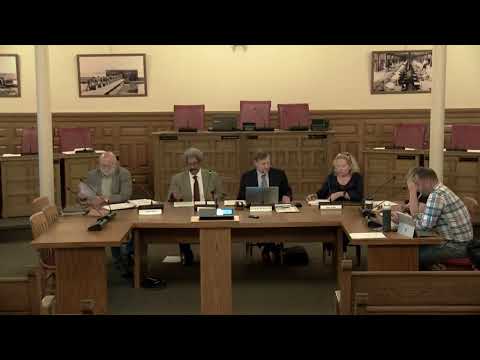
The Syracuse Planning Commission on July 28 recommended that the Common Council consider a broad package of zoning text amendments but attached a condition that the city and Syracuse University reach agreed language addressing Section 2.15 (planned districts, or PIDs) before the legislation moves forward.
The Syracuse Planning Commission on July 28 recommended that the Common Council consider a broad package of zoning text amendments but attached a condition that the city and Syracuse University reach agreed language addressing Section 2.15 (planned districts, or PIDs) before the legislation moves forward.
The commission also adopted a negative declaration under the State Environmental Quality Review Act (SEQR) for the package, concluding the text changes are unlikely to have significant adverse environmental impacts.
Syracuse University representatives and counsel urged the commission to keep the public hearing open and delay action, saying the city posted the full proposed text late Friday and that the 300-plus-page draft was not available in a redlined format that would let reviewers quickly identify substantive changes. Greg Foshay, attorney for Syracuse University, said, "We request that the commission keep the public hearing open and not act on the proposed changes until the full text or equivalent descriptions of the proposed changes are published and a meaningful opportunity is provided to us and the rest of the public to review and comment." Jennifer Bybee, associate director for campus planning at Syracuse University, told the commission she had "been calling city zoning every day" and that staff had not provided a clear, redline document earlier in the process.
City zoning staff and the city's law office rejected suggestions of intentional omission and said legal notice requirements were met. Jake (city zoning administrator) told the commission staff posted working copies and that formatting and file-conversion issues caused some redline changes not to appear in the PDF: "We just realized that the PDF didn't have all the underlying strikethrough." Jake also said staff's view was that recently approved large projects are not affected: "my professional opinion is none of them are in jeopardy and impacted by these changes."
University counsel and staff pressed two substantive concerns they said emerged from a preliminary review of the draft: (1) language on PIDs that they say may require projects previously approved under the 2023 rezone to comply with new Article 4 development standards and thereby change permitting expectations; and (2) a change to how parking standards transition for PIDs that could, in their view, revert projects to earlier (more onerous) parking rules. University representatives said those provisions could affect roughly half a billion dollars in projects the university expects to develop in Syracuse, and they asked for time to present detailed, documented concerns.
City counsel and staff repeatedly said that approvals already granted are final and that the proposed amendments do not automatically revoke existing approvals absent substantive changes to an approved project. Counsel explained the city's legal position on vested rights, noting that an approval typically creates vested rights if substantial construction and permits have been obtained.
After extended discussion, the commission voted to recommend the amendment package to Common Council with the condition that city staff and Syracuse University work in good faith to resolve the outstanding PID language (Section 2.15). The motion specifies that if the parties cannot reach an agreement, the PID portion will be returned to the Planning Commission for further consideration before submission to Common Council. Commissioners indicated they expected the parties to try to resolve language within the next few weeks so Common Council could receive a final packet in its next available cycle.
Members of the public and several local business representatives also spoke; some expressed support for specific changes (for example, proposed amendments that would allow certain one-story building rehabilitations along Erie Boulevard). The commission closed public comment, completed SEQR review, and approved the recommendation with the stated condition.
The commission's action is a recommendation to Common Council; final adoption of any zoning ordinance changes will be at the discretion of the Common Council and could include additional amendments.
Ending: The Planning Commission set an expectation that staff and University representatives meet promptly to attempt to resolve the PID language and said the commission will review unresolved language at its next regularly scheduled meeting if the parties do not reach agreement.