Westminster discusses 0.4% sales tax to fund new fire stations, staffing and neighborhood street repairs
Loading...
Summary
City officials told a town hall they may ask voters to approve a 0.4% sales tax increase to staff two new fire stations, rebuild aging stations and dedicate $2 million a year to neighborhood streets. Officials and residents discussed station condition, response gaps and outreach plans.
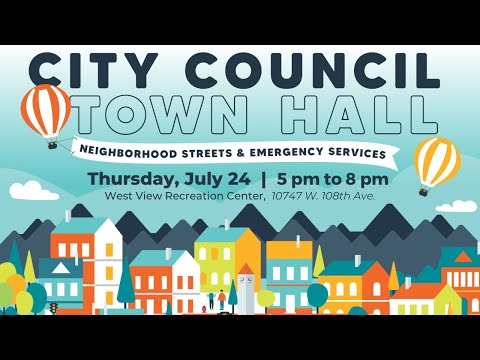
Westminster officials outlined a potential 0.4% city sales tax proposal at a July town hall to pay for additional fire stations and personnel and to dedicate recurring funding for neighborhood street repairs.
City Manager Jody Andrews said the 0.4% increase would raise the city sales tax from 3.85% to 4.25%, equating to "4¢ on a $10 purchase," and estimated it would cost an average family of four about $10 a month. He said the measure would fund staffing for a new central station and the northern station (the north station’s construction is partially funded by Urban Renewal Authority money), reconstruction of Fire Station 3, and would set aside $2,000,000 a year for neighborhood pavement work.
The proposal follows a failed ballot asking in which residents rejected a larger 0.5% sales tax last year. Andrews and Mayor Nancy McNally told attendees staff tightened budgets and identified non‑tax revenue before returning to the community with a smaller ask. "We asked a few questions and ... two thirds of the people, in June ... said yes, in fact, they would support a sales tax increase if the city is doing everything it can, to tighten its belt," Andrews said.
Fire Chief Eric Burke described operational drivers behind the request, saying Westminster’s 911 responses have more than doubled over 20 years while population grew about 12%. "Brain cells begin to die within 6 minutes without oxygen," Burke said, explaining the department aims to reach time‑sensitive incidents quickly. He said two service gaps — in the northern Orchard area and a central area around Westminster Boulevard — currently cannot be reached within a six‑minute response standard because of insufficient station coverage.
Burke also described aging facilities: Westminster added its sixth station in 1987, and several stations predate modern equipment, decontamination spaces and amenities for a diverse workforce. He identified Stations 3 and 4 as needing full replacement and said Station 1 would require renovation to add capacity. The department also is the city’s emergency medical services provider; Burke said about two‑thirds of calls require medical care.
Public Works Director Paul Knoepel summarized pavement data, saying the city’s network is in "fair" condition overall (a 54 score) while neighborhood streets are near the "poor" category. He said the city conducts annual condition assessments and emphasized that delaying repairs increases long‑term costs. City staff proposed using a portion of new sales tax revenue to repave neighborhoods and to prioritize keeping good pavement in good condition.
Officials presented several clarifying figures during the meeting: staff reported repurposing or reassigning $3,000,000 in personnel costs, the Urban Renewal Authority had dedicated $38,000,000 toward construction of the north station, and that the 0.4% sales tax would not fund some items (the city said it would not use the funds for headquarters administrative remodels, and Station 4 rebuilding and Station 1 rehabilitation would be pursued from other sources).
Residents at small‑group tables broadly supported more outreach and clearer plain‑language materials if the city proceeds. Suggestions included fact sheets explaining where tax dollars would go, comparisons of total tax rates (city plus county and other levies), use of water bills and community events for outreach, and volunteer citizen campaigns to explain the measure. Multiple table reports urged the city to explain the differences between sales and property tax impacts, and to include concrete examples such as the 4¢ per $10 and $10 per month figures.
City staff emphasized that no final decision to place the question on a ballot was made at the meeting; officials framed the town hall as community input to inform whether to advance a question. The session concluded with council members and volunteers asking attendees to sign up to assist outreach efforts including a citizen group named Citizens for Equality Westminster.
What’s next: city staff said they will compile meeting notes and an online survey summary for public review, and outreach planning and follow‑up will continue before any ballot placement decision.