Get Full Government Meeting Transcripts, Videos, & Alerts Forever!
Get email alerts on the Biosolids Management topic
No spam. Unsubscribe anytime.
Sacramento Area Sewer District outlines $450M biosolids program, warns of years of supplemental harvests
Summary
District staff told the board the ECHO Water program changed solids characteristics and permanent infrastructure upgrades costing roughly $450 million (capital) and $600 million (10-year program) are needed; supplemental harvest contracts will continue while projects are planned.
The Sacramento Area Sewer District on Sept. 10 presented a biosolids management plan that staff said will require major capital work and years of interim supplemental disposal to avoid violating the district’s discharge permit.
Sonny Lundy, director of ECHO Water Facility Operations, told the board the 2010 NPDES permit and subsequent ECHO Water program changed the character of solids processed at ECHO and that the district now needs roughly 40% more disposal capacity. "We were approximately, 3 weeks away from having to discharge some of those solids, to the unfortunately, to the river and violating our discharge permit, which is not a good thing. We avoided that," Lundy said.
District staff said the change in treatment — the Biological Nutrient Removal (BNR) and tertiary treatment upgrades commissioned between 2018 and 2023 — produced biosolids that settle poorly and are less biodegradable than prior material. A staff-led study and external technical advisory committee evaluated 16 alternatives and recommended a set of investments Lundy said offer the lowest life‑cycle cost and the strongest social, technical and environmental rankings.
The core recommendation is installation of primary sludge thickening, a digested‑sludge dewatering facility (likely centrifuges and associated odor control) and a large winter storage warehouse to allow four months of winter storage. Lundy said the dewatered system capacity target is roughly 50,000 dry tons per year. "The recommended project is a primary sludge thickening... It is dewatering facilities. This will help dewater the biosolids into a, more solid product and allow us to dispose of more, more of that on-site," Lundy told the board.
Staff also described emergency and interim work begun after the district declared an emergency in August 2023. A geotube dewatering program (phases 1 and 2) removed about 12,000 dry tons at a cost just under $10 million; a later mechanical dewatering (belt press) contract was used in 2024–25, with supplemental on‑site disposal in the summer and hauling off site in winter. Lundy said phase‑4 supplemental harvests could cost about $14 million per year and that the current multi‑year contract allows for two additional years of supplemental harvests but staff expect continuing need until permanent facilities are built.
Staff estimates capital costs for the recommended biosolids program at about $450 million (primary sludge thickening ~$130 million; digested‑sludge dewatering facility and warehouse ~$300 million; other projects ~$13 million). Lundy said total program costs across the planning horizon, including supplemental harvests and operations, approach $600 million over 10 years. Annual operating costs for the new facilities were estimated at roughly $6.4 million combined (about $1.4M for thickening plus $5M for dewatering/warehouse); supplemental harvests are a temporary ~$14M annual cost until permanent facilities come online.
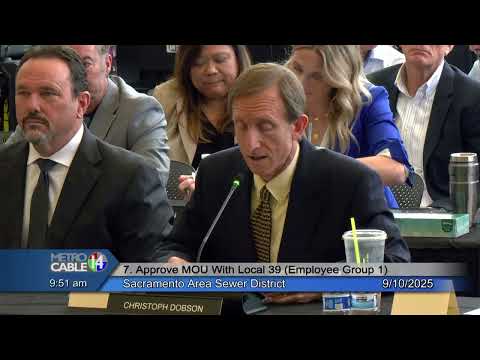
Board members pressed staff on origin and timing of the problem. Director Hume asked how the district ‘‘got here’’ after the nutrient removal work; Lundy and Christophe Dobson, district engineer, said the change in biosolids characteristics was not apparent at pilot scale and manifested about 18 months after BNR came online. "The characteristics, both the nondestructibility of the biosolids and the bulking, of the biosolids, non settling of the biosolids is really the reason why we're here," Lundy said.
Vice Chair Serna and other board members asked about odor control and community impacts from the proposed warehouse. Dobson and Lundy said vendors and other examples show odor‑control technologies (enclosures, air treatment) can be applied; staff noted prior geotube work did not produce odors above normal operations. Jeremy Boyce, senior civil engineer, said the district has about 20 suspended solids basins averaging about 5 acres each and that the basins could be repurposed in the future as lined dedicated land‑disposal (DLD) sites if needed.
Lundy said the permanent capital program would take about eight years to implement and would require about eight additional staff to operate. Staff will continue to optimize existing processes, test on‑site winter storage alternatives, and refine digester performance to reduce project size. The biosolids management plan and an executive summary are in the board packet and on sacsewer.com under the sustainability page, Lundy said.
There was no formal board vote on the management plan update; the item was presented for information and staff said no board action was required at this time.
— Ending note: Board members repeatedly returned to concerns about communication and ratepayer impacts; several directors urged proactive public messaging and promised a future presentation about the financial implications in the next agenda item.