Get Full Government Meeting Transcripts, Videos, & Alerts Forever!
Get email alerts on the Municipal Budget Millage topic
No spam. Unsubscribe anytime.
City staff outline budget pressures: millage baseline, frozen vacancies and thin public-works capacity
Summary
City managers told council the preliminary budget is balanced at the existing millage but relies on holding five vacancies and other temporary measures; filling those vacancies would require raising the millage. Public works and parks leaders described thin staffing that limits preventive maintenance and storms response.
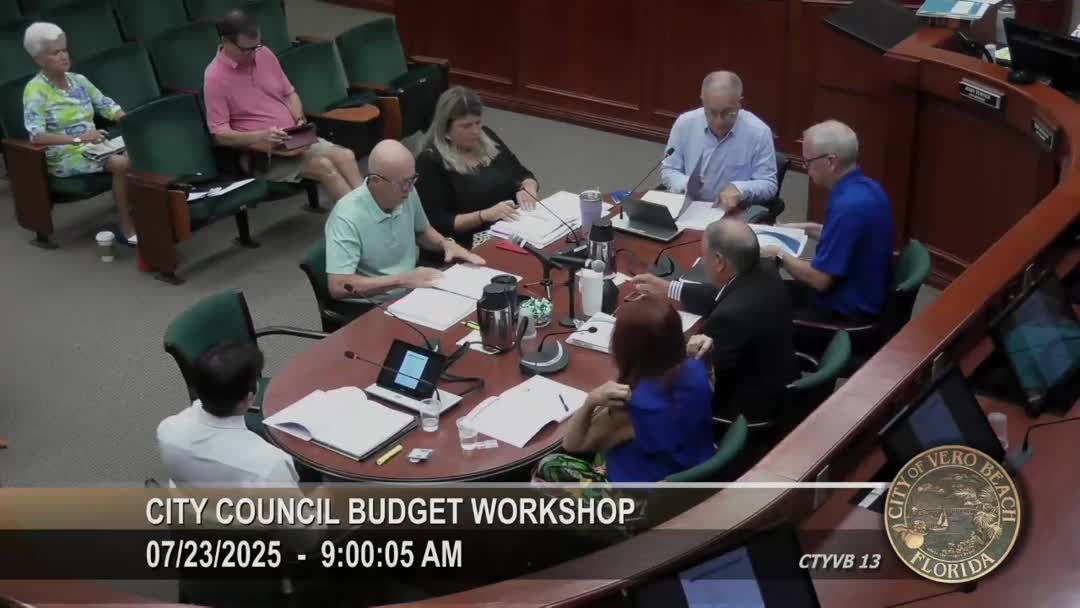
At the opening of the budget workshops the city manager and finance director reviewed the preliminary budget, key pressures and staffing choices that underlie next year’s numbers.
Millage and baseline: staff said the proposed budget is balanced at last year’s millage of 2.768; keeping five current vacancies frozen (two police, three public works) reduces payroll by about $400,000 and preserves the 2.768 millage. Staff said filling those vacancies would require a not-to-exceed millage of roughly 2.845 — about a 3.11 percent increase over the existing rate — although final numbers will change as state revenue-sharing estimates and audit results are finalized.
Cost drivers: Finance staff reported insurance and pension increases late in the budget cycle: health insurance rose by about $550,000 and the police pension actuarial contribution increased by about $340,000. Those increases led managers to withdraw proposed staff additions from the preliminary budget and to ask council to consider priorities over the next sessions.
Public works capacity: Public Works and Streets managers said the department is providing a wide range of services with limited staffing. Staff described three frozen positions currently in public works (a streets technician, a spray technician in grounds, and a senior administrative assistant) and said those vacancies reduce routine maintenance capacity for storm drains, tree trimming, ditch cleaning and other essential tasks. Managers described the department’s reactive posture during storms and outlined a desire for preventive programs (vac truck crews, additional staff) to avoid expensive reactive repairs.
ERP and finance modernization: finance and planning staff recommended moving ahead with modernizing core systems. Finance said an enterprise resource planning (ERP) system with an integrated permitting module would reduce manual, department-by-department updates and speed budget and audit processes; the ERP implementation would be a capital project and subject to a multi-year implementation calendar.
Quotes and tone: “Don’t let perfect get in the way of complete,” the finance director said of the preliminary budget, noting final audits will change some figures. The city manager reminded council that proceeds from the prior electric utility sale were used as transitional backfill years ago, and that structural adjustments remain ongoing.
Next steps and timeline: staff said final revenue-sharing numbers from the state will arrive late in the process and that council will be asked to approve millage and adjustments at the usual statutory deadlines. Council asked for a clear list of the five frozen positions and the cost to reinstate each, plus the not-to-exceed millage and the personnel deltas tied to alternatives.