Get Full Government Meeting Transcripts, Videos, & Alerts Forever!
Get email alerts on the County Budget And Bonds topic
No spam. Unsubscribe anytime.
Fulton County reviews options for up to $7 million in general-obligation bonds as financial-plan projects reshape budgets
Summary
County officials heard bond scenarios and a draft comprehensive financial plan showing revenue impacts from SEA 1 and LIT changes; consultants recommended flexible bond project descriptions and warned of estimated revenue shortfalls that could require using reserves or shifting levies.
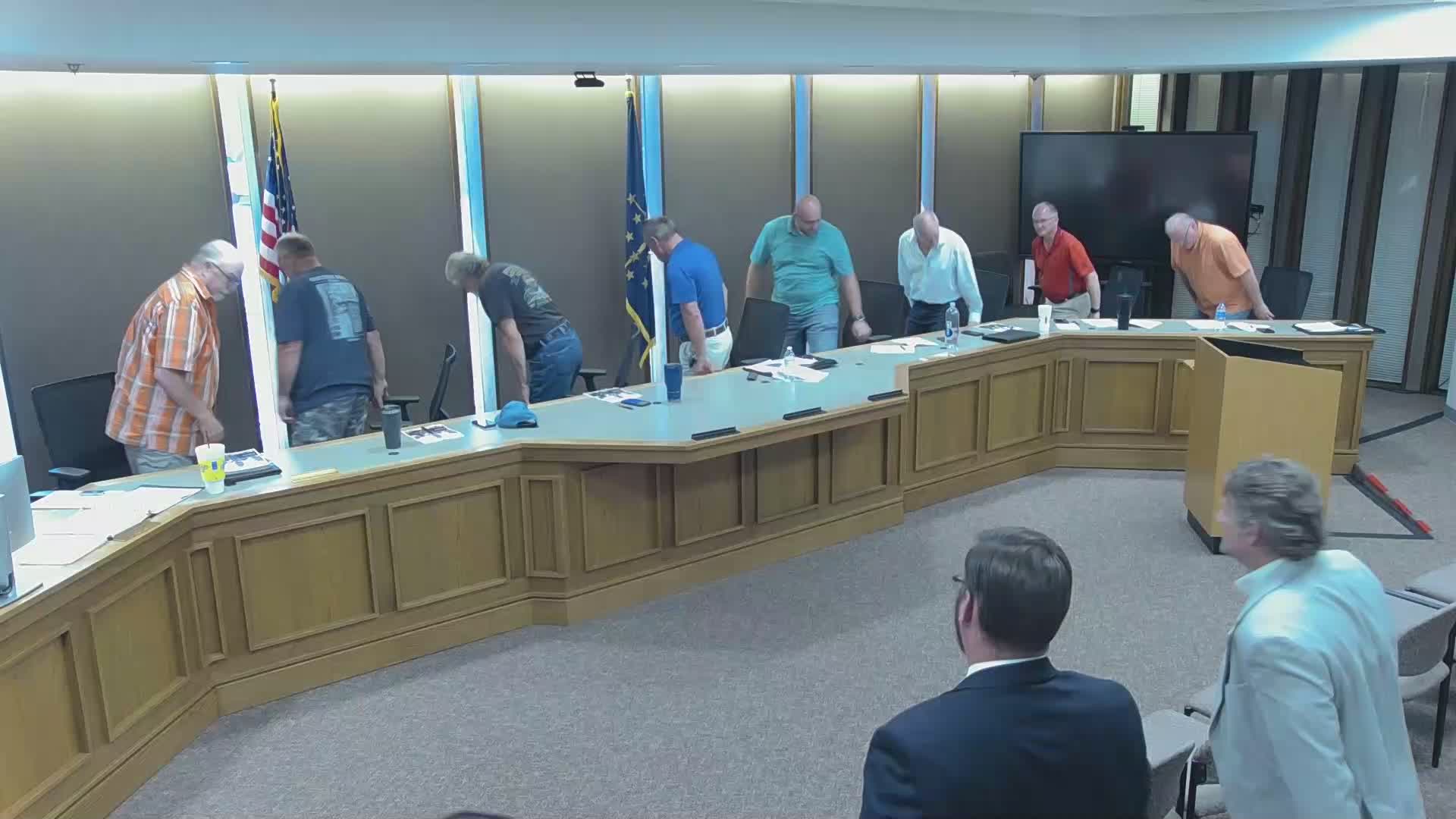
Fulton County Council and the Board of Commissioners heard detailed presentations Wednesday on possible general-obligation bond issues and a draft comprehensive financial plan that projects revenue impacts from recent state law changes.
Jason, a consultant with Baker Tilly, told the council the county could issue bonds in several scenarios — roughly $5.23 million, $6.0 million or about $7.25 million once financing costs are included — and still keep near-term taxpayer impacts relatively small. He said a $5.23 million issue paid over five years would raise roughly $1.32 million in annual debt service and require a new debt-service levy of “a little over 8¢” per $100 of assessed value under the assessment assumptions used in the presentation.
Susan Cohen, the financial consultant who presented the county's draft comprehensive financial plan, said the report contains estimates and caveats: “So this is a draft. If you want some of these estimates changed, revised, we can certainly do that,” she said. Cohen and Jason both warned that the county's revenue outlook will be affected by Senate Enrolled Act 1 (SEA 1) and by changes to how local income tax (LIT) will be allocated beginning in 2028.
Why it matters: the presentations tie a potential bond sale to a broader set of fiscal changes county leaders must address. The county faces maturing 2021 bonds with a final payment in January 2027, shifting LIT rules that may reduce some receipts for the county and increased circuit-breaker losses tied to SEA 1. Consultants advised the council to weigh bond timing and to prepare project lists and ordinances well ahead of statutory deadlines if it wants a rate established for the 2026 budget cycle.
Key points from the presentations
- Bond scenarios and timing: Jason said the county could issue a new bond while wrapping current maturing bonds to limit the net tax-rate impact. He presented three sized examples; under Scenario 1 (about $5.23 million funded over five years) the total interest cost shown in the illustrative schedule was roughly $760,000 and annual payments would start near $700,000 then rise to about $1.3 million in a later year. He emphasized market conditions that could lower rates if the county chose to sell sooner.
- Taxpayer impact examples: Jason used a $150,000 house to illustrate the levy effect, saying the difference between lower- and higher-size scenarios would amount to roughly a $44 to $50 increase in annual property taxes for that example household.
- Bond ordinance and project descriptions: Jason advised keeping project descriptions broad in the bond ordinance to preserve flexibility if priorities or bid results change. “I always recommend to be vague,” he said, noting that overly restrictive project language can constrain later spending when bids or costs differ from estimates.
- Schedule and legal constraints: Consultants said the Department of Local Government Finance requires bonds to be sold (closed) before a rate can be adopted for the coming budget year, so planning should begin in September to meet a December closing. The county's historic 2021 bonds mature January 15, 2027; consultants noted the county must account for those remaining payments in any plan.
- Comprehensive financial-plan findings: Cohen reviewed the draft plan's high-level estimates, noting the county's assessed-value mix (agricultural properties) and the way SEA 1 shifts homestead deductions and supplemental credits could reduce net assessed value over a multi-year phase-in. The report used a working assumption of a 4% max-levy growth quotient for projections and estimated an initial SEA-related revenue loss of roughly $300,000 for next year growing in subsequent years; by 2029 consultants showed estimated annual losses in the range of $600,000 across funds, driven largely by increased circuit-breaker exposure.
- LIT changes and distribution choices: Cohen explained 2028 LIT changes would replace multiple LIT classifications with a county general-services LIT (up to 1.2%) and optional targeted rates (for EMS, small municipalities and other non-municipal types). She said the county could adopt rates and also keep up to 75% of revenues from a small-municipal LIT distribution if it chooses; the distribution formulas for fire/EMS and small-municipal shares will be set by population and service territory, and further guidance from state agencies (DLGF and Department of Revenue) is still pending.
- Fund-by-fund pressure points: The draft plan showed projected operating-balance declines across several funds if current spending patterns continue and LIT and assessed-value changes materialize. Consultants recommended 5- to 10-year capital plans, noted the potential need to shift some program spending into the general fund after 2027, and flagged the statewide 9-1-1 fund and county health fund as areas that may require attention if state slot funding or fee receipts decline.
Council directions and next steps
Council members and commissioners did not vote to issue bonds at the meeting. Instead, the group agreed to assemble a consolidated list of capital projects, wants and needs to submit to bond counsel so that an ordinance and formal documents can be prepared if the council decides to proceed. A consultant timetable presented to the group forecasted ordinance introduction in mid-September and a public hearing in October if the county decides to move forward.
Adjournment
The council adjourned after the presentations. A motion to adjourn was made by Dave and seconded by Pete; the motion carried on a voice vote.
Ending note: consultants repeatedly stressed that the plan is based on estimates and that the county's final choices about LIT adoption, bond size and timing will materially change how much levy or reserves are needed in each fund. The council asked staff to compile project lists and budget numbers for review ahead of a possible August decision and the September ordinance timeline.