Get Full Government Meeting Transcripts, Videos, & Alerts Forever!
Get email alerts on the Agriculture Feedlot Variance topic
No spam. Unsubscribe anytime.
Board approves variances to split long‑standing family feedlot; allows existing barns, proposed house and addition to remain within setbacks
Summary
The Morrison County Board of Adjustment approved multiple variances allowing a long‑established family feedlot to be split into separate poultry and dairy operations and permitting existing barns, a planned home and a dairy addition to remain within county setback requirements.
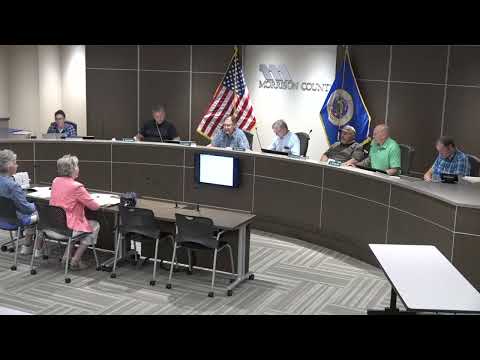
The Morrison County Board of Adjustment on July 22 approved variances that let a family split an existing combined feedlot into separate poultry and dairy operations, and that permit existing barns and a proposed house and barn addition to remain inside Morrison County setback distances from roads and residences.
County staff said the property currently operates as a single, long‑established feedlot comprising a dairy and poultry barns. The applicants — identified in filings as Brian and Kelly Becker and Jared Becker — proposed to deed the dairy operation north of the road to Jared Becker and retain the poultry operation south of the road. Because the county treats separated operations as separate feedlots under the ordinance, Staff cited Morrison County Land Use Ordinance section 1208.1 and the Tier 1 feedlot setbacks that require 200 feet from a road right‑of‑way and 660 feet from a non‑feedlot residence.
For the poultry/dwelling split the board heard that the poultry barn sits approximately 40 feet from the north road right‑of‑way (about a 160‑foot encroachment on the 200‑foot requirement) and about 185 feet from a non‑feedlot residence (a shortfall against the 660‑foot requirement). The applicants also proposed a new dwelling on the poultry parcel that would be about 513 feet from the dairy across the road (short about 147 feet of the 660‑foot residence setback). Darren, Land Services staff, and multiple board members emphasized that the buildings predate current feedlot setbacks and that pieces of the property have been farmed for decades.
Separately, Jared Becker sought approval for the dairy side: staff reported the closest animal holding area for the dairy is about 62 feet from the road right‑of‑way (a 138‑foot encroachment) and the applicant proposed a 60‑by‑100‑foot barn addition that would sit roughly 111 feet from the road right‑of‑way. Board members noted the farm has substantially more than the 20 acres required to host the poultry barn and that the operation has been on site since at least the 1980s; board members also recalled that county feedlot setbacks were first implemented around 1998.
Board members discussed the practical difficulties of strict enforcement: topography limits where a home could be placed, buildings and animal areas are existing and predate the ordinance, and the split is part of a family plan to allow the next generation to farm. Board member Clint said the county must “protect places that are most suitable for agriculture” and that splitting the operation to allow continued family farming was a primary consideration. Darren confirmed that a new septic for the proposed home would not require a variance for setback and that standard septic permitting has been satisfied for the proposed site.
The board approved the poultry/dwelling variances (motion by Brent; second by Marv) and later approved the dairy feedlot variances and the proposed addition (motion by Brent; second by George). Both motions passed unanimously with all five members voting aye. The board did not change feedlot tiers and did not record additional special conditions in the hearing record beyond the requirement that normal permitting and compliance inspections occur as part of subsequent land‑use permits.
Board members repeatedly framed the approvals as a way to recognize preexisting nonconforming uses while allowing a family transfer of farm operations. The decisions do not alter feedlot registration requirements; each separated operation must be registered and comply with Tier 1 feedlot rules and any required permitting going forward.