Get Full Government Meeting Transcripts, Videos, & Alerts Forever!
Get email alerts on the Lake Management topic
No spam. Unsubscribe anytime.
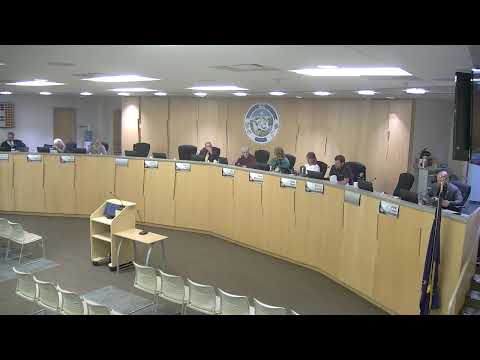
Assembly adopts Fuller Lake management plan after months of community debate
Summary
The Matanuska-Susitna Borough Assembly voted to adopt ordinance 25-079, implementing the Fuller Lake Lake Management Plan that bans personal watercraft and sets motor and quiet-hour limits after public hearings and multiple ballots among shoreline property owners.
The Matanuska-Susitna Borough Assembly on Aug. 19 adopted ordinance 25-079, enacting the Fuller Lake Lake Management Plan and amending borough code to implement community-approved restrictions, including a full ban on personal watercraft, a 5-horsepower motor limit for boats and quiet hours from 10 p.m. to 8 a.m.
The plan drew months of community meetings, multiple ballots of shoreline parcel owners and sharp debate at Tuesday’s public hearing. Borough planner Rebecca Scott Hogg summarized the process to the assembly, saying the petition to begin the plan was valid and that "Fuller Lake spans roughly 39 surface acres with the average depth of 5 feet 9 inches," and that 28 parcels were eligible to vote after one parcel (Meadow Lakes Elementary School) was excluded from voting.
The Fuller Lake process began in 2023 after residents raised concerns about safety and wildlife disturbance. Hogg told the assembly that petition and ballot results met the thresholds set in borough code: 61% of shoreline property owners signed the initial petition; a primary ballot returned 19 of 28 ballots with 15 in favor and four opposed; a secondary ballot on personal watercraft returned 17 of 28 ballots with 12 in favor of a full ban; and a final ballot on the full plan recorded 23 returns with 14 in favor and nine opposed. Borough staff recommended adoption, saying the plan met the requirements of MSB 15.24.031 and MSB 17.59.
Residents who spoke during the hearing were divided. Edward Bennett, a Fuller Lake homeowner, said a personal watercraft had once chased swans on the lake and argued the lake’s small size and depth made high-speed craft unsafe: "You can barely get a personal watercraft up to speed before you run out of lake," Bennett said. Longtime residents described concerns about safety, wildlife and the lake’s limited access points.
Opponents, including Esther Huddleston, said Fuller Lake is a state-owned surface waterbody and that restrictions would limit public access. Huddleston said the borough’s ballot counting treated returned ballots as the basis for approval and argued the result did not represent a majority of all property owners: "Fuller Lake belongs to the people of the state of Alaska. It doesn't belong to the homeowners around Fuller Lake," she said. Others warned the borough is increasingly restricting lakes and urged the assembly to preserve access.
Assembly debate focused on the legal and policy framework, fairness of the ballot process, and precedent. Several members said the community had followed the code-mandated process and that the assembly should honor that outcome, while others said non-response should not be treated as consent and that the thresholds in code merit review. Assemblymember Maxwell Sumner said he would not support the ordinance because, he said, the measure did not meet his view of an adequate threshold of support among all property owners. Assemblymember Dee McKee argued for honoring the long community process and work that went into the petition and balloting. The ordinance passed with two assembly members recorded as voting against the measure.
Adoption of 25-079 updates MSB 17.59 to reflect the Fuller Lake rules. Borough staff said signs and outreach would be used to publicize the new rules, but enforcement will rely primarily on education and complaint-driven follow-up; staff told the assembly that the borough typically handles lake management compliance through outreach, signage, and, when warranted, warnings or citations.
The Fuller Lake plan joins more than 40 other borough lake management plans. Planning staff and several assembly members noted that many existing plans already prohibit personal watercraft and that the Fuller Lake plan is consistent with existing local practice. Supporters emphasized the lake’s small size and nearby alternatives for ride-hungry users, such as Big Lake.
The assembly vote implements the community-approved plan; the ordinance will be codified in borough code and borough staff said they would publish the updated regulations and map and install signage where practicable. Several assembly members said they intend to review lake-management thresholds and related process language in future code amendments.
Ending: The Fuller Lake Lake Management Plan will take effect as codified in ordinance 25-079; borough staff expect to begin posting and publicizing the restrictions and to continue outreach to residents and users on safe, legal lake use.