Get Full Government Meeting Transcripts, Videos, & Alerts Forever!
Get email alerts on the Design Guidelines topic
No spam. Unsubscribe anytime.
Carmel-by-the-Sea steering committee narrows design-guidelines format, leaves photo choices unresolved
Summary
At a steering-committee meeting, members agreed to present a condensed, principle-driven design-guidelines draft to the Planning Commission but left image selection, certain captions and plant-list coordination unresolved; staff and two committee members will produce a revised draft for Planning Commission and City Council review.
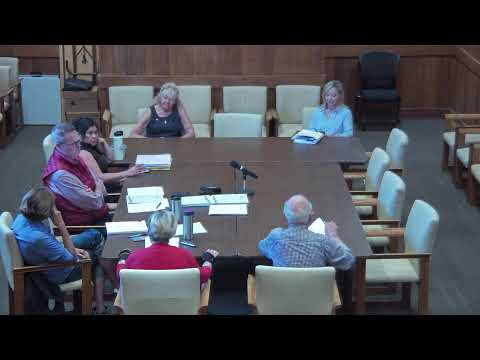
The Carmel-by-the-Sea Design Traditions Steering Committee met (date not specified) to finalize a draft of the town's design guidelines for presentation to the Planning Commission and City Council. Committee members confirmed a condensed structure centered on six core principles and a set of editorial rules for illustrations, but they did not reach agreement on a final selection of photographs or 'hero' images and asked staff to return with a revised, better-formatted package.
The committee said the condensed draft is intended to be easier for the Planning Commission, staff, applicants and the public to read and use than the longer prior editions. Members reaffirmed a multi-part approach: 1) a short preface and six core principles to guide design review; 2) an index and hyperlinks to cross-reference municipal code and other materials; 3) appendices with historical context and explanatory narrative; 4) lists of preferred planting and building materials; and 5) an application cover sheet (a brief self-evaluation tying projects to the six principles) to streamline reviews.
Committee members described the image/photo rules as the most controversial edits. The group endorsed the following image principles for the draft to be forwarded to the Planning Commission: use fewer photographs; place images inline and horizontal for consistent layout; integrate descriptive captions into the text so a reader knows exactly what detail the photo illustrates; avoid photographs that convey a negative message (use diagrams instead for negative examples); and treat 'hero' images as optional, not required. Despite agreement on those rules, members said the actual photo selection remained unsettled and that the current packet contained images several members found inappropriate (for example, nonnative cypress or photographs that show no building context). Several speakers urged that images chosen should clearly illustrate the guideline they accompany and that the committee should not send a draft with images that undercut the text.
On content beyond imagery, the committee discussed the draft's historical appendix and how it should relate to the city's adopted historic context statement and Local Coastal Program. Members reported the appendix is derived in part from Kent Seavey's work (condensed with permission) and is intended to orient applicants to the town's natural-and-built context rather than repeat a general town history. The group agreed the history material belongs in an appendix rather than the main body so users focused on design review are not redirected unnecessarily.
Preferred planting and building material lists were presented as draft appendices. The planting list was described as being drawn from published native-plant resources (including a regional list cited in the packet) and steering-committee contributions; committee members requested explicit coordination with the city forester (Justin) before the list is labeled as recommended guidance. On building materials, members emphasized the list is illustrative and not mandatory; it is intended to speed reviews for applicants who choose materials consistent with the guidelines.
Committee members also discussed implementation documents that will sit alongside the guidelines: an index with hyperlinks to municipal code sections and the local coastal program, an application cover sheet that asks applicants to explain how their proposals meet the six principles, and a project-review checklist. Those procedural pieces remain works in progress and staff said they will not finalize administrative checklists until the guidelines text is sufficiently stable.
Next steps and assignments were agreed before adjournment. Victoria and Brandon will produce a re-formatted draft that preserves the committee's prior decisions about which guideline items require photographic illustration and which do not, while improving layout, captioning and visual quality. Staff will run the planting list by the city forester for compatibility with the city's forest and beach planning work. The committee intends to present the revised package to the Planning Commission and, subsequently, the City Council; scheduling and exact hearing dates were described as uncertain. Members emphasized the committee's goal: provide Planning Commission and Council a clear, readable draft that communicates the steering committee's decisions and supporting context, not a final codified regulation.
The meeting included repeated calls for a short chronology/timeline in the staff report showing the steering committee's formation, community meetings and key milestones so Planning Commissioners and Council members can see how the current draft was developed. The steering committee did not adopt any formal motions or votes during the session; members instead recorded directions and assignments for follow-up work.