Get Full Government Meeting Transcripts, Videos, & Alerts Forever!
Get email alerts on the Ethics Ordinance topic
No spam. Unsubscribe anytime.
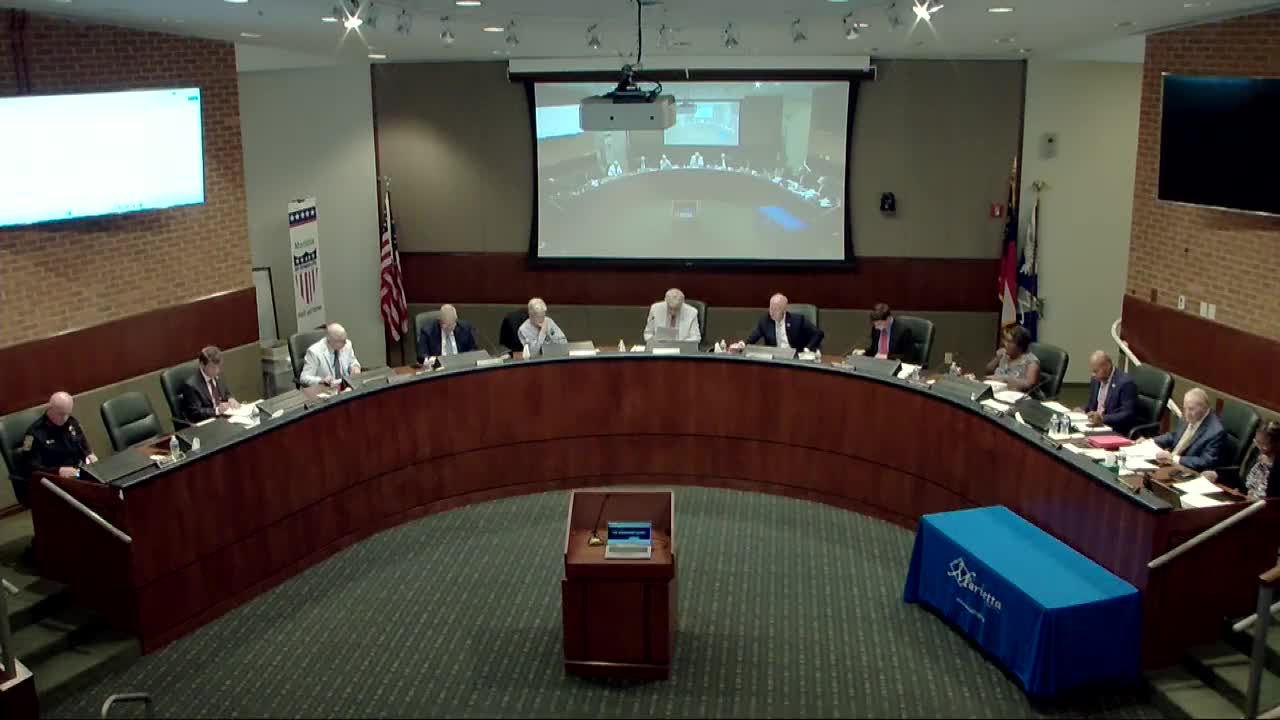
Marietta council debates ordinance language that would delay ethics complaints during election period
Summary
City councilmembers spent extended discussion on a proposed ethics ordinance change that would limit when ethics complaints can be filed around election dates; no formal vote was taken beyond first-reading status.
Marietta councilmembers spent more than an hour debating a proposed change to the city’s ethics/complaint code that would restrict the filing of ethics complaints during a defined election period and delay processing until after elections.
At Tuesday’s meeting, several councilmembers expressed concern that the change — which would make a provision effective in January but would block filing during the period from mid-August through early November — could leave candidates unable to respond if a complaint surfaced in the run-up to an election. “So basically, from August 18 until November 4 … you still have 6 months,” one councilmember said, adding that the delay meant a complaint could not be filed during the interim but could be filed after Election Day and still be within statutory deadlines.
The exchange included back-and-forth about whether the provision was intended to protect candidates from last-minute, reputationally damaging filings and whether it would conflict with state whistleblower protections. “The whistleblower law protects the whistleblower. … They’re fully protected,” another speaker said, noting different statutory goals. A separate councilmember described a scenario where a late filing could “sully” a candidate’s name even if the complaint later proved unfounded.
City staff clarified that the draft change would not permanently remove the right to file a complaint; rather, it would change the effective timing so complaints lodged in the restricted window would be filed and processed after the election. Councilmembers repeatedly noted that the language under consideration was at first reading and that waiving the first reading would be inappropriate. “First reading, nothing has to happen at all,” a councilmember said.
No formal amendment or final vote on the ordinance was recorded at the meeting; councilmembers said the item would return for further consideration and that additional discussion with the ethics committee and legal staff would continue. Several speakers requested more time to examine how the draft aligns with state law and precedents used by other jurisdictions.
The ordinance discussion came during the regular agenda rather than during public comment. Councilmembers referenced past local and national examples where late-stage filings affected campaigns and emphasized the need to balance timely investigation of allegations with protections against opportunistic filings timed to influence elections.
The council did not take final action on the ordinance at Tuesday’s meeting. Staff and councilmembers indicated further review and potential redrafting ahead of a future meeting.