Get Full Government Meeting Transcripts, Videos, & Alerts Forever!
Get email alerts on the Youth Programs Budget topic
No spam. Unsubscribe anytime.
Tonawanda council tables vote on youth bureau pay; debate focuses on $5,000 stipend and recordkeeping
Summary
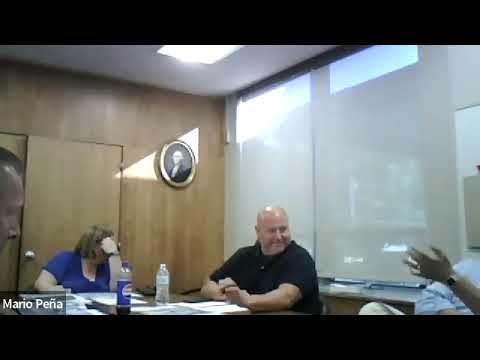
The Tonawanda Common Council unanimously voted to table a resolution on the youth bureau’s stipend after members and bureau representatives debated whether a $5,000 annual payment should remain a salary or be moved into a discretionary budget line for programming.
The Tonawanda Common Council unanimously voted to table a resolution concerning pay and structure for the city’s youth bureau after a prolonged discussion on whether a $5,000 annual stipend — split between two people, according to bureau members — should remain as salary or be moved into a budget line for programming.
Council member Tom Milam moved to table Resolution 3; Council member James Sheasley seconded. The clerk called the roll and the motion passed on a unanimous vote (Sheasley, Fisher, Raubstraw, Milam, Cook — all aye). The council then continued the meeting without deciding the underlying budget question.
The debate on the record covered three broad topics: the size and use of the youth bureau’s budget, the workload expected of paid bureau staff, and the availability of records and minutes.
Sarah Miszlin (who identified herself during public comment as associated with the youth bureau) told the council she had filed a letter and explained that bureau members had concerns about the proposed change to remove or reallocate the stipend. “No one is going to do that paperwork for free at all,” Miszlin told council members, describing the administrative workload bureau officers handle and saying the stipend (she described the amount as split between two people) compensates people who perform the work.
Council members pushed back with alternative proposals. Several members — including Council member James Sheasley and Council member Tom Milam — suggested that the city could move the $5,000 from a salary line to a discretionary line for youth programming and require the bureau to submit receipts and periodic reports. Council members noted the bureau’s current budget lines include about $5,000 for salary and roughly $250 for awards, which they described as the bureau’s total operating lines in current documents presented during the meeting. Several council members said moving the money to a program line would create clearer oversight and give the bureau a “seat at the table” during budget deliberations.
Bureau volunteers and staff countered that volunteer labor is limited and that paid stipends make it feasible to complete time‑consuming work such as grant management, vendor coordination, and event logistics. A bureau representative said the stipend is modest — roughly $290 net per month after taxes, as discussed in the meeting — and described the positions more as stipends than salaries.
Council members and bureau representatives also discussed recordkeeping and liaison duties. Bureau members said minutes and annual reports historically existed in binders and on shared drives, and they asked the council to improve electronic access. Council members asked that bureau minutes be emailed to the city clerk after adoption so they can be placed on the official record and included in future budget deliberations; the clerk and mayor’s office staff said the administration could assist with scanning and uploading records.
Several participants referenced an administrative action by the city attorney in 2023 that changed how the youth entity is described on city records (the speaker described that change as converting an earlier “U4” entity to the bureau). Meeting participants said there is no record available to council staff that clearly documents that change in a single consolidated place and asked staff to search records from November 2023 for a memo from the city attorney.
Council members said they were not seeking to eliminate programming funds for youth; several urged patience and a transparent process that would be revisited during the formal budget process in October. The council’s motion to table will allow additional time for clarifying documentation, for the clerk to gather missing records, and for staff and volunteers to propose how program funds should be structured in the budget.
The discussion also included several public‑facing community announcements and praise for recent youth events. Multiple council members complimented recent events at Coler Pool and the pop‑up playgrounds; those community activities were cited by some participants as examples of the bureau’s value.