Get Full Government Meeting Transcripts, Videos, & Alerts Forever!
Get email alerts on the Elections Residency topic
No spam. Unsubscribe anytime.
Hamtramck special session hears private-investigator findings that two council members may not live in city; clerk must decide by deadline
Summary
A special Hamtramck meeting without a quorum heard a private investigator—s preliminary finding that two sitting council members and candidates, Abu Ahmed Musa and Mohit Mahmood, may not reside in Hamtramck. The city clerk must make a decision by the county deadline; the full council will revisit the question at its next meeting.
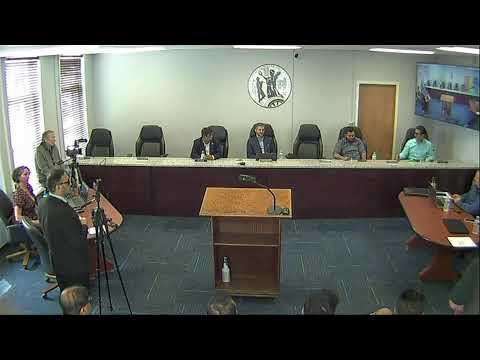
A special meeting of the Hamtramck City Council on Oct. 25, called to review a private investigator—s residency probe of municipal candidates, became a study session when the body lacked a quorum. The private investigator told the meeting that "2 of the applicants we found were not living in the city of Hamtramck," identifying councilman Abu Ahmed Musa and councilman Mohit Mahmood as the subjects of the report. City Clerk Rana (Clark) must decide whether to remove the two from the upcoming ballot by the county—s 4 p.m. deadline; the council will revisit any vacancy or candidacy questions at its next regularly scheduled meeting.
The issue matters because council members and mayoral candidates in Hamtramck sign a sworn affidavit saying they have been continuous residents for at least one year; the city—s packet cites the charter—s procedures for handling alleged ineligible candidates. The special session brought the investigator—s preliminary findings to the public and gave the two council members an opportunity to address the allegations despite the lack of a formal vote.
At the meeting the investigator, identified as Jeff, described methods he used and specific findings. He said surveillance, public-record searches and neighborhood canvassing placed Musa at 28045 Kingswood Court, Warren, Mich., rather than the affidavit address listed as 11441 Mitchell in Hamtramck. He said investigators identified a separate primary address for Mahmood at 5555 Patterson (Troy), which he said conflicts with an affidavit listing 3119 Holbrook Street (Hamtramck). Jeff also reported vehicle observations and GPS tracking on vehicles registered to the subjects, and said neighbors at the non-Hamtramck addresses corroborated residency there. The investigator described placing GPS devices on vehicles and conducting spot checks and canvasses; he said one vehicle was seen at a Hamtramck address on one night but otherwise tracked to the out-of-city address.
Council members and staff repeatedly cautioned that the investigator presented a preliminary letter and that a fuller, detailed report with timestamps, interview notes and video would be forthcoming. A city official said the city had only received an initial letter and that compiling a full investigative dossier takes additional time. The clerk—s deadline to act on candidacy, however, created urgency: if she disqualifies candidates, that decision can be appealed to circuit court, and if the council later disagrees the matter could be revisited.
Public comment at the meeting ran largely in defense of the two council members and criticized the investigation—s speed and format. Several speakers said the investigator—s written material lacked dates and full supporting documents and urged the council or clerk to delay any removal. One audience member, identified as Hassan Ewan, told the meeting privately obtained GPS tracking could raise legal concerns and argued such surveillance may implicate Fourth Amendment issues, saying, "GPS? You can't put GPS ... Illegal cease and seizures." Other residents described long personal knowledge of the council members— ties to Hamtramck and urged the city to avoid rushing to remove candidates from the ballot.
Both council members addressed the meeting. Mohit Mahmood denied the allegation, saying the assertions were "completely wrong" and that he had documentation to show his qualifications. Councilman Abu Musa said his attorney would represent him and threatened legal action if the investigation—s results lead to penalties. The mayor and other officials reiterated the charter-based process: when new information is received that calls eligibility into question, the charter gives the council (not staff) a role as trier of fact, but because fewer than a quorum were present the clerk faces a near-term procedural decision.
Officials and speakers repeatedly warned the city could face lawsuits whether candidates are removed or retained. Several speakers urged the clerk to postpone final action until the next full council meeting or to place the candidates on the ballot pending a fuller report, which some officials said might be possible before ballots are printed. City staff said ballots can be revised before printing and that disqualifications can be changed but acknowledged county deadlines constrain options.
Because no formal vote or removal occurred at the special session, the meeting ended with the clerk scheduled to make a time-sensitive administrative decision and with an agreement to bring the matter back to the full council for deliberation when a quorum is present. Officials said a detailed investigation report was expected to follow and that any judicial review would allow cross-examination of investigators and fuller evidence to be presented.