Hamtramck council keeps two members on ballot after police residency inquiry referred to state police
Loading...
Summary
After a Hamtramck Police Department special investigation found discrepancies in two council members' residency affidavits and referred the matter to the state police, the City Council voted against declaring vacancies and later voted to allow both incumbents to remain candidates on the upcoming ballot.
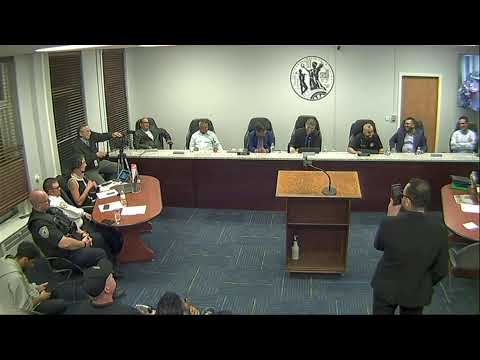
The Hamtramck City Council on May 13 declined to remove two seated council members after a police investigation into their stated residences and then voted to allow both to remain candidates on the upcoming election ballot.
Special Investigator David Yamczyk, reading a statement at the start of the meeting, told the council the Hamtramck election commission had received sworn affidavits for candidates Abu Ahmed Musa and Muheed Mahmood by the April filing deadline, and that an internal probe found “substantial discrepancies” between those affidavits and independent investigative findings. Yamczyk said investigators used records, neighborhood canvassing and surveillance and that the Hamtramck Police Department forwarded the matter to the state police for further criminal investigation.
Yamczyk said the probe identified different addresses than those listed in the affidavits: the statement reported that Mr. Musa declared a Hamtramck address at 11441 (address in filing) but investigators located him at 28045 Kingswood Court in Warren, Mich.; Mr. Mahmood declared 3119 Holbrook Street in Hamtramck but investigators located him at 5555 Patterson Street in Troy, Mich. The statement also said investigators found an active federal tax lien of $32,575.50 tied to Mr. Mahmood’s Troy residence and recorded in Oakland County; the statement said the state police have accepted the referral and will lead the ongoing criminal investigation.
In public comment before council action, several residents urged different outcomes. Andrea Karpinski, a former council member who identified herself as a longtime resident, said private investigators’ findings should be believed: “When private investigators come with evidence that these councilmen don’t have residents in this city, you have to believe that information,” she told the council. Other residents said they regularly see the council members at Hamtramck addresses and called the investigation unfair.
Council debate centered on whether council chambers were the proper forum for deciding residency, and on the lack of a clear, binding statutory definition of residency in the city charter or ordinance. A council member noted the charter reference the resolution relied on (city charter section 6-11) but said investigators had provided only a summary letter rather than the underlying evidence the council would need to make a final determination.
The council first considered Resolution 2025-51, which would have declared a vacancy and removed Councilman Abu Ahmed Musa from office under city charter section 6-11. The motion failed. Council discussion noted the investigation had been referred to the Michigan State Police and that the full investigatory materials had not been presented to the body prior to the vote.
The council then took up a companion Resolution 2025-52 to remove Councilman Muheed Mahmood; that resolution likewise failed. During discussion Mr. Mahmood disputed the investigation’s representations, said he had documentation showing his Hamtramck residency dating to July 15, 2021, and called the process “humiliating” for his family. He asked that records used in the inquiry be produced to the council.
After debate, the council adopted two separate resolutions — 2025-55 and 2025-56 — directing the city clerk not to automatically disqualify Abu Ahmed Musa and Muheed Mahmood from the ballot on residency grounds and effectively allowing both to remain candidates in the upcoming election. Council members who spoke in favor framed the votes as preserving voters’ choices pending the state police investigation or a court decision.
Mayor (name not specified) and council members repeatedly stressed the limits of local authority on criminal matters and urged that the state police and appropriate authorities complete their reviews. The Hamtramck Police Department’s statement to the council said that, consistent with departmental policy, no further comment would be made while the state-led criminal inquiry is ongoing and directed follow-up questions to the department’s deputy chief.
What happens next
Because the Hamtramck Police Department forwarded the matter to the Michigan State Police, any criminal inquiry will be handled at the state level. The council’s votes left both incumbents on the ballot; residents and candidates in public comment said they intend to use the election to determine the council’s composition. The council also received repeated public requests to clarify the city’s legal definition of residency and to consider tighter rules or ordinances so future disputes can be resolved before filing deadlines.
Action items recorded at the meeting included the two failed removal resolutions (2025-51 and 2025-52) and the two approvals to leave the candidates on the ballot (2025-55 and 2025-56). The council did not receive or cite complete underlying investigatory evidence in open session; the special investigator’s statement notes the referral to state police and lists investigative techniques used (surveillance, neighborhood canvassing, motor vehicle records, GPS tracking, photographic evidence).