Get Full Government Meeting Transcripts, Videos, & Alerts Forever!
Get email alerts on the Elections Language Access topic
No spam. Unsubscribe anytime.
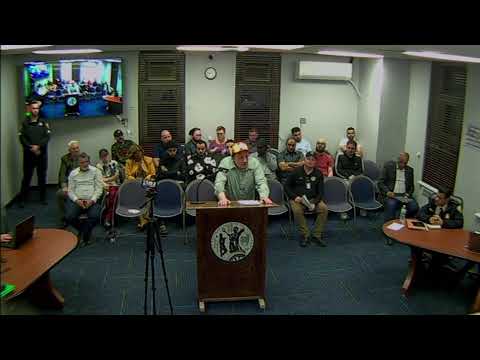
Hamtramck council hears request to add Bosnian ballots; clerk warns of cost and technical burden
Summary
City clerk told the council that adding a Bosnian-language ballot would trigger substantial translation, testing and equipment work; Bosnian residents urged the council to pursue the change as recognition of their community.
Hamtramck city officials and residents discussed whether the city should add Bosnian-language ballots for upcoming elections, with the city clerk saying state rules and the city—s census numbers determine which languages the city must provide and flagging significant costs and administrative work.
City Clerk Miss Clark told the City Council that the Michigan Voting Rights Act requires the city to provide ballots in Bangla because census figures show Bangla speakers make up about 26 percent of Hamtramck—s population, but Arabic is not a separately reported category in the census and therefore does not trigger automatic coverage. Clark said Bosnian speakers make up about 7 percent of the city—s populationroughly 1,800 peopleand that the group is not automatically covered under the state threshold for required translated ballots.
"We are required by the Michigan Voting Rights Act to do Bangla," Miss Clark said. "So with Hamtramck, our population is 27,000. Bangla is 26% of that. So we understand why we have to do the ballots for Bangla ... Now with Bosnian, it's only 7% of the city. That's not registered voters, that's just as a whole population. As a whole, there's about 1,800 Bosnians."
Why it matters
The issue matters to residents who say language access affects whether people can understand what they are voting on and who they are voting for. Residents who addressed the council said Bosnian-language materials would help older residents and others with limited English proficiency participate.
"The Bosnian people can see clearly what they're voting for and who they are here," said Arwa Mayor, a community member who spoke during public comment.
Costs and logistics
Clark told the council that adding a ballot language is more than printing a translated sheet. She described translation and testing work that must be completed for each additional language, including machine testing, translation of voting-system interfaces, ADA audio translations and translated signage and forms. "We spend a total, total of $25,000 on it each election, just to test our ballots," she said, adding that the cost breaks down to about $7,000 per ballot style for testing when multiple styles exist. Clark later estimated that the first year to fully introduce an additional language could cost as much as $100,000 because of startup work and recurring updates for changing systems.
Council and community response
Council members asked whether grants or other outside funding could cover the cost; Clark said she had not found grant programs that cover the expense and that Wayne County depends on Hamtramck to complete translations and proofs because the county waits for the city's supplemental-language ballots before finalizing materials. Clark also said the clerk's office already must provide Bangla- and Arabic-language services at precincts by law and staffing, and she has Bosnian-speaking workers available at some precincts.
Councilmembers and staff recommended further research and outreach. The mayor suggested the council continue investigating options and hear more from the Bosnian community before making a decision.
What the council directed
Council did not vote to add Bosnian ballots at the meeting. Instead, councilmembers asked staff to research options, report back on funding possibilities and solicit public input from the Bosnian community before taking formal action.
Community context
Several Bosnian residents and community representatives addressed the council in favor of the addition, saying it would be a recognition of Bosnian voters and help older residents who came to Hamtramck after wartime displacement. Clark said anecdotal precinct experience suggested relatively few Bosnian voters use a Bosnian ballot now, and that one long-serving Bosnian precinct supervisor told her he had helped just one Bosnian voter in four years, but speakers said even helping one voter is significant.
For now, the clerk and council plan further outreach and research; any formal rollout would require additional staff work, vendor testing, and, likely, appropriations.