Get Full Government Meeting Transcripts, Videos, & Alerts Forever!
Serdar Berdimuhamedov elected president as LLDC3 adopts rules, agenda and launches Awaza Programme of Action
Summary
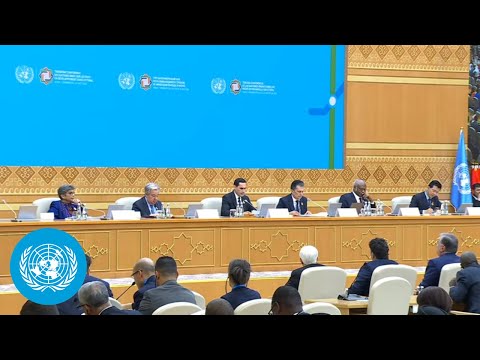
At the opening plenary of the third United Nations Conference on Landlocked Developing Countries (LLDC3) in Awaza, Turkmenistan, delegates elected President Serdar Berdimuhamedov as conference president by acclamation and approved the conference's rules of procedure and agenda.
At the opening plenary of the third United Nations Conference on Landlocked Developing Countries (LLDC3) in Awaza, Turkmenistan, delegates elected President Serdar Berdimuhamedov of Turkmenistan as president of the conference by acclamation and approved the conference's rules of procedure and agenda, officials said.
The adoption of the Awaza Programme of Action and the organization of the conference set the stage for a week of technical sessions and discussions aimed at accelerating infrastructure investment, trade and transit facilitation, digital connectivity, climate resilience and financing for the 32 landlocked developing countries (LLDCs). "Geography should never define destiny," United Nations Secretary-General Antonio Guterres told delegates in his opening statement.
Why it matters: LLDCs represent about 570 million people but account for a small fraction of global trade and face higher transport costs, limited connectivity and climate vulnerability, speakers said. Conference documents and speakers repeatedly emphasized the need for large-scale concessional finance, reforms to transit and trade rules, and targeted investments in physical and digital infrastructure.
Serdar Berdimuhamedov, opening the meeting as the conference's president, framed several Turkmenistan proposals for the global agenda. He proposed an initiative for "global medicine of the future" under United Nations auspices to strengthen medical diplomacy and the delivery of medicines to countries with limited sea access; a "global atlas of sustainable transport connectivity" to integrate LLDCs into logistics networks; a global program for a…
Already have an account? Log in
Subscribe to keep reading
Unlock the rest of this article — and every article on Citizen Portal.
- Unlimited articles
- AI-powered breakdowns of topics, speakers, decisions, and budgets
- Instant alerts when your location has a new meeting
- Follow topics and more locations
- 1,000 AI Insights / month, plus AI Chat