Get Full Government Meeting Transcripts, Videos, & Alerts Forever!
Get email alerts on the Information Technology topic
No spam. Unsubscribe anytime.
Bureau of Information Technology seeks $12.33 million to sustain cybersecurity, ServiceNow rollout and FEMA LMR project management
Summary
The Bureau of Information Technology asked for $12.33 million in FY26 to fund personnel, software licensing (including Microsoft enterprise licensing), infrastructure upgrades, utilities and continued ServiceNow and cybersecurity work while managing a $160 million FEMA land mobile radio project.
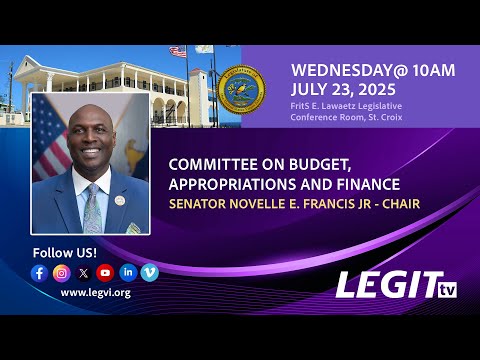
The Bureau of Information Technology told the Senate budget panel July 23 it needs $12,329,386 for fiscal year 2026 to preserve the territory's ongoing digital programs, maintain cybersecurity capabilities and continue infrastructure upgrades.
Director Rupert O. Ross said the request includes personnel and fringe (29 positions) as well as funding for enterprise software licensing, infrastructure upgrades and utilities to run data centers and communications sites. "This budget request reflects more than operational cost. It's an investment in continuity, cyber defense and improved government service delivery," Ross said.
Key program lines and projects
Ross highlighted several priorities: - Cybersecurity: BIT said it has adopted the NIST Cybersecurity Framework to guide detection, response and recovery efforts and has deployed Microsoft Defender and Sentinel across parts of the enterprise. The bureau said it has strengthened its Government Network Operations and Security Center (GNOSC / GNASc) to monitor and respond to incidents and held a territorywide cybersecurity summit to raise awareness. - ServiceNow: The IT service-management rollout continues; BIT said the platform now supports over 3,700 users and has improved service-desk tracking and interagency workflows. - FEMA Land Mobile Radio (LMR) program: BIT said it secured $160 million in FEMA funding to rebuild and upgrade the territory's land mobile radio system for first responders (P25-standard upgrades across the islands) and said project management and coordination will be essential to fully obligate and implement the project.
Budget breakdown and spending notes
BIT presented line items and explanations to the committee. Major FY26 requests included $3.2 million for personnel and fringe to fund 29 positions, $3.7 million for software licensing and platform support (including Microsoft enterprise licensing), $5.1 million for infrastructure upgrades and managed services and $250,000 for utilities to power data centers and communications towers. The bureau also listed a miscellaneous general-fund request of $7.7 million (detailed items include Microsoft enterprise renewals, managed infrastructure support, ServiceNow licenses and security awareness training).
Progress, risks and reliance on federal grants
Ross told senators that BIT had completed several agency consolidations and technical projects during FY25, including infrastructure and data upgrades for several agencies, e-citation and mobile data projects for the police, and enterprise system work for labor and licensing. But he warned of risks if funding stalls: "Without continued funding, we risk slowing the progress we've made and our ability to defend government systems from cyber threats could weaken," he said.
The bureau said it administers multiple federal awards and is the recipient or implementer of subgrants for disaster-related projects; BIT also is coordinating the State and Local Cybersecurity Grant Program (SLCGP) work that is routed through VITEMA and requires a territorywide council. Ross told senators the SLCGP process requires interagency governance and does not function as unobligated cash in the bureau's account until projects are agreed by the council and FEMA.
Why it matters
BIT is the central IT authority for the territory's executive branch. Its budget and project choices influence cybersecurity readiness, how quickly agencies can modernize services, and the government's ability to use FEMA disaster funds and federal grants. Officials told the committee that continued investment in software licensing, managed services and personnel is necessary to sustain the expanded monitoring and incident-response posture that officials say has reduced risk.
Ending
BIT asked senators to approve the FY26 request and said it would supply requested follow-ups (detailed actuals, clarifications on supplies and licensing lines) to the committee. Ross said his team will continue to expand ServiceNow service coverage and manage the FEMA LMR work in coordination with public-safety partners.