Get Full Government Meeting Transcripts, Videos, & Alerts Forever!
Get email alerts on the Licensing Consumer Protection topic
No spam. Unsubscribe anytime.
Licensing agency asks for bigger FY26 general fund, highlights cannabis program growth
Summary
The Department of Licensing and Consumer Affairs asked the Senate budget committee for $5.87 million in FY26 general fund support and described enforcement, licensing volumes and the Office of Cannabis Regulation's startup, which has begun processing business and patient applications.
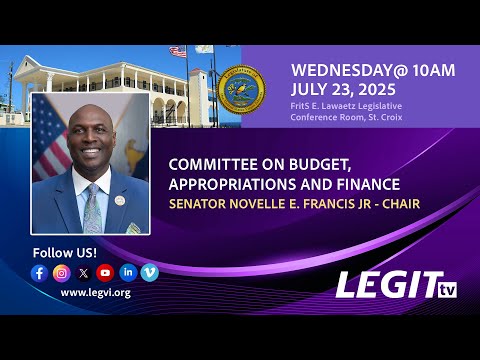
The Department of Licensing and Consumer Affairs told the Senate Committee on Budget, Appropriations and Finance on July 23 that it is seeking $5,871,053 in general fund appropriations and an additional $800,000 from the Consumer Protection Fund for fiscal year 2026.
Commissioner Natalie Hodge, who led the department's budget presentation, said the FY26 general fund request represents an increase of about $973,074 over FY25 and is aimed at sustaining personnel and core operations while supporting enforcement and technology improvements. "Our mission, serving businesses and assisting, educating and protecting consumers guides our work," Hodge said in prepared testimony to the committee.
The department reported license-processing and enforcement statistics for FY25 to date. Using a digitized platform, the Division of Licensing approved 8,223 business licenses in FY25 (a 1% decline from FY24) covering 14,079 active categories. License-fee collections rose slightly to $3,108,274.53, the department said. Hodge noted St. Thomas led the territory in business activity and fee collection.
The division that oversees alcohol licensing reported 617 alcohol-related licenses and 22 notices of violation in FY25, and DLCA said inspectors performed extensive checks across retail food and fuel sellers: the weights and measures unit inspected about 106 businesses and found 51 locations with expired products. The consumer protection unit said it received 184 complaints between October and May and resolved 168 of them, securing roughly $16,800 in restitution.
On enforcement, DLCA reported 174 citations in FY25 totaling roughly $100,550 and two arrests tied to licensing-law violations. Legal staff said the agency processed 214 notices of intent to revoke for tax nonpayment under Title 27, Sec. 304(k) of the Virgin Islands Code; 57 cases closed after BIR confirmed payment or approved plans, and 20 licenses were revoked for continued noncompliance.
Office of Cannabis Regulation: growth, licensing and spending
Joanne Morehead, executive director of the Office of Cannabis Regulation (OCR), which is housed within DLCA, told senators the OCR's FY26 ask is $1,639,917 (including $200,000 from the Tourism Advertising Revolving Fund). OCR said it has grown from a single-person office to a six-person team and has begun accepting cultivation and dispensary applications.
OCR reported receiving 26 cultivation-license applications (14 on St. Croix, 10 on St. Thomas and 2 on St. John) during the first application round, and it said awarding of licenses must follow the 90-day statutory window for initial awards. Morehead said OCR had collected $103,725 in revenue from October 2024 through June 2025, mostly from cultivation application fees, and that $616,480.78 of the $1,000,000 TARF appropriation from Act 8,680 had been expended by June. Morehead told the committee $243,180 of that TARF money had paid for law-enforcement vehicles.
OCR said about $248,666.66 is allocated for its registry portal (Tyler Technologies) and $26,691 for hardware; the office reported spending roughly $32,000 on training and professional engagement. Morehead told the committee OCR is buying field test kits and pursuing cannabis analyzers for territory testing; OCR also said it purchased $207,000 in equipment for the Department of Health public laboratory.
Staffing, vacancies and technology
Hodge said DLCA has 53 general-fund positions; six were listed as vacant at the hearing, and she asked for two new critical FY26 roles: a network administrator and a public information officer. Hodge said two new positions were approved for DLCA in FY26 and that the enforcement division is understaffed for after-hours work, requesting $50,000 for overtime and nighttime differential to increase late-night inspections.
Committee members pressed DLCA on several operational details, including vendor payables (DLCA reported roughly $218,000 outstanding as of the hearing), revenue collections for FY25 (Assistant Commissioner Horace Graham reported $3,970,067 year-to-date), and whether the department had received allotments (Hodge said the department had received allotments through October). Senators asked about supply and "other services" line items in the post-audit report; DLCA staff acknowledged discrepancies and said they would resubmit corrected figures.
Why it matters
DLCA regulates business licensing, consumer protection and enforcement across the territory; it also houses OCR as that new program grows. The department's budget and staffing choices affect business permitting timelines, enforcement capacity for consumer and weights-and-measures issues, and the pace of OCR licensing and oversight for the emerging cannabis market. The committee asked for follow-up documentation and corrected post-audit figures before final appropriations.
Ending
DLCA said it would provide requested clarifications and corrected numbers to the committee. OCR said it expects to award cultivation licenses within the statutory 90-day evaluation window and that dispensary and manufacturing licensing rounds will follow. The committee recessed after the hearing and planned additional follow-up from agencies as the budget process continued.