Get Full Government Meeting Transcripts, Videos, & Alerts Forever!
Get email alerts on the Disability Services Advocacy topic
No spam. Unsubscribe anytime.
Indiana Disability Rights outlines services, urges public comment as funding uncertainty continues
Summary
Michelle Wickham of Indiana Disability Rights described the agency’s legal and advocacy services, urged public comments on FSSA waiver changes open through Aug. 8 and answered questions about how local residents can get involved. The advisory board did not have a quorum and took no votes.
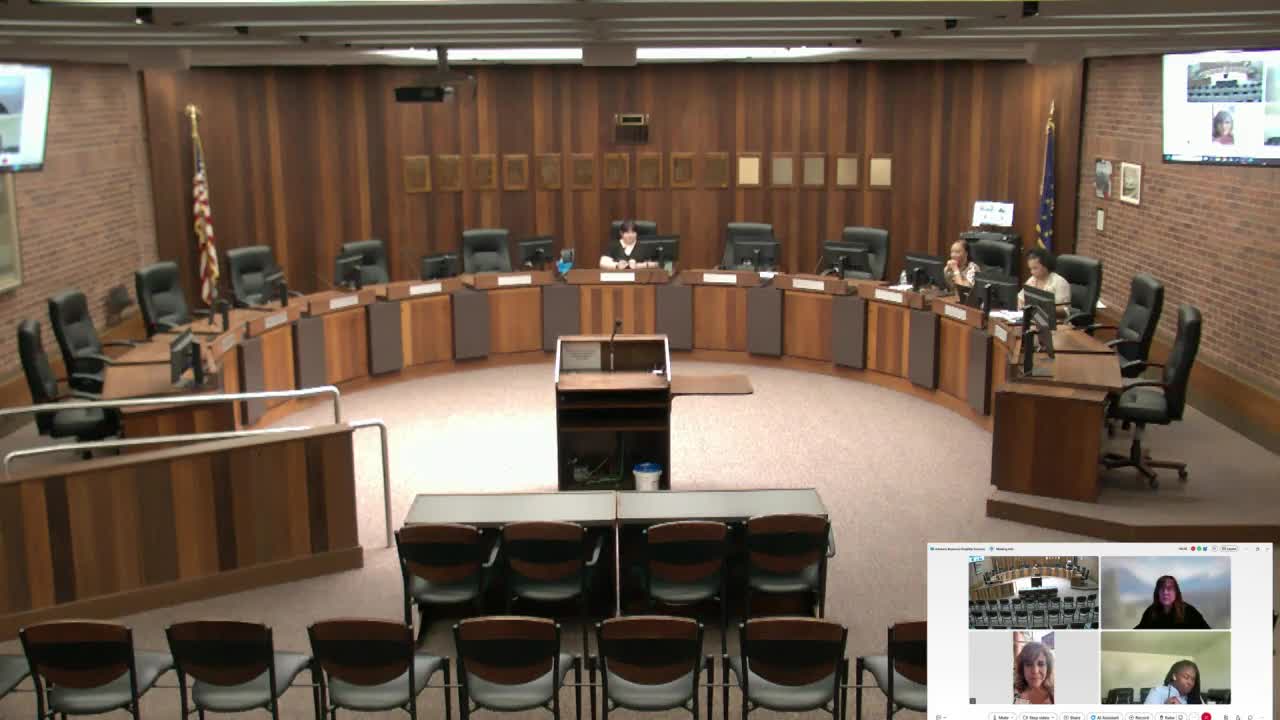
Michelle Wickham, special projects manager for Indiana Disability Rights, told the Evansville City Advisory Board on Disability Services at a July meeting at the Civic Center that the state agency provides legal protection and advocacy for Hoosiers with disabilities and is encouraging public engagement as federal and state funding questions continue.
“We are a state agency that provides protection and advocacy services for individuals with any kind of disability in the State of Indiana,” Wickham said. She described intake and referral services, legal representation when needed, and broader systemic advocacy work, including class actions, policy comments and public reports.
Wickham said the agency’s intake team fields about 250 calls per month and that Indiana Disability Rights (IDR) holds what she described as “special access authority to go into facilities that serve people with disabilities and investigate abuse, neglect, and exploitation.” She outlined teams that handle employment accommodations and vocational rehabilitation disputes, representative-payee audits of Social Security benefits, abuse-and-discharge investigations, health-care access issues (including American Sign Language interpretation), self-determination agreements as alternatives to guardianship, and education supports for students with individualized education programs.
Wickham also discussed the agency’s policy work and urged local residents to comment on changes to Family and Social Services Administration (FSSA) waivers. “We’re developing public comments, which can still be submitted to FSSA until Aug. 8,” she said, and offered to help community members submit remarks.
On federal funding, Wickham said P&A (protection-and-advocacy) program funding depends on congressional appropriations for fiscal 2026 and remains uncertain while negotiations between the House and Senate continue. She said IDR currently operates nine federal grants but that some grant renewals are unresolved. Wickham described the situation as a “moving target” and recommended constituents contact FSSA for waiver-specific questions and contact their federal representatives’ local offices about appropriations.
Board members asked practical questions during the presentation. One member asked how IDR’s advocacy differs from typical case management; Wickham said IDR follows a tiered approach (self‑advocacy, advocacy, individual representation, then systemic cases) and that the agency refers matters outside its scope to organizations such as Indiana Legal Services and the ACLU of Indiana. She noted IDR’s strict handling of identifiable information to meet federal grant reporting requirements.
Wickham recommended coalition-building and local engagement with groups such as the Arc of Indiana for people who want to stay informed and influence policy. She also offered presentation and training support for local organizations and school-transition programs, asking for about six weeks’ notice for scheduling.
Procedural items at the meeting: the board announced it lacked a quorum and therefore did not vote on minutes. Meeting organizers said future votes will require participants to have cameras on because the meetings are now livestreamed. The board scheduled its next meeting for Sept. 5 at the Civic Center and adjourned.
Practical local details discussed included a difficulty posting the board’s ADA-related video to EVSC channels because of a quoted Peachjar posting fee of about $600; members said sharing via department social pages may be used instead.
Contact information provided during the meeting: Wickham invited callers to reach Indiana Disability Rights via the agency website, indianadisabilityrights.org, and said staff can assist with public comments and requests for presentations.