Get Full Government Meeting Transcripts, Videos, & Alerts Forever!
Get email alerts on the Emergency Preparedness topic
No spam. Unsubscribe anytime.
NYC Emergency Management briefs precinct council on coastal-storm and flood preparedness
Summary
A New York City Emergency Management representative told the 40th Precinct Community Council about coastal-storm risks, urged residents to sign up for Notify NYC and create go-bags, and described shelter and outreach resources ahead of the late-summer coastal storm window.
Dustin Bridal, special projects administrator in the New York City Office of Emergency Management, told the 40th Precinct Community Council that the city is in the middle of the coastal-storm season and urged residents to plan, sign up for alert services and prepare go-bags.
Bridal said the city’s community engagement bureau focuses on preparedness education across all five boroughs to help residents “come through that event a little easier, a little faster, because they were more prepared.” He described the coastal-storm period as running June 1 through Nov. 30 and said the peak window for storms that affect the New York region generally is August through October.
Why it matters: Coastal storms can bring both intense rainfall and storm surge. Bridal emphasized that flooding risk can increase rapidly and that individual preparedness and timely alerts are the first line of public safety when flood-prone conditions develop.
Bridal described three immediate steps for residents: know your flood/hurricane zone using the city’s Know Your Zone map, sign up for Notify NYC for real-time alerts (text 692692 or the Notify app), and make an emergency plan that includes a written list of medications, emergency contacts and a packed go-bag. He said the Know Your Zone interactive map on nyc.gov shows current shelter locations when the sheltering plan is activated and that the city prints materials in 12 languages for community distribution.
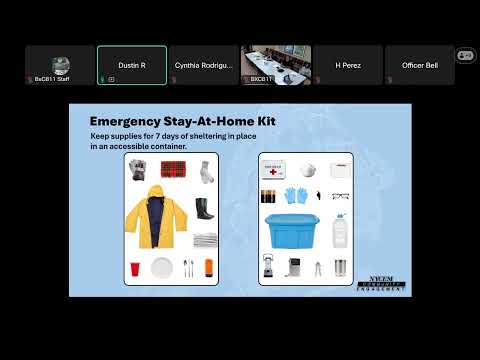
Bridal also advised moving to higher ground if flooding is likely and relocating vehicles in advance when evacuation notices are anticipated. He suggested keeping copies of critical documents (birth certificates, insurance information), medication lists, flashlights, water (at least a gallon or two per person for the first days), batteries, a first-aid kit and pet records in an accessible container.
On storm-drain capacity and climate change, Bridal said the drains handle heavy rain up to “about 2 inches an hour,” but he added, “please don’t quote me on that,” and pointed people to the Department of Environmental Protection for technical questions. He noted that prolonged heavy rainfall, debris and fallen leaves can clog drains and that DEP and parks crews conduct pre-storm maintenance on known problem locations when forecast windows allow.
Bridal described interagency coordination during forecast events: the agency convenes calls with partner agencies, activates on-call teams and operates either virtually or from the Emergency Operations Center so decision-makers and responsible staff are in direct communication. He also said the community engagement bureau will schedule brief follow-up presentations across neighborhoods in mid‑October through early November to review winter-weather and heating-related risks.
The presentation closed with an offer to answer questions and an email contact Bridal said he manages for scheduling community-board outreach and follow-up.
Ending: The council did not take formal action on the presentation; members asked follow-up questions about climate trends, storm-drain capacity and services for older residents, and Bridal noted the Department for the Aging coordinates age‑specific outreach and that the city can be contacted for evacuation assistance requests.