Get AI Briefings, Transcripts & Alerts on Local & National Government Meetings — Forever.
Sedona council hears sharply divided views on Western Gateway master plan as housing, amphitheater and parks loom
Loading...
Summary
Sedona city planners and outside consultants briefed the City Council on Oct. 25 about a draft Western Gateway Master Plan that would reconfigure a 41‑acre parcel the city bought in 2022; the presentation and public comment devolved into a sharp debate over whether the site should prioritize housing (as many businesses and some council members requested), a revived Cultural Park amphitheater, or expanded parks and trails.
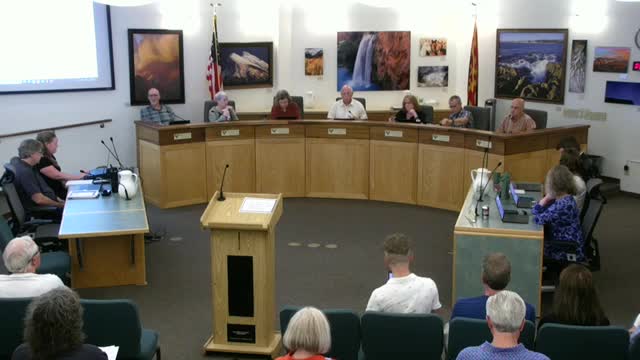
Sedona city planners and outside consultants gave the City Council a detailed briefing on the draft Western Gateway Master Plan on Oct. 25, while residents and council members traded sharply different views over whether the 41-acre site should prioritize housing, cultural uses or open space.
The council meeting drew several hours of staff and consultant presentations, public comment and detailed questions from council members about how many housing units the site should hold, what type of housing would best serve the city’s workforce and families, and whether the Sedona Cultural Park amphitheater should be restored rather than redeveloped.
City planning staff said the draft plan currently reserves about 11.5 acres for housing with a maximum scenario of about 430 units, 4 acres for mixed-use commercial, about 9.5 acres for community benefits (parks, festival and recreation space) and roughly 10.5 acres of natural open space. Carrie, a city planning staff member who led the presentation, said the allocation is a starting point, not a final commitment, and that the council could give direction to change the mix.
Why this matters: Sedona faces a long-running local housing shortfall, pressure on schools and workforce recruitment, and competing desires to protect scenic and cultural character while expanding housing availability. The council’s choices for the Western Gateway site could shape where employees and families live and how the city balances visitor infrastructure with year-round resident needs.
What consultants told the council
Elliot Pollock, the housing consultant, summarized updated market work showing a substantial local affordability gap. He reported a 2020 Elliott Pollock assessment that estimated a 1,250-unit shortfall for Sedona (and larger regional shortfalls), and told the council a 2023 market update showed roughly 1,871 Sedona households are “cost-burdened” (paying 30% or more of income for housing). He said recent apartment projects absorbed quickly and that rental products (studios, one- and two-bedroom apartments) are the most feasible way to supply workforce housing.
Pollock’s presentation included current market statistics the council requested: median single-family sale prices around $1.1 million, condominium averages near $580,000, and a stabilized apartment vacancy rate of roughly 6 percent. He recommended focusing on rental and modestly sized units (studios, 1BR and 2BR) to address the largest portions of the workforce and resident need.
Site constraints and infrastructure
Urban designers and geotechnical teams also briefed the council about the parcel’s topography and constructability. Jay Hicks, a DIG Studios lead, and an engineering consultant reported the team drilled eight borings across the site and generally found rock at a shallow depth: an average of about 4.5–5 feet before auger refusal, with one location at roughly 13 feet and one near 1 foot. Staff said those results were “typical” for Sedona and not by themselves a showstopper, but they increase building and utility costs in places.
Steve (city staff) and the consultants showed a draft plan that illustrates how townhomes, garden-style apartments and 3‑ to 4‑story buildings could be phased. The team also showed circulation and a 10-foot multiuse path that would link the site to the high school and adjacent trails, and noted an existing required easement to maintain access to Forest Service lands.
Council questions and points of friction
Councilors pressed for specifics throughout the session. Vice Mayor Ploog, Councilors Dunne and others asked whether the city’s adjacent park-and-ride property and the high-school connection could be incorporated. Staff said they can study ways to add links and shared-use paths.
Several council members asked consultants to be explicit about whether taller (four‑story) buildings were necessary. Multiple councilors said they were uncomfortable with four stories in most locations; some signaled three stories or fewer would be preferable in most places. Council members also pressed staff for traffic analysis and asked whether the city should expect to subsidize infrastructure such as lift stations, a water tank (the draft plan shows a roughly 0.9-acre tank site) or off-site road improvements.
Public input at the meeting: housing vs. culture
Public testimony was divided. Many speakers urged the council to revive the Sedona Cultural Park amphitheater and argued the venue — properly managed and marketed — could be an economic engine to support workforce housing elsewhere and sustain year‑round jobs. Artists, cultural leaders and several longtime residents said the site should remain primarily for cultural uses; some speakers described the amphitheater as Sedona’s cultural “home” and urged the council to solicit concrete business plans from organizations proposing to restore it.
Other speakers — including business leaders, chamber representatives and residents who work in town — urged more housing. They argued the city’s workforce, emergency personnel and schools need housing nearby and that the Western Gateway is the last large parcel within city limits where the city can proactively influence outcomes. Several business leaders and the Sedona Chamber representative said housing for employees and families is essential to maintain local services and school enrollments.
Technical and legal background discussed
- Staff summarized the planning history: a Western Gateway CFA plan was adopted in 2016; the city purchased the site in February 2022 to steer redevelopment rather than simply respond to private proposals. The site had operated as an amphitheater until about 2003, staff said. - The council heard that the U.S. Forest Service surveyed cultural resources in the early 1990s; the Forest Service records shared with staff found no National Register‑eligible sites on the parcel and showed an excavation had removed artifacts from a prehistoric sinagua processing site, with the survey concluding the site was not eligible for the National Register. Staff also told the council they are arranging consultations with the Yavapai Apache Nation and other tribes as a matter of respect and due diligence.
Costs and feasibility questions
Several council members and many public commenters asked for concrete financial plans. Multiple members of the public and councilors said staff and proponents have not provided the type of detailed business plan or proven funding sources that would be required to resurrect a 5,000‑seat amphitheater or to construct a large recreation center. Council members repeatedly asked staff to show rough cost ranges and funding options (for example, whether a rec center or parking garage would require municipal subsidies or special financing).
Next steps discussed
Staff and consultants said the master‑plan materials are intentionally illustrative and that the council’s direction would shape the next draft. Councilors asked for a focused housing strategy and suggested at least some work be paused until the city has more complete housing targets. Several council members supported additional focused outreach (developer charrettes or a ULI‑type review) to test market interest and refine a plan developers could build to.
Ending and council direction
No formal actions or votes were taken at the session. Council members asked staff to return with more specific information: a sharper housing strategy to show how many and what types of units the city should target; traffic impact analyses (including a scenario that models a restored amphitheater); clearer cost estimates for any municipal facilities (for example a recreation center); and follow‑up consultations with the Forest Service and tribal representatives about trails and cultural resources. Staff said they would prepare additional materials, and several council members signaled they want the next round of work to be explicit about building heights and the mix of uses so the public can weigh in on concrete options.
What’s next: council members said they want a housing strategy developed in the coming months and additional, targeted conversations before they approve any final master‑plan language. Several councilors emphasized they do not consider the current draft a final plan — rather a framework that will change as the council refines priorities and tests market feasibility.
Ending note
The council paused the session for a short break and then heard an extended public comment period. Residents and stakeholder groups remained split: some urged protection and restoration of the Cultural Park and amphitheater; others pushed for housing to address workforce and school‑enrollment declines. Councilors left the meeting with multiple requests for staff work and consultant follow‑up, but no final decision on the property’s future.
(Reporting note: quotations in this story are drawn verbatim from the Oct. 25 Sedona City Council work session recording and transcript. Speakers are identified in the council and public comment lists.)