Get Full Government Meeting Transcripts, Videos, & Alerts Forever!
Get email alerts on the School Finance Pilot Payments topic
No spam. Unsubscribe anytime.
Sayville district says Bristol PILOT change will raise 2025–26 tax levy cap to 2.8%
Summary
District staff told the board that a revised Payment‑In‑Lieu‑Of‑Taxes (PILOT) agreement restored 2024–25 revenue but defers credits that eliminate anticipated PILOT revenue for 2025–26, requiring the district to adjust its tax‑cap calculation and plan for a 2.8% levy increase.
The Sayville Union Free School District reported that a revised payment‑in‑lieu‑of‑taxes (PILOT) agreement with the town restored the district’s 2024–25 PILOT revenue but will remove the PILOT payment the district had budgeted for 2025–26, prompting an upward adjustment to the district’s tax levy cap.
District staff said the change stems from a settlement reached in June. "With this revised PILOT payment agreement, which we settled in June, it does make the schools whole for the 24–25 school year in terms of how much money we were gonna get in pilot payments," Robert Bartels, district staff, told the board. Bartels said the town deferred a credit to the Bristol that will be applied in 2025–26, meaning the district should not expect PILOT revenue for that year.
The board was told that because of the deferred credit the district revised its tax‑cap calculation, which increased the allowable levy cap and results in a planned tax levy increase of 2.8% for 2025–26. "We had budgeted a little over $400,000 for pilot payments for 25–26. We are not gonna be getting those," Bartels said.
Board members asked for clarification on timing and responsibility. A board member summarized the effect: "We did not get what we anticipated last year from the Bristol PILOT… We then got an agreement with the Town of Islip where we were then receiving that money back," and asked why the payment was deferred. Bartels replied that the town determined a credit would be applied in 2025–26 and that the timeline for returning the Bristol to the tax rolls was unclear. "It may take a year or two to go back on the tax rolls," he said.
When asked whether the deferred year of revenue would be collected later, Bartels said the timing and collection are determined by the town’s assessment process and not by the district. "That's really up to the town. That's not up to us as a school district; that's part of the assessment process for the town," he said.
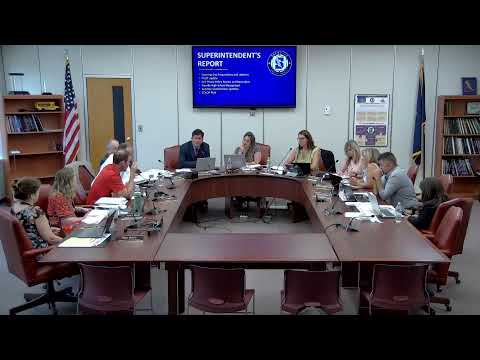
District staff told the board that the tax levy increase tied to the revised PILOT assumptions would be placed on the meeting agenda for board consideration. Board members said the district will not assume recurring PILOT revenue for budgeting until the town confirms the Bristol’s long‑term tax status.
The discussion was informational; no formal vote on the levy or a PILOT agreement was recorded during the portion of the meeting covered by the transcript.
The district also noted it had received correspondence, including a letter about the districtwide safety plan and a parent transportation letter, that will be addressed separately.