Get Full Government Meeting Transcripts, Videos, & Alerts Forever!
Get email alerts on the Police Cip topic
No spam. Unsubscribe anytime.
Dover police outline capital plan: body cameras, tasers, drones, cruisers and evidence storage among priorities
Summary
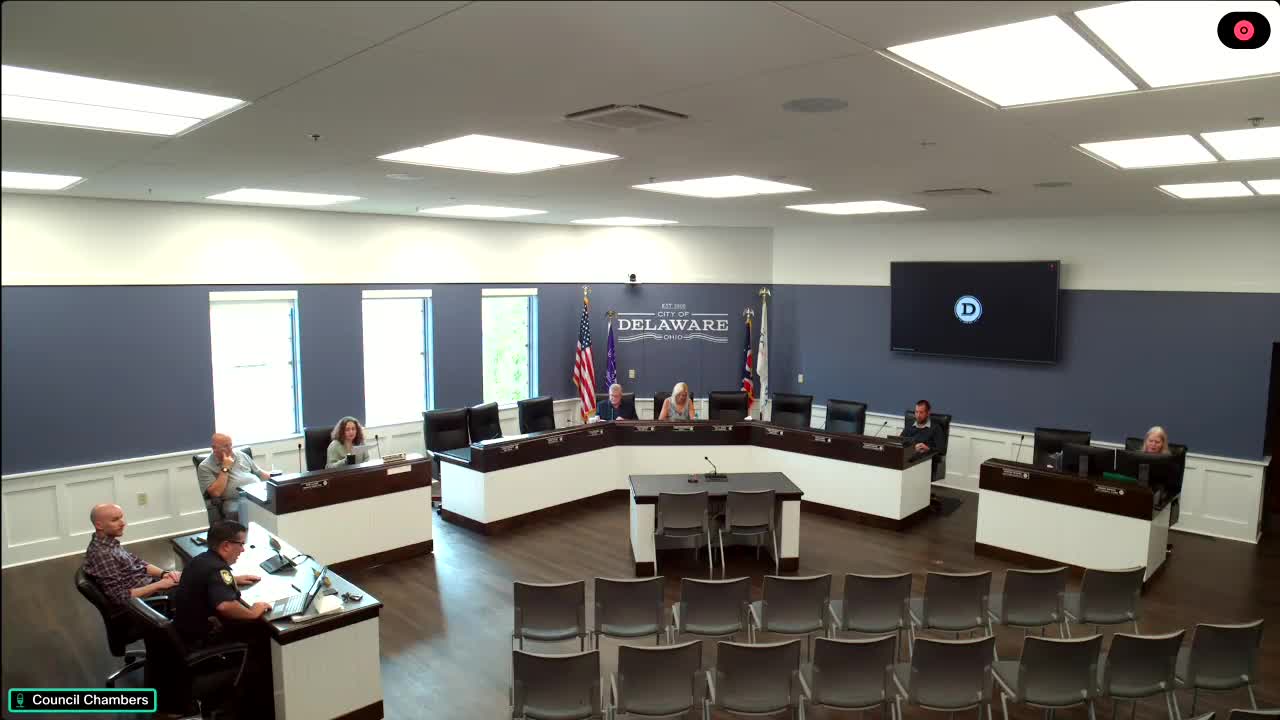
At an Aug. 19 Dover City Finance Committee meeting, the police chief presented the department—s capital improvement priorities for 2026–2029, including an upgrade to Motorola body-worn cameras, replacement tasers, new police dogs, drone equipment, cruiser replacements, and plans to replace off-site evidence storage and study the Justice Center.
The Dover City Police Chief (name not specified) told the City Finance Committee on Aug. 19 that the department's capital improvement plan will prioritize equipment and facilities upgrades over the next several years, including an upgrade to body-worn cameras, replacement tasers, new canine officers, drone hardware, vehicle replacements and a planned replacement of off-site evidence storage.
The chief said the department "have inked a deal with the Motorola company to upgrade our first generation body worn cameras to their most recent technology, the m7 hundreds," and that the contract will put a camera "available to them, at all times" for every sworn officer. He described the purchase as a multiyear project that will not require further immediate CIP spending on cameras.
The chief also said the department acquired additional tasers so that all sworn officers are issued one. He warned that changing models carries ancillary costs such as new holsters and training, and noted the department sought to "lock us in with this technology for 5 to 6, 7 years." He compared incremental changes in taser models to smartphone upgrades, saying the newest models can be much more expensive while offering only marginal gains for daily policing.
The department replaced a canine earlier this year and added a second dog in April; the chief estimated a service life of about "7 to 10 years" for each canine, and said the two new dogs mean canine costs likely will not be a major CIP item for five to six years.
Chiefs' drone program plans were a central part of the presentation. The department had budgeted $40,000 in 2025 for a main drone airframe but has not spent it because tariffs raised prices by about 20 percent, the chief said. He described interest in smaller, patrol-deployable drones and in emerging systems such as "drone first responder" programs, and noted the Federal Aviation Administration has relaxed some line-of-sight rules for public-safety operations. The chief said the department currently has four FAA-licensed pilots and a larger set of officers trained as certified observers, and that additional pilot training would be required if patrol officers were to operate drones in the future.
On vehicles, the chief said cruiser upfits are the current bottleneck even though manufacturers have caught up on vehicle production. For 2026 the department's CIP includes funds to replace four frontline cruisers and to acquire one unmarked car, a package he described as "5 vehicles total." He said frontline cruisers typically reach 100,000–120,000 miles before reassignment to secondary duties such as school resource officers or parking enforcement.
The chief flagged an off-site evidence storage building constructed in 1990 as inadequate: the facility lacks climate control, running water, internet access and restroom facilities, and the department is statutorily obligated to retain evidence for some cases for decades. He said funds are budgeted in 2027 to address replacement of that storage.
The chief also said the city contracted a citywide space-needs study that will inform long-term decisions about the 33-year-old Justice Center, which currently houses the police department, the city prosecutor and courts. He noted the department is considering facility investments such as covered carports over cruiser parking; such structures were listed in the CIP as a long-range idea and could be paired with solar panels.
Committee members thanked the chief for the presentation and offered no substantive changes during the meeting.
Ending: The Finance Committee recorded the presentation for inclusion in the 2026 CIP and will consider related budgetary items in upcoming finance hearings.