Get Full Government Meeting Transcripts, Videos, & Alerts Forever!
Get email alerts on the Wildlife Nesting topic
No spam. Unsubscribe anytime.
Local Audubon urges Carbondale Parks commission to pursue osprey nesting platforms
Summary
A resident representing the local Audubon chapter presented a proposal to the Carbondale Parks and Recreation Commission to install osprey nesting platforms on town land and seek partnership with the electric utility; the commission asked staff to bring a full package to its September meeting for further review.
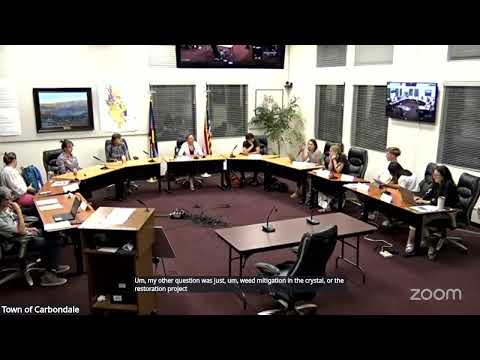
The Carbondale Parks and Recreation Commission heard a proposal on Aug. 13 from Mateo Sandate, speaking on behalf of the local Audubon chapter, to provide alternative nesting platforms for ospreys that have been building nests on power poles and other hazardous locations.
Sandate told the commission the issue has risen in town this summer after nests were repeatedly removed from electrical equipment. ‘‘We’re very good at removing the nests, but I’m not sure that we’ve provided an alternative for this bird,’’ Sandate said. He described platforms used by other towns and organizations and said the project could be inexpensive and community-driven.
Commissioners asked staff to return in September with a fuller packet so the group could decide whether to include a platform project in next year’s budget. Recreation Director Eric Brenlinger said staff would place the proposal on a future agenda for deeper review and research about permitting and site constraints.
Why it matters: ospreys are migratory raptors that often nest on poles and other elevated structures; platforms are a widely used mitigation to reduce hazards to both birds and electrical infrastructure. A locally sited platform could also serve an education role, Sandate said, and potentially involve volunteers and local nonprofits.
Details and next steps - Sandate identified three town-owned locations listed on his handout as possible sites: the Bob Terrell State Wildlife Area boat put-in near Gateway, Carbondale Nature Park and Riverfront Park. He said other candidate sites mentioned in his outreach are privately owned. - Sandate reported rough cost estimates for components: single poles and simple platform materials can range from low-cost (free or donated used poles) to about $100–$600 for new poles, while simple plywood platforms and volunteer labor keep construction costs low. He also said some organizations donate poles. - Commission members and staff noted constraints that will require follow-up: conservation easements on portions of some town property, town land-use and height rules, and the need for agreement with the electric utility where platforms would be close to power infrastructure. - Commissioners suggested staff contact Holy Cross Energy, which has partnered on similar projects elsewhere, and Colorado Parks and Wildlife staff (the transcript refers to ‘‘Mr. Groves’’ from CPW) to identify recommended sites and safety requirements.
The commission directed staff to include a prepared packet for the Sept. 9 meeting with specific site notes, any conservation-easement limits, estimated costs, and any permissions that would be needed from utilities or other landowners. The commission did not take a formal vote to fund or adopt a policy at the Aug. 13 meeting.
Ending: The commission’s September agenda will include the Audubon proposal and the staff packet requested. If the commission elects to recommend moving the project forward, the next formal steps would be to identify a funding source and any required interagency agreements.