Get Full Government Meeting Transcripts, Videos, & Alerts Forever!
Get email alerts on the County Budget Contributions topic
No spam. Unsubscribe anytime.
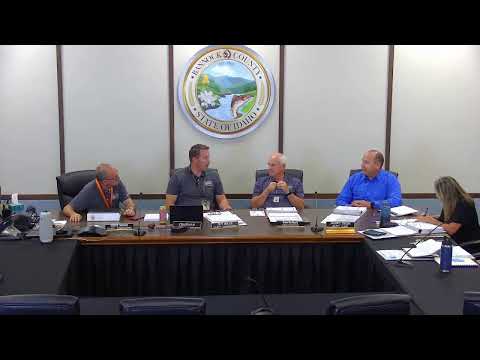
Bannock County commissioners trim some nonprofit grants, earmark funds for veterans, childcare and fields
Summary
Bannock County commissioners finished a follow-up budget session on funding for community organizations and county operations, agreeing to cut or adjust several charitable contributions, earmark funds for veterans’ facility expenses, set aside one‑time money for employee longevity and provisionally add funds for new athletic fields.
Bannock County commissioners finished a follow-up budget session on funding for community organizations and county operations, agreeing to cut or adjust several charitable contributions, earmark funds for veterans’ facility expenses, set aside one‑time money for employee longevity and provisionally add funds for new athletic fields.
In the meeting, commissioners left several existing grants largely intact but reduced or reallocated other requests to create roughly $109,000 in savings from the clerk’s recommendation and to cover near‑term county priorities. Commissioners said they would pay a $25,000 check to the Hot Springs Veterans Memorial for building‑related needs and retain ongoing contributions for Meals on Wheels and several senior programs while cutting other requests.
The decisions matter because they reallocate county tax dollars intended for private nonprofit services at a time commissioners said internal pay and employee retention are a higher priority. Commissioners spent most of the session weighing where to trim recurring donations and how to use reserves and one‑time dollars for facilities and pilot programs rather than ongoing increases to department budgets.
Most significant funding decisions and adjustments
- Veterans Memorial: Commissioners agreed to provide $25,000 to the Veterans Memorial and directed that the money be given as a check for facility use (utilities, repairs and insurance were discussed as likely uses). A commissioner noted past practice required the county to pay invoices directly but said the county would instead give the Memorial the check and ask for an accounting.
- Nonprofit contributions: The board left several small allocations in place (for example, a $1,200 allocation to the Hot Springs veterans account and continued telobus/transit support of $10,300) but cut or reduced several other requests: Boxtel Senior Center was reduced from a $20,000 request to $10,000; Bannock Development Corporation was reduced from a $70,000 ask to $60,000 with expectations for greater transparency; Family Services Alliance was cut to $5,000 (board consensus); and the Free Clinic was set at $50,000 rather than the clerk’s lower recommendation.
- Childcare pilot (Kids Alliance tri‑share): Commissioners agreed to fund a one‑year, $25,000 contribution for a childcare tri‑share pilot intended to help employers and employees cover child care costs; the board asked for an invoice so the payment could be made from this fiscal year’s budget instead of added to next year. Commissioners discussed using the pilot to help county employees as well as private employers, noting the program’s income thresholds and employer/employee participation requirements.
- One‑time employee longevity payments: The commission agreed to set aside $40,000 in one‑time funds for longevity/bonus payments to employees who were not otherwise receiving increases. Commissioners discussed structuring the payments as two checks (for example, $500 in the fall and $500 in spring) but left implementation details to staff.
- Wellness complex / new fields: Commissioners discussed and agreed in principle to include a new‑fields and fencing project at the Event Center/Wellness Complex in the proposed PILT/building projects line, with an estimated ballpark of roughly $375,000–$400,000 for about nine acres of fields and associated fencing and site work. The board directed staff to include design and planning costs so the project could be scoped and returned to the board for approval before construction.
Budget balancing and operational trims
Throughout the session, commissioners sought ongoing savings (fuel, department operating lines, and other departmental adjustments) and proposed modest cuts such as trimming Road & Bridge operating supplies and sheriff fuel to help balance recurring costs without cutting staff. Commissioners discussed taking $10,000–$20,000 from sheriff fuel and smaller amounts from education/training lines, while emphasizing they did not want to undercut mandatory or safety staffing/training needs.
Process notes and next steps
The board directed staff to incorporate the agreed changes, prepare a revised budget packet, and reconvene during the regular budget meeting the following day to finalize numbers. For the childcare pilot, commissioners asked for an invoice so the county could pay out of the current year’s budget; for the fields project, commissioners asked that design and fencing be detailed and brought back before any construction funds are spent.
What commissioners said
Commissioner Moser (on Family Services Alliance): “I’m good with 5.”
A commissioner arguing for prioritizing county employees: “My priority is our employees.”
Another commissioner supporting the childcare pilot noted it could directly benefit county staff and local employers and said the $25,000 would fund roughly eight children for a year based on program averages.
Why this matters locally
The decisions reallocate limited county tax revenues among veteran services, longstanding local nonprofits and county workforce and facilities needs. Several commissioners emphasized transparency and measurable outcomes for economic development dollars, and the board asked organizations that receive reduced or continued support to provide clearer performance reporting in future budget cycles.
The commission scheduled a follow‑up review during the regular budget meeting to approve final numbers and to receive invoices and plans for the items the board asked staff to pursue.