Get Full Government Meeting Transcripts, Videos, & Alerts Forever!
Get email alerts on the Food Systems topic
No spam. Unsubscribe anytime.
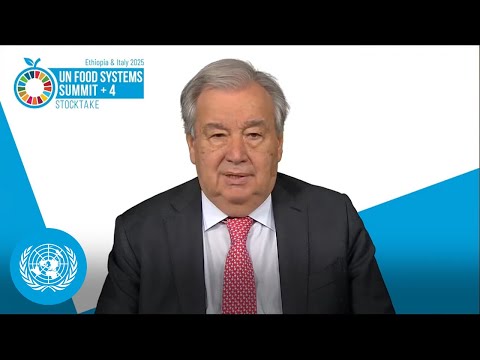
UN summit speaker urges integrated action to transform global food systems
Summary
An unnamed United Nations representative at the UN Food Systems Summit said governments, the private sector and the UN must break policy silos, address power imbalances and unlock finance to tackle rising hunger, climate impacts and inequity in food systems.
An unnamed United Nations representative, speaking at the UN Food Systems Summit, outlined three urgent priorities to transform global food systems: break down policy silos, address power imbalances and unlock finance at scale.
"Food systems are about more than foods. They're about health, nutrition, climate, decent work, justice, and the right to a better future," the speaker said, framing food systems as intertwined with broader development goals.
The speaker said progress has been made since the first UN Food Systems Summit four years ago, citing that "two-thirds of countries have integrated food systems transformation into national development plans," that "over 100 have aligned food strategies with climate and biodiversity goals," and that "155 countries are advancing efforts with national conveners and strong engagement from businesses, civil society, indigenous peoples, youth, and farmers." The remarks noted the UN Food Systems Coordination Hub as a partner in those efforts.
But the speaker warned that progress is "not fast or fair enough," saying global hunger is rising and trade shocks are pushing food prices out of reach. The speech included several quantitative claims: that one-third of the world's people cannot afford a healthy diet; that one-third of the world's food is lost or wasted; and that the "hidden costs of our food systems on health, nature, and human suffering exceed 10,000,000,000,000 US dollars a year" (the transcript gave this figure in full).
"This is not just a crisis of scarcity. It is a crisis of justice, equity, and climate," the speaker said, adding that "nearly 40% of the global workforce is linked to food systems, yet many remain trapped in poverty." The speaker cited conflict — naming Gaza and Sudan — as a driver of hunger and said, "We must never accept hunger as a weapon of war."
On solutions, the speaker urged three actions. First, break down policy silos and create integrated frameworks that link agriculture with health, climate, trade and finance, and to harness technologies, including artificial intelligence, to boost production and reduce waste. Second, address power imbalances by elevating women, youth, indigenous peoples and local actors to ensure fair governance and the right to food. Third, mobilize finance at scale, including debt relief and aligning climate finance—the speaker specifically referenced COP30 as a venue to close the adaptation gap and better align climate funding with food systems.
The speaker also called on the private sector for "responsible business practices aligned with the public good" and cited new cross-sector partnerships and alliances against hunger and poverty, without specifying organizational details.
The speech concluded with an appeal for peace so that investments can take root and farmers can plan for the future: "And above all, we need peace so that investments can take root and farmers can look to the future with confidence."