Get Full Government Meeting Transcripts, Videos, & Alerts Forever!
Get email alerts on the Stormwater Culverts topic
No spam. Unsubscribe anytime.
Newcastle council denies ordinance change that would have allowed plastic driveway culverts
Summary
After hours of public comment and technical debate, the City Council voted to deny an ordinance amendment that would have let developers use HDPE (plastic) culvert pipe and add headwalls as an allowed end treatment for local streets.
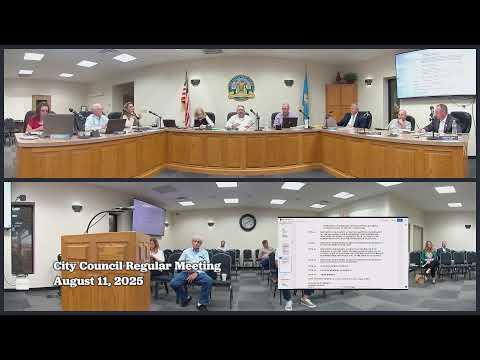
Newcastle City Council on Monday voted to deny an ordinance amendment that would have allowed plastic (HDPE) driveway culverts and explicit headwall end treatments on local streets. The proposal had been recommended for approval by planning staff and the planning commission but drew extended debate from council members, staff and local builders over durability, maintenance and required cover depth.
Planning staff described the change as an update to subdivision and driveway culvert rules in New Castle Code chapter 153.081, adding language to allow certain corrugated plastic and dual-wall products and permitting headwall end treatments on local streets under 25 mph. "Planning staff recommends approval of this ordinance amendment," planning staff member Shanay Greenlee told council, citing an engineer's letter that set installation requirements and minimum manufacturer cover specifications.
The nut graf: opponents — including local home builders and at least one council member — said the city's existing ditch depths and driveway profiles in many established neighborhoods cannot meet the minimum cover the plastic pipe requires, which would create driveway humps or require digging much deeper ditches across subdivisions. Builder Mark Woodard told the council he is a long-time local builder and said he opposed the change: "I'm a builder in Pacella," Woodard said during public comment, and he described examples in other municipalities where the product led to maintenance and replacement issues.
Council discussion focused on three technical points: (1) minimum cover required above HDPE/PE pipe (some municipalities require up to 2 feet), (2) whether the city's existing bar-ditch profiles and easements provide enough depth to meet those cover requirements, and (3) inspection and long-term maintenance — including whether enforcement resources exist to verify cover and proper end treatment installation before a driveway is poured.
Planning staff and the city engineer had proposed an owner/developer acknowledgment form to assign maintenance responsibility and require that manufacturers' installation specifications be met. Staff also noted the ordinance would exclude locations where minimum cover cannot be achieved and that developers could still pursue alternatives through the subdivision/plat or PUD process. Council members questioned whether that would be sufficient to prevent post-construction failures and said many existing neighborhoods have pipe and ditch configurations unsuited to the change.
After deliberation, a motion to deny the ordinance amendment was made and seconded; the motion carried, meaning the proposed revision to chapter 153.081 will not be adopted. The planning commission had recommended approval (vote: 3–1), but council members concluded the city's current subdivision profiles and inspection capacity made the change premature. The council also asked staff to tighten the proposed owner/developer acknowledgment and to provide deeper comparative research about where and how other Oklahoma municipalities allow the product.
Ending: Council members suggested that a developer could still pursue use of alternate culvert materials through a planned unit development or a variance that includes detailed engineering showing how cover depths and end treatments would be met for a specific subdivision. Staff said it would return with revised language for the acknowledgment and with additional research if council wanted to revisit the issue.