Get Full Government Meeting Transcripts, Videos, & Alerts Forever!
Get email alerts on the Project Marvel Arena topic
No spam. Unsubscribe anytime.
San Antonio council to continue negotiations on proposed downtown arena after hours-long public hearing
Summary
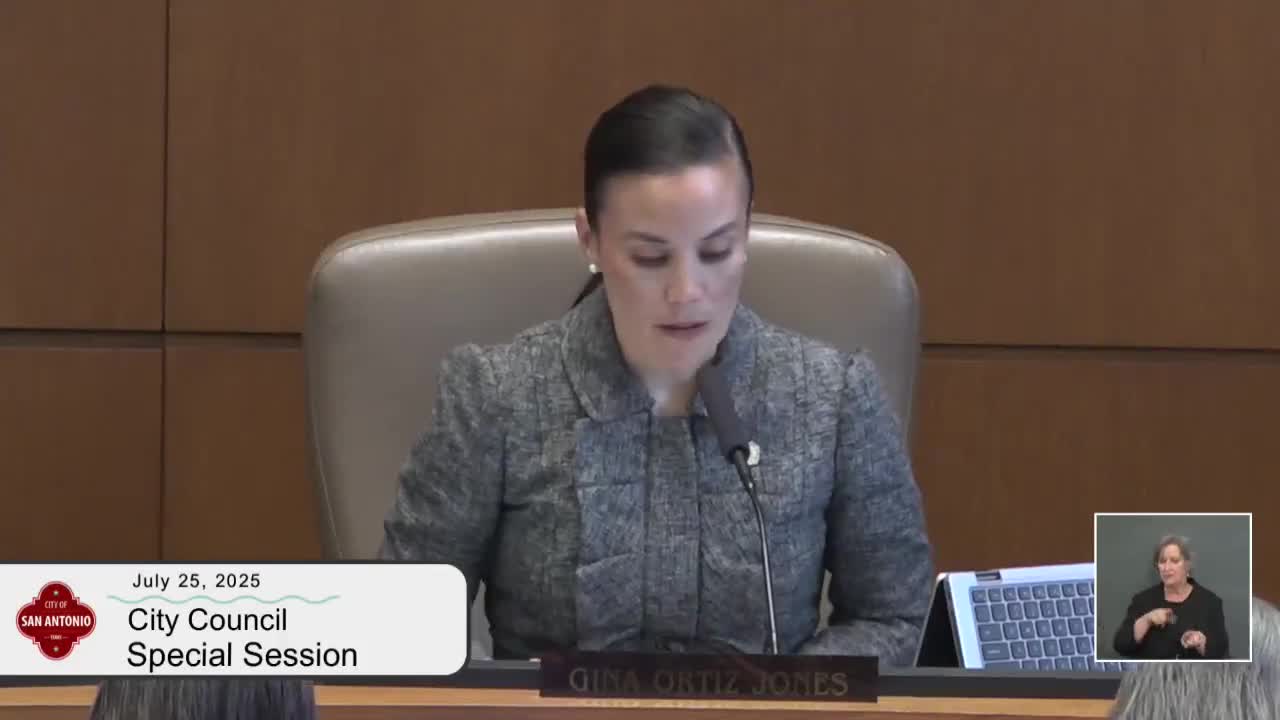
SAN ANTONIO — City staff and the San Antonio City Council spent a special session reviewing a financing framework and community benefit proposals for the proposed downtown arena and entertainment district known in public discussion as "Project Marvel," and directed staff to continue negotiations while returning additional analyses to the council.
SAN ANTONIO — City staff and the San Antonio City Council spent a special session reviewing a financing framework and community benefit proposals for the proposed downtown arena and entertainment district known in public discussion as "Project Marvel," and directed staff to continue negotiations with the Spurs and other partners while returning additional analyses to the council. No final vote or legally binding agreement was approved at the session.
City Manager Erick presented scenarios the city has been negotiating with Spurs Sports & Entertainment and a potential private developer, laying out three broad funding “boxes”: private contributions from the team and developer, state/tourism sources tied to hotel occupancy (PFC/hotel tax) and local financing tied to development-generated tax increments. Erick said the termsheet the parties had shared “no creará ningún o ninguna obligación legal o financiera,” and that definitive agreements would follow negotiations and legal review.
Why it matters: The project would reshape the Hemisfair/downtown area and carries multi-decade fiscal implications and community impacts if built. Councilmembers emphasized they wanted more economic-impact analysis and a fuller accounting of where any public revenue would come from before any binding commitments are made. Dozens of residents and organizational representatives urged both caution and action during a nearly four-hour public-comment period.
Key facts and immediate next steps
- Spurs commitment: City staff said Spurs Sports & Entertainment committed about $500 million in private capital as a starting point in a letter the council received the prior month. Staff described that pledge as an opening position that will be part of ongoing negotiations.
- Estimated total cost: Staff reiterated prior estimates that the new arena and related development could cost in the range of $1.2 billion to $1.5 billion. Staff and several councilmembers stressed the final number remains subject to design, inflation and negotiated guarantees.
- Potential county contribution and voter process: The county has signaled it may seek voter approval for a portion of project financing tied to tourism-related revenue; staff said one illustrative county figure used in presentations is about $311 million and noted any county ballot measure would require the county to place it before voters.
- Hotel-tax/PFC limits: Staff and the city manager told the council uses of state-controlled hotel-occupancy revenues are limited by state law and state controller rules; those restrictions shape what the city can direct to this project.
- Community benefits offered: Spurs and project proponents provided a list of proposed community benefits staff summarized as roughly $60 million in total commitments, with the education component described in materials as about $35 million and other public-purpose funding described in staff remarks as sums to be delivered over multi-decade schedules (staff cited roughly $32 million for certain public uses over 20 years as one illustrative figure). Staff said more detail from the Spurs was necessary to value those benefits.
Public comments and community concerns
The public-comment period drew about 47 registered speakers. Speakers were sharply divided. Many neighborhood leaders, renters and advocacy organizations urged the council to postpone advancing the plan, saying the city faces urgent infrastructure and housing shortfalls and that the proposal risks displacing low-income residents. Common concerns included:
- Loss of public funds and trade-offs with already-identified needs such as roads, drainage and affordable housing; one speaker referenced a projected city budget shortfall of about $141 million for 2027. - Displacement and affordability: multiple speakers asked for firm, enforceable commitments to replace or preserve low-cost housing near the project area and to prioritize long-term affordable housing funding in any community-benefit agreement (CBA). - Transparency and community process: several commenters said district outreach had been insufficient and asked for a CBA negotiation process led or co-led by community organizations. - Environmental and flood/heat impacts: speakers requested an environmental impact assessment, citing local flooding events and heat vulnerability.
Other speakers, including business leaders and advocates for downtown investment, urged the council to keep negotiating, saying a new district could drive jobs, tourism and long-term tax base growth if structured carefully and if commitments to small-business inclusion, local hiring and workforce development are enforced.
Council direction and timeline
Councilmembers repeatedly emphasized three items they wanted completed before making any binding commitment: an independent economic-impact analysis, a public report summarizing community engagement and comments, and more detailed financial answers from Spurs and potential developers about revenue streams that would be used to service debt.
Council direction recorded in the session (no final vote): staff was asked to continue negotiations with the current structure and to return updated materials to the council. Staff said it would provide an economic-impact analysis and the community outreach summary to the council the following week and proposed a status update session around July 31 and further presentations in early August (staff mentioned Aug. 5–6 and Aug. 14 as part of the near-term schedule in different places during the meeting). Councilmembers requested that negotiated terms include a robust community benefits approach and mechanisms to protect or replace affordable housing and to monitor environmental impacts.
What the council did not decide
No ordinance, contract or binding financial commitment was approved during the special session. The termsheet discussed was explicitly described by staff as nonbinding and intended to guide negotiations; staff and council members repeatedly said definitive agreements would come later and that any use of voter-approved revenue would require separate public processes.
What’s next
The council set a near-term expectation that staff would return with the requested analyses and more-detailed answers from Spurs about revenue assumptions, the scope and timing of the private contributions, and more specificity on the proposed community benefits. Councilmembers signaled they expect codified community benefits, stronger local hiring and small-business participation terms, and clearer plans to limit displacement before they will consider final approvals or recommend any ballot measure.
Direct quotes from the record (Spanish-language excerpts verbatim)
City Manager Erick: "no creará ningún o ninguna obligación legal o financiera, y los acuerdos definitivos seguirán después."
Councilmember (summary of direction to staff): "continuar las negociaciones bajo la estructura actual" (direction recorded by staff during the meeting).
Ending note
Councilmembers and staff said they would use the next round of reports and the economic-impact study to refine negotiations and to provide the public greater detail. Any final deal that includes use of public or voter-approved funds would require further council action and, where applicable, voter approval; meanwhile the council left the principal decision—whether to approve a final binding financing package—in the future after additional analysis and public input.