Get Full Government Meeting Transcripts, Videos, & Alerts Forever!
Get email alerts on the Residential Rezone Symphony Homes topic
No spam. Unsubscribe anytime.
Kaysville planning commission continues public hearing on Symphony Homes 50‑acre rezoning after hours of public comment
Summary
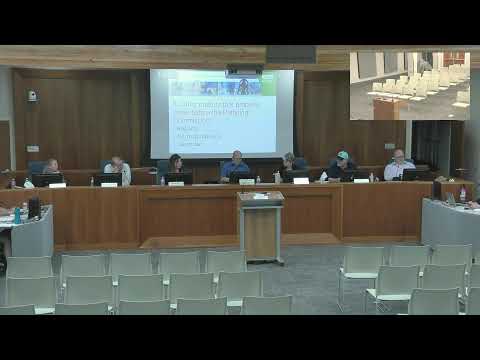
Kaysville City Planning Commission on Tuesday held a lengthy public hearing on a 50‑acre rezoning and development agreement proposed by Symphony Homes and Ivory Homes and voted to continue the item to Oct. 9 so staff and the applicant can finalize road‑ and agreement‑related issues.
Kaysville City Planning Commission on Tuesday held a lengthy public hearing on a rezoning and development agreement proposed by Symphony Homes and Ivory Homes for about 50 contiguous acres on Kaysville’s west side and voted to continue the item to Oct. 9 so staff and the applicant can resolve outstanding road and development‑agreement issues.
The application would rezone the site into a mix of R‑1‑6 and RM zones and, as presented, include 193 detached single‑family homes and 102 attached single‑family homes (townhomes), for a total of about 295 dwelling units and an average project density the applicant described as 5.8 units per acre. Developer representative Matt Loveland said the plan includes perimeter lots as a transition to existing larger lots, interior detached homes on smaller lots, and amenity features including a pool, pickleball courts, trails and a proposed city‑owned “bike park” to replace the privately owned equestrian facility on the site.
Community Development Director Melinda (last name not specified) told the commission the city mailed about 65 notices, posted the hearing on the state public meeting site and the city’s channels, and by about 6:30 p.m. had received roughly 30 emails and a few calls — most opposing the rezone. She said staff and utility providers had reviewed infrastructure and found sewer, water and power capacity available but warned some homes may require grinder or lift pumps because of sewer configurations. Melinda recommended continuing the matter to allow the developer and staff to finalize parts of the development agreement tied to the proposed road connections.
Why it matters: neighbors said the plan’s density, lot sizes and road access would alter the character of established half‑acre‑lot neighborhoods and pose public‑safety and traffic risks on nearby Sunset Drive and other local streets. The developer and staff said additional time is needed to finalize a proposed connection for Road 550 West and to coordinate right of way with Central Davis Sewer District.
Most of the evening was devoted to public comment. Residents cited safety concerns at an existing blind curve and roundabout on Sunset Drive, the adequacy of sidewalks and school access for children, and the loss of the long‑standing equestrian use. Multiple speakers urged larger perimeter lots (many asked for half‑acre lots to remain adjacent to existing homes) and asked that Angel Street be completed to provide an additional primary access before approving major development. Neighbors also described prior development agreements and recorded plat notes they believed limited future changes to the equestrian parcel; the city retained outside counsel to review those documents and gave a legal briefing to the commission during the meeting.
Legal question over equestrian parcel: the city retained land‑use attorney Brent Bateman to review plats, CC&Rs and development agreements. Bateman told the commission he found many “statements of intent” in the chain of documents but no final act — such as a plat dedication or recorded legal step — that would legally reserve the equestrian parcel as common open space or an equestrian center in perpetuity. “Where it is now,” Bateman summarized, “the act of reserving the equestrian center to be an equestrian center or common area never occurred.” Symphony’s counsel, Skyler Walker, told the commission their position is that the parcel is not part of the HOA; Walker said a quitclaim deed and other changes removed legal constraints. City staff emphasized the city generally does not adjudicate private HOA contract disputes and recommended the HOA and the developer pursue their own counsel if they have competing claims.
Developer presentation and community input: Matt Loveland, speaking for Symphony, said the applicants held an open house earlier this year and solicited public feedback, and he described proposed lot sizes and product types intended to provide a range of housing that Symphony called “attainable.” He said the RM zone allows up to 15.6 units per acre (per city code), but the proposed development agreement would cap build‑out to the conceptual plan presented. Loveland proposed minimum perimeter lots of 12,000 square feet for transition, interior detached lots from about 6,000 square feet, RM detached lots from 3,000 to 5,000 square feet, and attached‑product lots averaging roughly 2,800 square feet. He also proposed a city‑owned bike park (pump tracks and jump lines) as a public amenity in place of the private equestrian use.
Infrastructure and access: several residents and engineers raised the need to connect Road 550 West through the property into Angel Street to disperse traffic and provide emergency access. Staff said the sewer district owns a parcel across which the city and developer would prefer the road to run; the developer attempted to acquire that parcel earlier in the year and the sewer district declined to sell. Staff and the applicant said they would approach Central Davis Sewer District together to seek a solution, but the commission and many neighbors said completion of Angel Street and multiple access points are critical before approving large‑scale residential development.
Ownership and occupancy assurances: the draft development agreement and staff discussion referenced a previously used provision that would require at least 60% of units be owner‑occupied and prohibit any one entity from owning more than two units. Staff said the ownership/occupancy requirement would be enforced through CC&Rs recorded with the subdivision and by HOA enforcement; staff also acknowledged the city has limited direct enforcement power over private HOA rules and that the HOA would be the body responsible for day‑to‑day enforcement.
Action and next steps: the commission closed the public hearing and then — after receiving legal analysis and staff responses — voted to continue deliberation until Oct. 9 to allow staff, the applicant and the sewer district to refine the development agreement and road plan. The commission also voted to extend the meeting later in the evening to finish deliberations.
What remains uncertain: the exact recorded status of the equestrian parcel (despite the legal review, competing counsel offered different interpretations), whether the sewer district will sell or otherwise convey the right of way needed for the 550 West connection, and the final development‑agreement language (including any binding caps on density and occupancy provisions). The commission’s recommendation will come forward to the Kaysville City Council, which makes final zoning decisions.