Get Full Government Meeting Transcripts, Videos, & Alerts Forever!
Get email alerts on the Cafo Regulations topic
No spam. Unsubscribe anytime.
ADEM hearing: Lake Martin group urges tighter controls, more reporting on poultry litter after high E. coli readings
Summary
At a public hearing Aug. 19, 2025 in Montgomery, the Alabama Department of Environmental Management heard testimony from Matt Campbell of Lake Watch of Lake Martin calling for clearer controls on poultry litter disposal and public reporting on monitoring in the Tallapoosa River watershed.
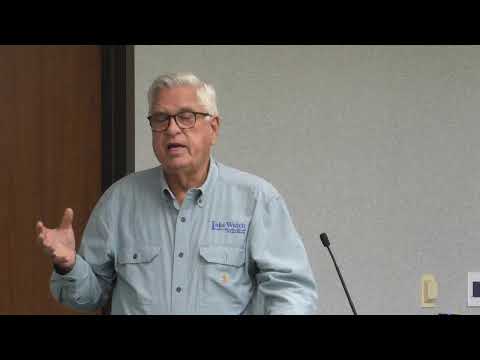
MONTGOMERY, Ala. — At a public hearing Aug. 19, 2025, the Alabama Department of Environmental Management (ADEM) took oral and written comments on proposed updates to state regulations that govern concentrated animal feeding operations (CAFOs), including requirements tied to the National Pollutant Discharge Elimination System (NPDES). Matt Campbell, representing Lake Watch of Lake Martin, told the hearing the public needs clearer information and stronger attention to poultry litter disposal and monitoring in the Tallapoosa River watershed.
Campbell, who said Lake Watch has conducted volunteer water-quality monitoring on Lake Martin and its tributaries for 32 years, said the group has documented a recurring pattern of elevated E. coli readings following heavy rains. “We found 3,567” colony-forming units per 100 milliliters at a creek near Highway 49 in a complaint filed June 24, 2020, Campbell told the hearing, and he contrasted that reading with what he cited as ADEM’s single-test alert level of about 487 E. coli per 100 milliliters. “I want chicken. I want cheap chicken, and I also want clean water,” he said.
Why it matters: Campbell tied Lake Watch’s findings to the state’s ongoing total maximum daily load (TMDL) work on streams in the Tallapoosa watershed, saying TMDLs should produce information ADEM can share with the public and with industry about sources and reductions needed. Campbell urged greater communication and collaboration among poultry producers, university researchers, the Natural Resources Conservation Service and regulators, and suggested the industry study and publish improvements such as composting practices.
The hearing, convened to receive public input on the existing Division 335-6-7 regulations covering CAFOs and related technical standards, also included procedural notices: copies of the chapter and exhibits were made available at ADEM field offices and on the agency web page; public notice was published in four statewide newspapers on or about July 15, 2025; and written comments and exhibits received at the hearing were placed in the record. The hearing officer said a summary response by the department to comments received would be posted within 120 days and that the full hearing record would be available for inspection at the ADEM Montgomery office.
Campbell acknowledged that Lake Watch’s routine monitoring shows most samples were below ADEM E. coli limits except for the rain-driven spikes, and he described the problem as largely nonpoint-source in nature that will require best management practices by producers and land managers. He said Lake Watch supports development and public release of monitoring results and of any improvements identified through TMDL work.
No public officials spoke at the hearing; one registered member of the public gave oral testimony. The hearing was recorded by a court reporter and will be included in the public record along with written submissions and exhibits. The hearing officer reminded attendees that substantial technical statements should also be submitted in writing and noted a deadline for submitting comments to be included in the hearing record.
Next steps: ADEM will accept written comments and exhibits for the record and will publish a written response and any determination on whether the regulations will be modified in accordance with the Alabama Water Pollution Control Act. The department’s written response and the completed hearing record will be available at the Montgomery office once the process is complete.