Get Full Government Meeting Transcripts, Videos, & Alerts Forever!
Get email alerts on the Damage Assessment topic
No spam. Unsubscribe anytime.
County emergency management runs damage‑assessment refresher for fire personnel ahead of storm season
Summary
Emergency management staff led damage assessment training covering windshield surveys, documentation forms, damage categories (affected, minor, major, destroyed), photographic standards and how assessments feed state and FEMA requests for disaster declarations and reimbursement.
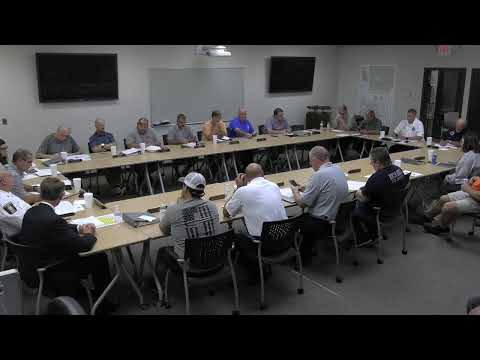
Lancaster County emergency management and fire training staff gave a damage‑assessment refresher to Fire Commission members and department officers, explaining the county’s process for documenting storm damage and how local assessments support state and federal disaster assistance requests.
Presenters reviewed the operational steps: wait for conditions to be safe, prioritize life safety, conduct windshield surveys and record address or GPS, structure type, occupancy, estimated damage category (affected, minor, major, destroyed) and insurance status. Personnel were told to begin photo documentation at the mailbox or 911 sign to establish address continuity and to take 360‑degree photos of structures. The training emphasized that flood damage thresholds are judged by whether water reached electrical outlets (major) versus lower‑level flooding (minor), and that road and bridge failures or utility‑critical infrastructure can alone push an area toward thresholds for assistance.
Emergency management staff explained the chain for assistance: county assessments go to emergency management (EMD), which compiles and forwards data to the governor’s office; the governor may then request FEMA assistance and the president decides whether to declare a disaster. Staff cited recent thresholds in other counties and noted that FEMA and state processes are changing; they urged careful documentation to preserve eligibility for reimbursement and grants.
Why this matters: Accurate, contemporaneous documentation determines whether the county qualifies for state or federal assistance and affects reimbursement levels. Presenters said good documentation was also required to maintain the county’s eligibility for some planning grants and to support repair funding for roads, bridges and utilities.
Ending: Emergency management staff confirmed damage‑assessment kits and paperwork are stocked at stations and urged departments to send photo and form submissions promptly after a damaging event so county EMD can compile a complete package for state review.