Get Full Government Meeting Transcripts, Videos, & Alerts Forever!
Get email alerts on the Fire Funding And Staffing topic
No spam. Unsubscribe anytime.
Lancaster County officials outline options to change fire-service funding, aim for regional full‑time staffing
Summary
County staff and the Fire Commission discussed a multi-year plan to shift capital and operating costs toward localized fire service areas, start full‑time coverage in McDonald Green in January and explore additional regional 24/7 staffing tied to municipal participation and possible rooftop fees or local millage.
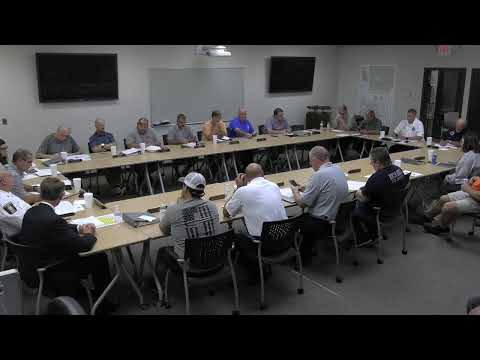
Lancaster County fire officials and the Fire Commission discussed proposals to change how the county funds fire apparatus and staffing, with a goal of beginning 24‑hour full‑time coverage in the McDonald Green area in January and considering similar regional staffing in other areas.
County staff described a three‑to‑ten year planning approach that would separate capital and operating funding by service area so that communities receiving the service would help pay for it. The presentation identified a countywide capital request of about $16,600,000 to replace aging apparatus (12 tankers and 5 engines were listed) and noted current apparatus lead times of 36 to 44 months. Staff said one option is to place some apparatus orders now — potentially seven to nine vehicles — even before a final funding structure is set to avoid the long manufacturing lag.
County staff emphasized that the McDonald Green staffing model — approved by county council and scheduled to begin in January — will station six career personnel on three shifts (two personnel per shift, a captain and an engineer) to provide 24‑hour coverage there, and that county funding would continue to support 15 dedicated career personnel based at the county facility for daytime operations and system support. The county currently spends about $6.2 million a year for fire service as presently organized.
Officials said municipal decisions will affect how the county frames options for council. Staff asked that municipalities (Kershaw, Lancaster city, Van Wyck and others) tell the county by November whether they intend to provide full‑time fire service, contract for service, or remain in a fire service area. Those choices will shape proposals the county presents to the Lancaster County Council in the winter budget cycle; budget requests are due in March, staff said.
Staff also discussed potential local funding mechanisms. Indian Land operates under its own ordinance and funds operations and capital with a rooftop fee and could add a district millage; staff outlined a rough scenario showing a $300,000 taxable house in a candidate service area could see about a $70 annual cost if a millage were adopted in that area. County staff stressed multiple funding permutations are possible — per‑area rooftop fees, district millages, or maintaining countywide funding — and said county council will need detailed recommendations and municipal participation to finalize a structure.
Why this matters: County officials framed the shift as an attempt to align who pays with who receives services as call volumes and population growth increase demand for paid staffing. The discussion affects capital replacement schedules, long apparatus delivery lead times, local tax bills and where full‑time firefighters are based.
County staff asked the Fire Commission’s moving‑forward committee to recommend which region should receive the next 24‑7 staffing allocation after McDonald Green, naming three geographic regions under consideration (west, east and south) and noting that municipal contracts and existing service areas such as Kershaw and Van Wyck complicate uniform approaches.
Officials also flagged operational and equity concerns: volunteers remain the backbone of county fire service (staff reported about 243 volunteers across 18 districts), so the recommended model attempts to balance volunteer strength with added career backup. Staff repeatedly emphasized that final decisions on capital and operating costs depend on municipal participation and council direction.
The presentation noted a longstanding capital funding mechanism (bond fund) will be insufficient going forward and described the county’s intent to propose new capital funding arrangements to council. Staff briefly noted litigation and market risks in apparatus procurement: a recently filed antitrust suit by a Wisconsin city against several major manufacturers could affect pricing and availability; county presenters advised the commission they were monitoring that litigation while pursuing apparatus orders.
Ending: County staff said McDonald Green implementation is scheduled for January and pledged to bring refined cost scenarios and municipal responses to county council during the coming budget cycle. Commissioners and staff were invited to continue committee work to recommend the next regional staffing priority.