Get Full Government Meeting Transcripts, Videos, & Alerts Forever!
Get email alerts on the Haiti Humanitarian Crisis topic
No spam. Unsubscribe anytime.
UN humanitarian coordinator calls Haiti crisis "alarming, acute and urgent" as funding falls short
Summary
Enrique Richardson, the UN humanitarian coordinator for Haiti, described a worsening security and humanitarian crisis — including mass displacement, child recruitment and failing health services — and said the UN response plan is only 9% funded.
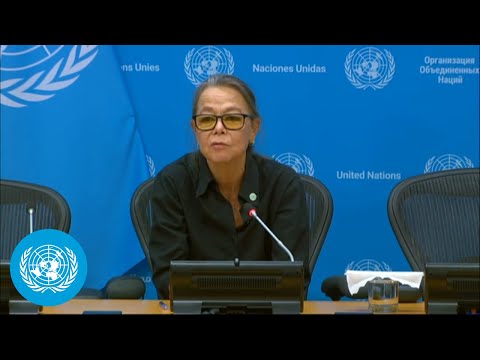
Enrique Richardson, the United Nations humanitarian coordinator for Haiti, warned reporters at a UN briefing that the security and humanitarian situation in Haiti is “alarming, acute and urgent,” and said international funding and political support remain far short of needs.
Richardson, who said he will leave his Haiti post to take a new assignment in Libya on Sept. 1 after more than three years in Port-au-Prince, told the briefing that roughly 1,300,000 people have been displaced by gang violence, about half of them children, and that some 3,000 people have been killed in gang-related incidents since the start of the year. He said about 2,000,000 people are living at IPC 4, the emergency level of food insecurity.
The scale of the crisis, Richardson said, is not only statistical. “Behind every figure there is a woman, a mother, a child, a father, a young young person,” he said, describing accounts of sexual violence, children being recruited by armed groups and widespread malnutrition. “The situation is really strikingly horrific in the capital,” he said.
Richardson also described serious disruptions to basic services. He said only “36% of hospitals in the capital” are fully functioning and that, in his view, “two out of three major hospitals are actually out of function” (as stated at the briefing). Schools have closed and generations of children have missed full school years, he added.
The UN humanitarian response plan for Haiti, Richardson said, requests $900 million but has been funded at just 9%. “That is, of course, a big frustration,” he said, calling the level of financing the lowest for any response plan in the world and stressing that “the tools are there” but not sufficiently resourced or applied.
Richardson urged greater international action on several fronts, repeating recommendations he said he has raised during three years in Haiti: cut off arms trafficking; enforce the sanctions regime introduced in 2022 that aims to break ties between gangs and political or economic actors; and adequately resource the multinational security support mission (MSS). He said the MSS, which was expected to include more than 2,500 uniformed personnel, has not been given the force size or tools needed to fulfill its role.
On the MSS specifically, Richardson said many of the roughly 900 Kenyan police officers deployed have served a year in difficult conditions and have not been rotated, and that the mission was intended to be multinational rather than largely Kenyan. He said the UN Secretary-General’s proposal to the Security Council from February remains pending and that the Security Council’s decisions will be pivotal to the mission’s future.
When asked why Haiti has received so little funding, Richardson said it was a combination of limited political will and competing global priorities. He also said he has seen growing regional engagement, including more involvement from neighbouring Latin American countries, and noted that parts of the MSS have been financed by the United States.
Richardson framed the current situation as reversible if violence ends and international and regional actors act in parallel on security, politics and development. “Haiti can quickly spiral up again. But the violence needs to end,” he said.
The briefing included questions from multiple journalists about funding shortfalls, the MSS’s operational status and whether the international community is suffering from “Haiti fatigue.” Richardson urged member states to keep Haiti on their agendas and to invest in the available tools, saying repeatedly that time is running out.
Richardson closed by expressing optimism about Haiti’s long-term prospects provided the immediate security and political challenges are addressed: “I’m very optimistic…. the country can be rebuilt,” he said.